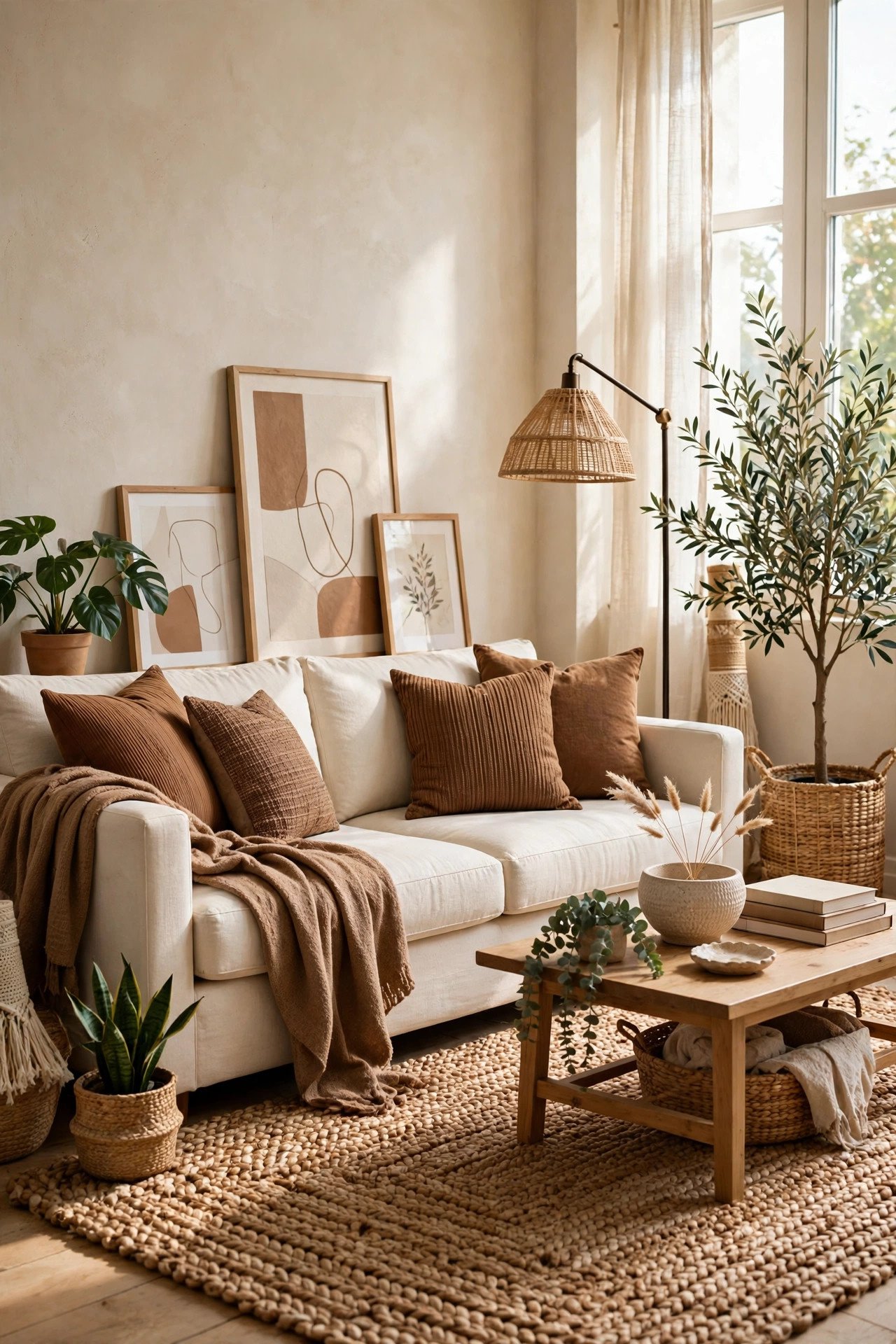
Renting puts a frustrating limit on decorating: the room you live in every day is not fully yours to change. No paint, no new holes, no swapping the light fitting — and a deposit waiting at the end if you get it wrong. So most renters do nothing, and live for years in a plain white box that never quite feels like home.
That box can change far more than you think, using only reversible moves. Everything in this makeover leans, clips, hangs from existing fittings, or simply stands on the floor — and every item can leave with you on moving day. The plan follows one rule: change the big, soft, and movable things, because those are what make a room feel decorated, and none of them belong to the landlord.
Quick Answer
For a rental-friendly living room makeover with no paint and no damage: lay the largest rug you can afford or already own to define the seating area and cover dull flooring. Hang curtains high and wide on a tension rod or existing rail to change the whole window wall. Use large removable picture strips or lean large art on furniture instead of drilling. Add warm plug-in lighting — floor and table lamps — to replace the harsh ceiling light. Then finish with textiles: cushion covers, a throw, and one or two plants. Every step reverses in minutes when you move.
Before You Start: Know Your Exact Rules
Read your tenancy agreement once, looking for three things: rules on picture hooks and adhesive strips, rules on window coverings, and any clause about keeping original fittings. Most agreements ban nails and screws but allow removable adhesive strips used correctly, and almost none restrict rugs, curtains on existing rails, lamps, or furniture placement. If anything is unclear, a short written question to your landlord now is cheaper than a deposit dispute later. Photograph the walls, floor, and window frames before you change anything, so the room’s starting condition is on record — this protects you, not just the landlord.
Step 1: The Rug Is Your New Floor (Biggest Single Change)
Rental flooring — tired laminate, stained carpet, cold tile — sets the tone of the whole room, and you cannot replace it. A rug is how you cover as much of it as possible without touching it. Choose the largest size your seating area can take: in a living room, the front legs of the sofa and chairs should sit on the rug. A rug that is too small floats like a bath mat and makes the room look more temporary, not less.
Flat-weave rugs cost less, sit well under doors, and are easy to clean and roll up when you move. Pick a warm, simple pattern or a plain texture in tones that work with your sofa, since the rug will anchor every colour decision after it. If a new rug is out of reach, check second-hand listings — rugs are sold cheaply by people moving — and clean any used rug thoroughly outdoors before it comes in. Underlay or rug tape at the corners stops sliding and protects the floor beneath, which your deposit will thank you for.
Step 2: Curtains High, Wide, and on No New Fittings
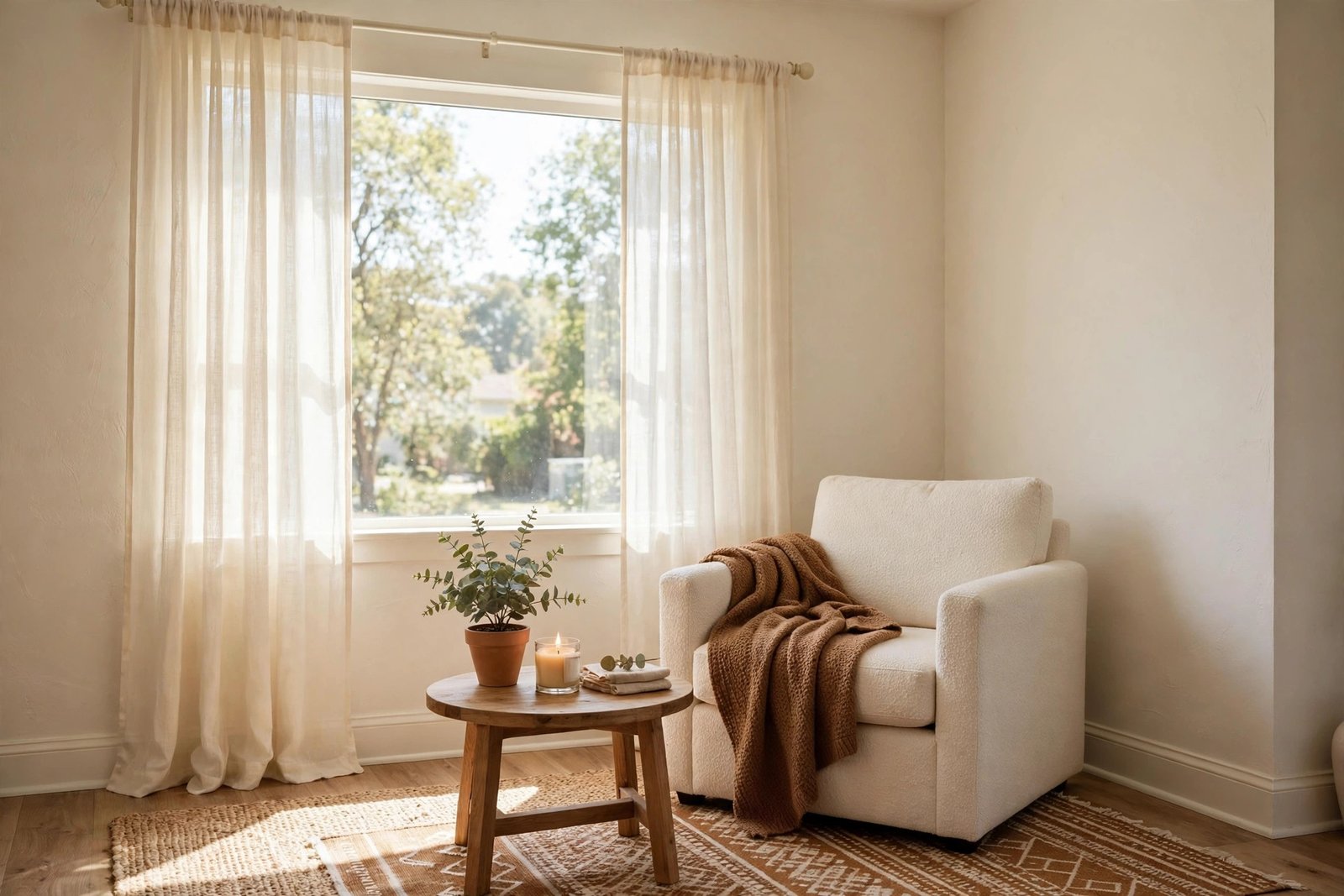
Windows are the second-largest surface in the room, and rental windows usually come with short, thin curtains or a bare blind. Longer curtains that reach the floor (or just above it) make ceilings feel higher and the room feel finished. Hang them from the existing rail or track where you can, a no-drill tension rod inside the window frame, or extendable rods that rest on adhesive brackets rated for the weight.
Position matters more than fabric. Where the fitting allows, mount the rod 10–15 cm above the frame and wider than the window on both sides, so the curtains stack back onto the wall and the full window of light shows during the day. Choose a warm neutral or one soft colour, washable, and lined if the room is cold — heavier curtains also soften echo in sparsely furnished rental rooms. The technique is borrowed from the same biggest-surfaces thinking behind our living room makeover on a $100 budget, and it costs a renter nothing in repairs.
Step 3: Wall Decor Without a Single New Hole
You have three good options, in order of safety. First, removable adhesive picture strips, used exactly as the packet directs: correct weight rating, clean wall, full curing time before hanging, and removal by pulling the tab straight down — not outwards — when you leave. Test one strip in a hidden spot first if your paint looks old or flaking, because weak paint, not the strip, is what usually fails.
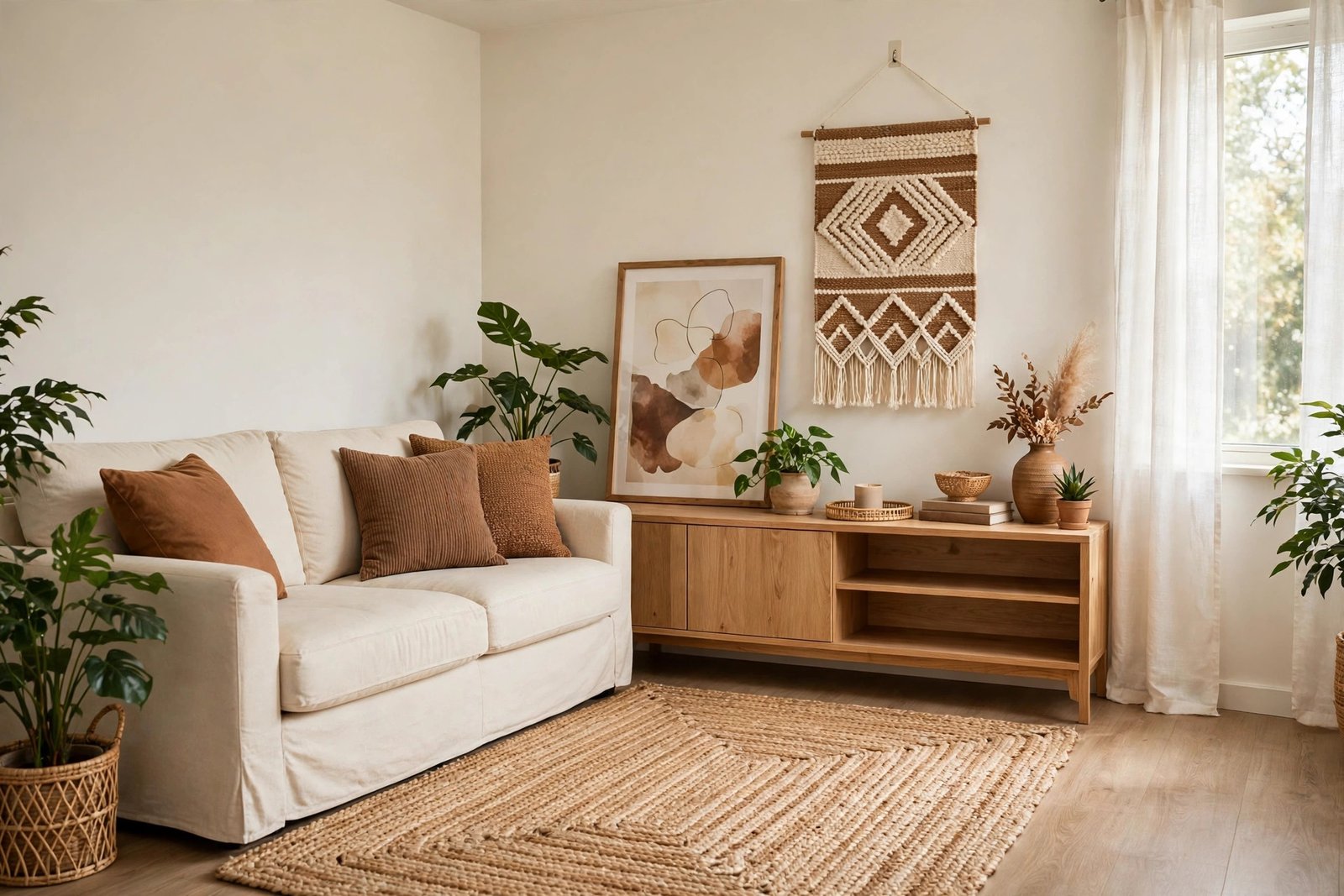
Second, lean instead of hang. A large framed print or mirror leaning on a sideboard, shelf, or even the floor against the wall looks deliberate and modern, and needs nothing at all from the wall. Third, use what already exists: many rentals have one or two old hooks or picture nails from previous tenants. A hook that is already there is a hole you are not making.
Build One Grouped Display
Whichever method you choose, group your pieces into one arrangement above the sofa rather than scattering small frames around the room. One confident group reads as decorating; single small frames dotted about read as making do. Keep gaps even at 5–8 cm, and plan the layout on the floor first.
Step 4: Replace the Ceiling Light With Your Own Lamps
Rental ceiling lights are famously harsh, and you usually cannot change the fitting. You can simply stop using it. A floor lamp behind or beside the sofa plus a table lamp on a side table give warm, low light exactly where you sit, and both unplug and leave with you. Warm white bulbs (2700K–3000K) are essential; the cold bulb in the ceiling fitting is half the reason the room feels unwelcoming.
If the ceiling shade itself is ugly but removable, keep it safely stored and fit your own inexpensive shade — many pendants accept a simple drum shade without any wiring. Photograph the original fitting before and after, and refit the original before you move.
Step 5: Textiles and Plants — the Portable Layer
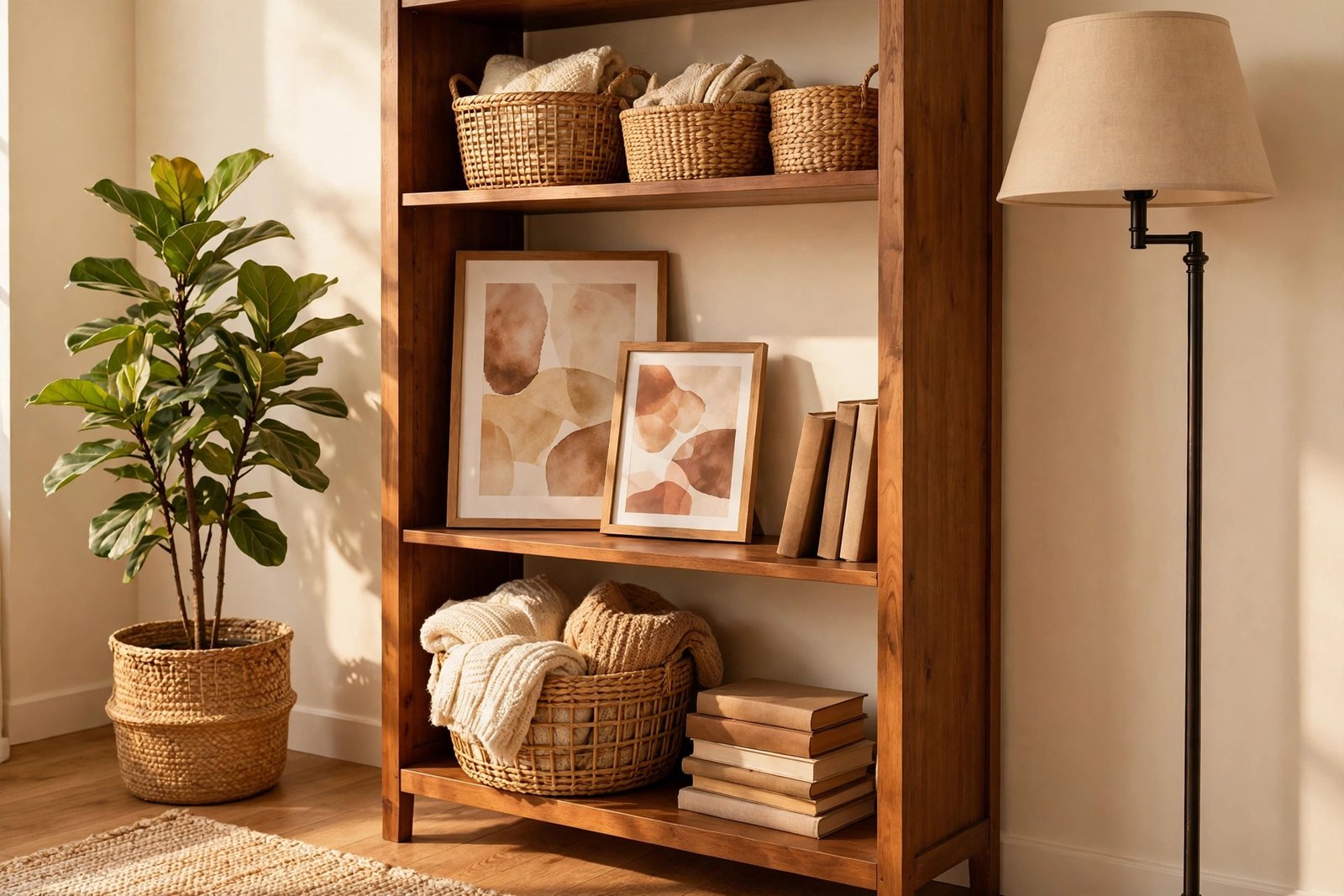
Now add the layer that makes any room feel lived in: cushion covers in one calm colour family, a throw over the sofa arm, and two plants at different heights — one on the floor, one on a shelf or table. None of it touches the building. All of it is yours. This is also where a tired room benefits from the free editing in our guide to refreshing a tired room without buying new furniture: fewer, larger soft furnishings look richer than many small ones, in a rental most of all.
For more step-by-step plans that keep deposits and budgets intact, browse our budget room makeovers — most of them were written with exactly these limits in mind.
Mistakes to Avoid
- Assuming adhesive strips are always safe. On weak, old, or freshly painted walls the paint can lift. Test in a hidden area, respect the weight limit, and remove by the tab, slowly.
- Buying a small rug to save money. An undersized rug underlines that the floor is borrowed. One large flat-weave costs less than most people expect and changes more than any other item.
- Drilling “just one” shelf. One unfilled hole can cost more from a deposit than the shelf was worth. Lean, stack, and use furniture-height storage instead.
- Storing the landlord’s items off-site. Keep original curtains, shades, and fittings safely in the home and labelled, so everything can be reinstated exactly on moving day.
- Painting a “feature wall” and planning to repaint it later. Colour matching the original paint is harder than it looks, and many agreements ban painting outright, whatever you promise at the end.
- Skipping the before photos. Without dated photos of existing marks and wear, pre-existing damage can be blamed on your makeover.
Frequently Asked Questions
How can I hang pictures in a rental without damaging the walls?
Use removable adhesive strips within their weight rating on sound paint, test one in a hidden spot first, and remove them by pulling the tab straight down. Safer still, lean large frames on furniture or use any hooks that already exist in the walls.
What is the best first purchase for a rental living room?
The largest rug your seating area can take. It covers flooring you cannot change, defines the sitting zone, softens echo, and rolls up to leave with you. It changes more of the room than any other single item.
Can I change the curtains if the landlord provided some?
Usually yes, if you keep the originals safe and refit them when you leave. Store them clean, folded, and labelled, and use the existing rail, track, or a no-drill tension rod for yours so no new fittings are added.
Will a landlord mind lamps and plants?
Plug-in lamps and potted plants are normal household items and need no permission in most tenancies. Just protect floors and windowsills from water marks with trays or mats under pots — water damage is a real deposit issue, unlike decor choices.
A rental living room is a set of limits, not a life sentence. Cover the floor, dress the window, lean your art, light it warmly, and layer in textiles that belong to you. When the tenancy ends, the room hands back its deposit — and every good piece walks out with you to the next home.