Some small rooms are not just small. They are dark at midday, heavy in the corners, and shaped like the inside of a box — four flat walls, one small window, and a ceiling light doing its lonely best. People blame the size, but size is rarely the real problem. A small room with good light feels cosy. A small room with bad light feels like a cupboard, whatever its measurements.
The fix is not a renovation. It is a diagnosis first — why is this room dark, and why does it feel boxy — then three decor tools that answer almost every cause: the right colours, light in layers, and mirrors placed where they can borrow daylight. The same tools sit behind the fixes for a small living room that feels cramped; this guide generalises them to any small dark room.
Quick Answer
To fix a small room that is dark and boxy, work on light in three ways. First, colour: paint the walls a warm pale colour with a high light-reflecting value, keep the ceiling plain white, and put the biggest textiles in the same pale family so the room stops absorbing light. Second, light in layers: a soft ceiling light, a lamp at the height where people sit, and one lamp in the darkest corner, all in the same warm tone. Third, mirrors and shine: one large mirror on the wall opposite or beside the window, plus a few glass or glossy touches to scatter light. Finally, soften the box: hang curtains high and wide, put the tallest item in a corner, and let one long rug lead the eye across the floor.
First, Diagnose the Darkness: Four Common Causes
Dark rooms are not all dark for the same reason, and the reason decides the fix. Stand in the room at midday with the lights off and check four things.
1. The window faces the wrong way — or is too deep
A north-facing window (south-facing in the southern hemisphere) never gets direct sun, so the room lives on flat, cool daylight. A small window set deep in a thick wall, or shaded by a building or a tree, has the same effect. You cannot move the window, so these rooms need the full treatment: paler colours than you think, warmer bulbs than you think, and a mirror to catch what light there is. This room will always be a lamplight room in the evening — design it to be a good one.
2. The surfaces are eating the light
Daylight only helps a room if the surfaces bounce it around. Dark walls, a dark floor covering, heavy curtains, and dark furniture can absorb most of the light that enters, so the window works hard and the room stays gloomy. This is the easiest darkness to fix: it is a colour problem, not a light problem.
3. The window is dressed like a lid
Thick curtains covering a third of the glass, a blind that never fully opens, a high shelf or tall plant parked in front of the window — all of these cut the room’s light supply. In many dark rooms, rehanging curtains so the fabric stacks on the wall instead of the glass gains more light than any lamp.
4. The light you have is in the wrong place
One ceiling bulb lights the middle of the ceiling and the tops of heads. The corners, where the eye judges a room’s true size, stay dark, so the room reads as a lit centre in a dark box. Shadows collect exactly where the room should open up. The fix costs almost nothing: lamp positions, not new fittings.
Colour Fixes: Choose Paint That Works for Its Living
For a dark room, paint is not decoration; it is equipment. Choose wall colours with a high light reflectance value — printed as LRV on many colour cards, and anything above about 60 bounces light generously. In plain terms: warm whites, pale creams, and the palest versions of colours you like. A “soft sage” that looks gentle on the card can turn swampy in a north-facing room; go two shades paler than your instinct.
Keep the ceiling plain white, always — it is the room’s second light source, bouncing light back down. Then continue the pale family into the big soft items — curtains, duvet or throw, the largest rug — because a pale room with one huge dark sofa still has a dark heart. The sofa can stay, but dress it with a pale throw and light cushions.
Warm versus cool matters too. Cool blue-greys steal warmth from already cool daylight and make a dim room feel damp. Warm whites and creams correct the light itself.
Light in Layers: Three Levels, One Warm Tone
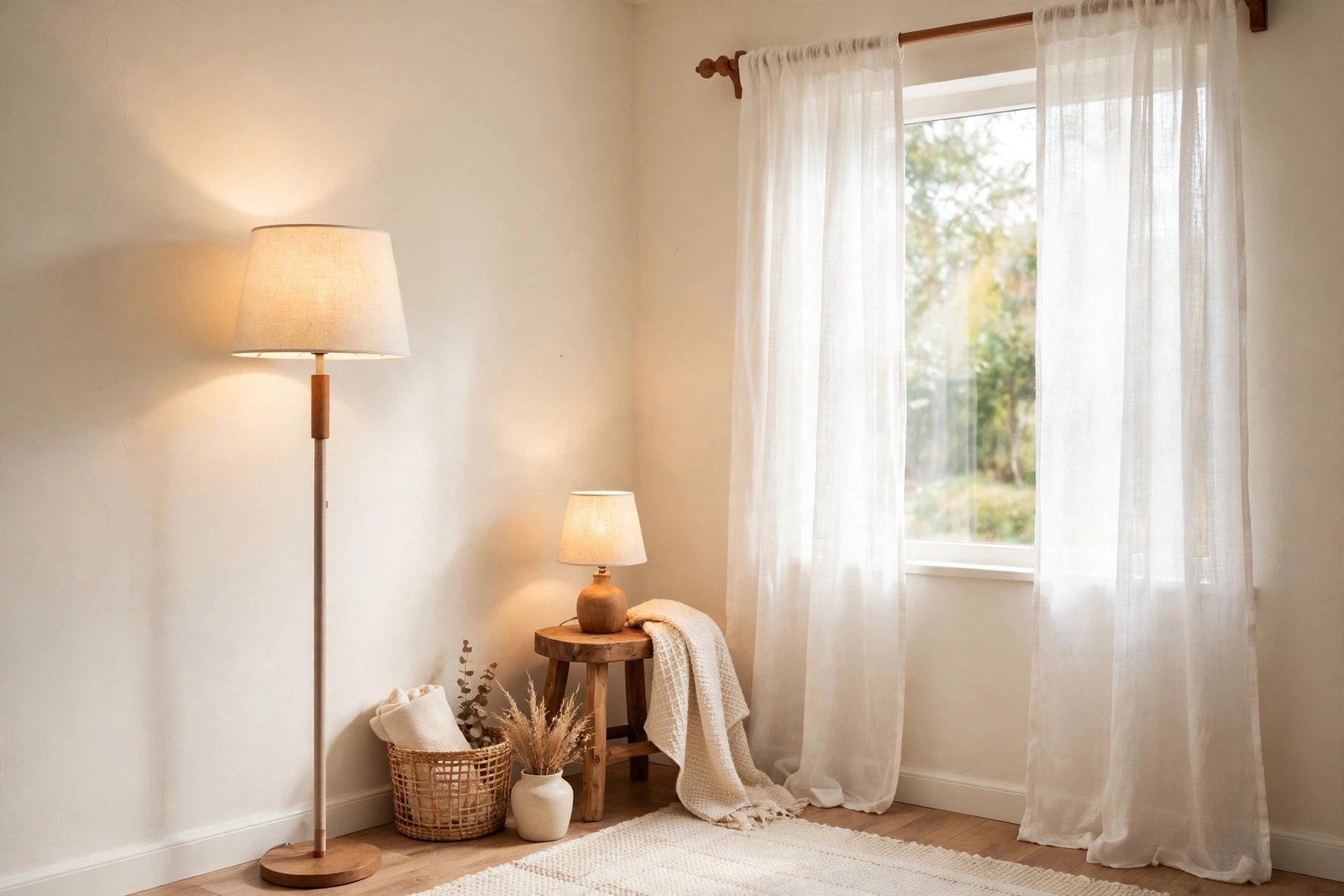
Aim for three levels. At the top, a ceiling light with a shade that spreads light sideways as well as down — an opal dome or a fabric drum — instead of a bare bulb. In the middle, a lamp at sitting height: beside the sofa, the desk, or the bed. At the low level, one lamp in the darkest corner, because lighting the corner erases the box.
Keep every bulb in the room at the same warm tone. Mixed bulbs — one cold white, one yellow — make a room look like two rooms arguing. In a room with little daylight, warm bulbs also fight the grey cast that makes everything look tired. If the room is a home office, put the task light on the desk, close to the work, rather than brightening the whole room to desk level.
Mirrors and Shine: Borrowed Light
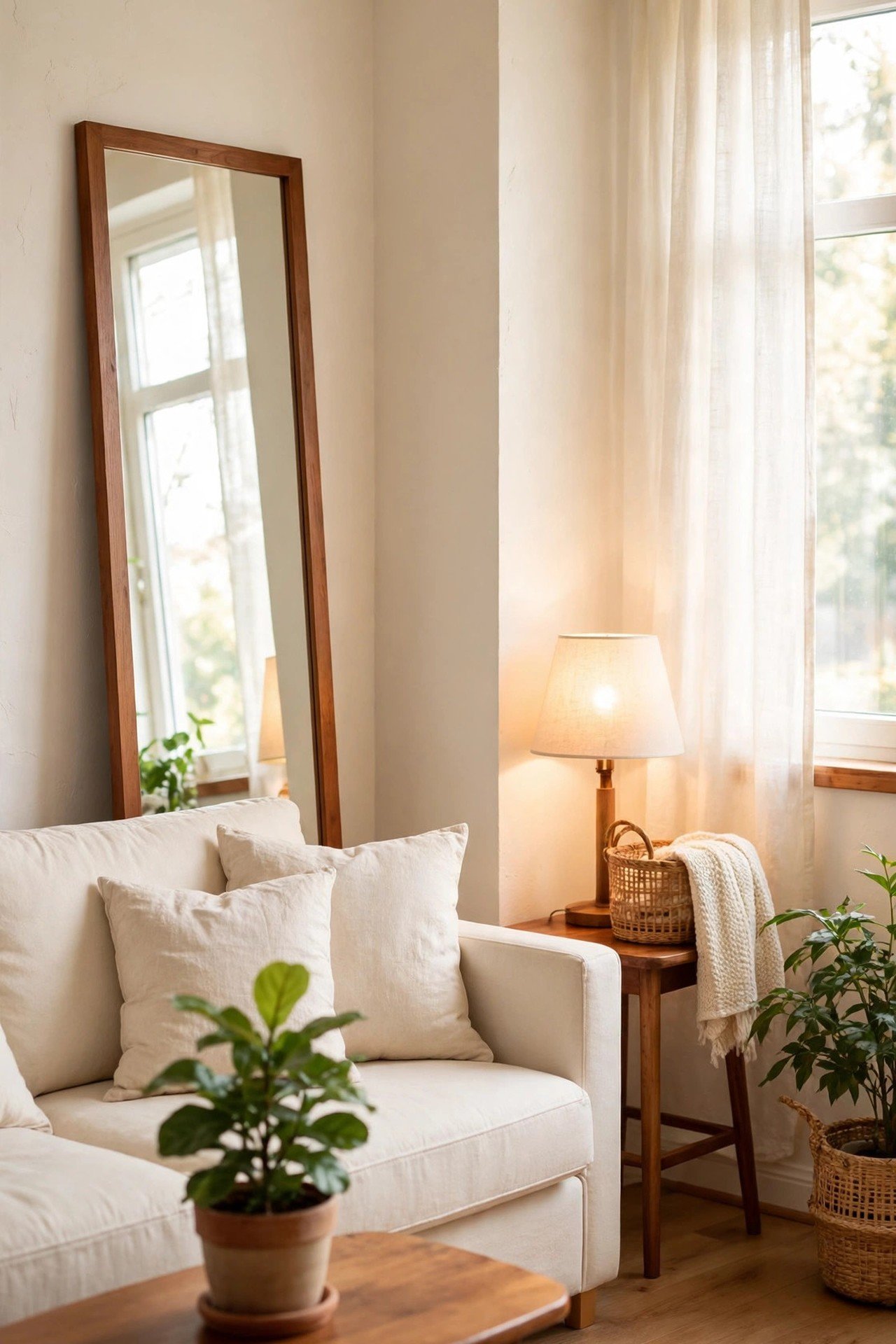
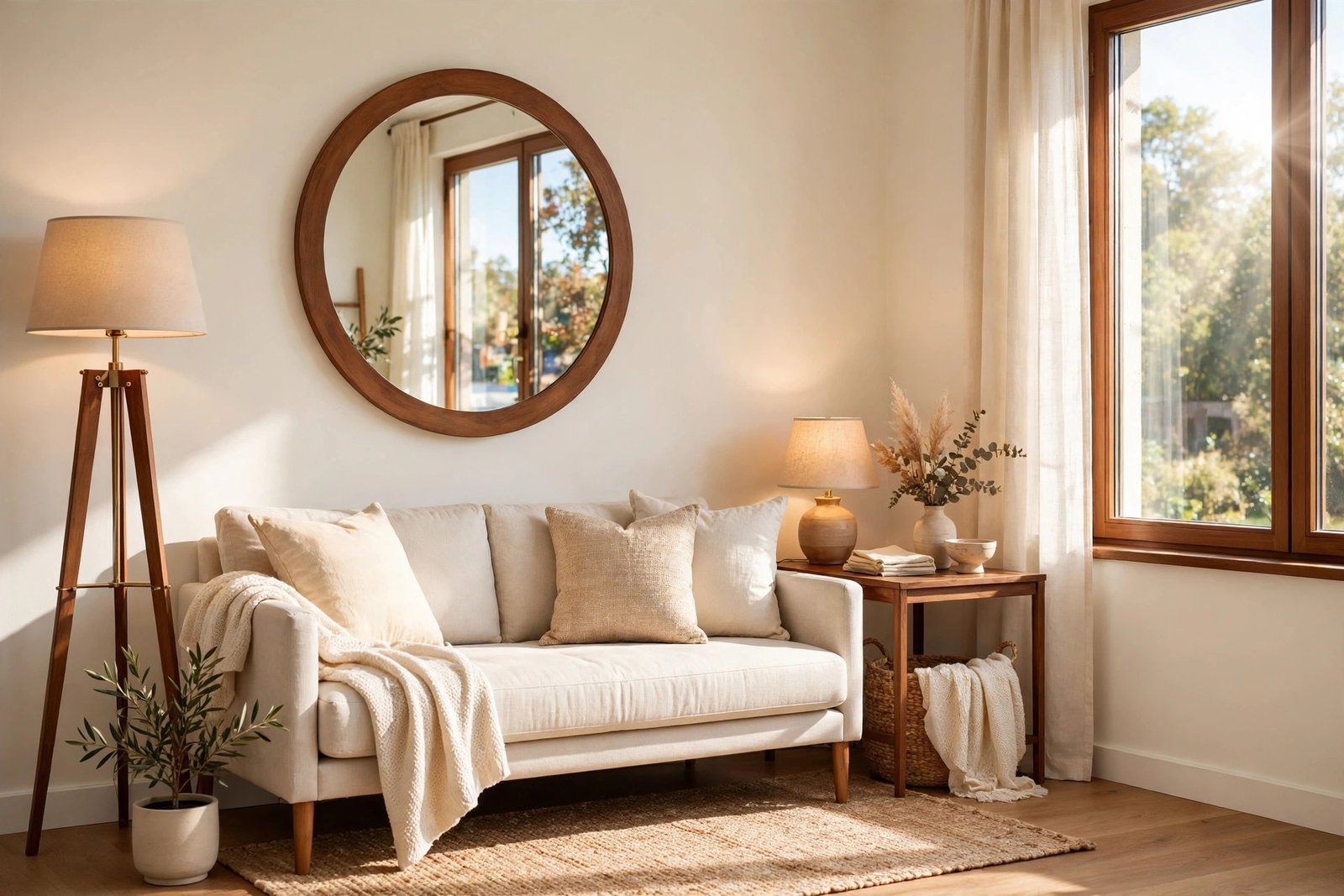
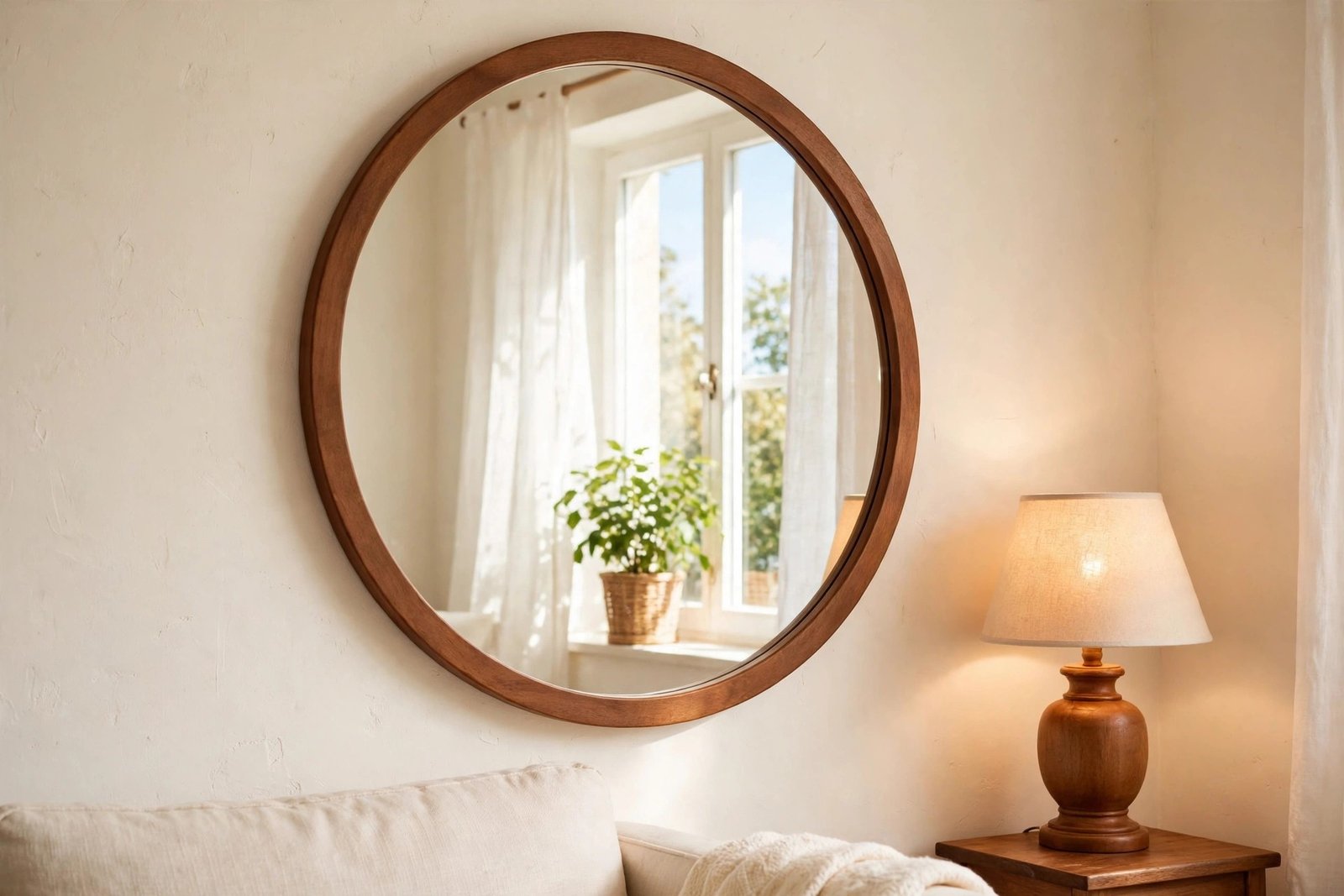
A mirror in a dark room is not an ornament; it is a second window. Place the largest mirror you can on the wall opposite the window, and it will throw daylight deep into the room and show a bright view. If opposite is impossible, the wall beside the window catches light at an angle and spreads it sideways. Two rules matter: big beats small (tiny mirrors reflect mostly wall), and the mirror should reflect something worth seeing — the window, a lamp, the lightest wall — not a dark corner.
Beyond the mirror, add shine in small doses: a glass-topped table, metal lamp bases, a glazed vase, frames with glass rather than matte mounts. Each catches a point of light the eye registers as brightness. None of it needs to be new — most homes own pieces that can move rooms. Choosing where each goes is a measuring job, which is why it pairs well with the rules for choosing furniture size for a small room.
Break the Box: Shape Fixes That Cost Nothing
Darkness is half the complaint; the box shape is the other half. Soften it in three ways. First, push the tallest items — bookcase, wardrobe, tall plant — into corners rather than mid-wall, so the walls read as longer unbroken lines. Second, hang curtains from near the ceiling and past the window’s sides: the tall vertical lines lift the ceiling and hide where the window really ends. Third, lead the eye across the floor with one long rug or runner pointing toward the window, instead of a small centred rug. Long lines make long rooms.
Finish with the door: painted the same pale colour as the walls, it disappears, and the wall reads as one surface. A dark door is a full stop in the middle of the sentence.
A Sample Small Budget for a Dark, Boxy Room
- Paint: $25–$45 — one tin of warm pale paint for the walls; plain white for the ceiling if it is grey or yellowed.
- Bulbs and shades: $10–$20 — matching warm bulbs everywhere, one opal shade to replace a bare bulb.
- Corner lamp: $0–$25 — move a lamp from another room first; buy simple and second-hand if needed.
- Mirror: $0–$35 — the biggest plain mirror the budget allows, or relocate the one you own.
- Textile lightening: $10–$20 — one pale throw for a dark sofa or bed, cushion covers in the wall’s family.
Room by room, the whole small-space series is collected under small-space decor ideas that work.
Mistakes to Avoid
- Testing paint under the shop’s lights or the old bulb. Paint a large patch, change the bulbs to the warm tone you will live with, and judge it at night as well as midday before committing.
- One small mirror and calling it done. A hand-sized mirror reflects a hand-sized patch. In a dark room the mirror is a light tool — size it like one.
- Cold white bulbs to “brighten” the room. They brighten like a dentist’s office and make pale walls look blue. Warm light at three levels beats harsh light at one.
- Keeping curtains over the glass. However pretty the fabric, if it covers a third of the window by day, it is a light tax the room cannot afford.
- A dark rug in the middle of a pale room. It anchors the eye to the floor centre and shrinks the room around it. Pale and large, or none.
- Lighting only the centre. Dark corners are the box. One small lamp in the worst corner does more for the room’s size than a stronger ceiling light.
Frequently Asked Questions
What is the best wall colour for a small dark room?
A warm white or pale cream with a high light reflectance value — above roughly 60 LRV. Warm tones correct cool, grey daylight; high reflectance bounces what light exists around the room. Avoid blue-greys and any colour whose palest version still looks strong on the card.
Will mirrors really help if the room gets very little light?
Yes, within limits. A mirror cannot create light, but it can move the light you have into corners that currently get none, and shows the eye a bright view instead of a wall. Place one large mirror opposite or beside the window, and pair it with layered lamps — the mirror then doubles the lamplight in the evening too.
Should I use daylight bulbs in a room with no sun?
Usually no. Daylight bulbs imitate noon sun and can feel cold and clinical in a home. Warm bulbs at three heights make a dim room feel lit by evening sun instead. The one exception is a desk for colour-sensitive work, where one task bulb can be cooler.
The room is rented and I cannot paint. What works?
Almost everything except the wall colour: hang curtains high and wide in a pale fabric, add the three light layers with plug-in lamps, put a large mirror opposite the window, and dress dark furniture with pale throws and cushions. Together they recover most of the light painted walls would have given you.