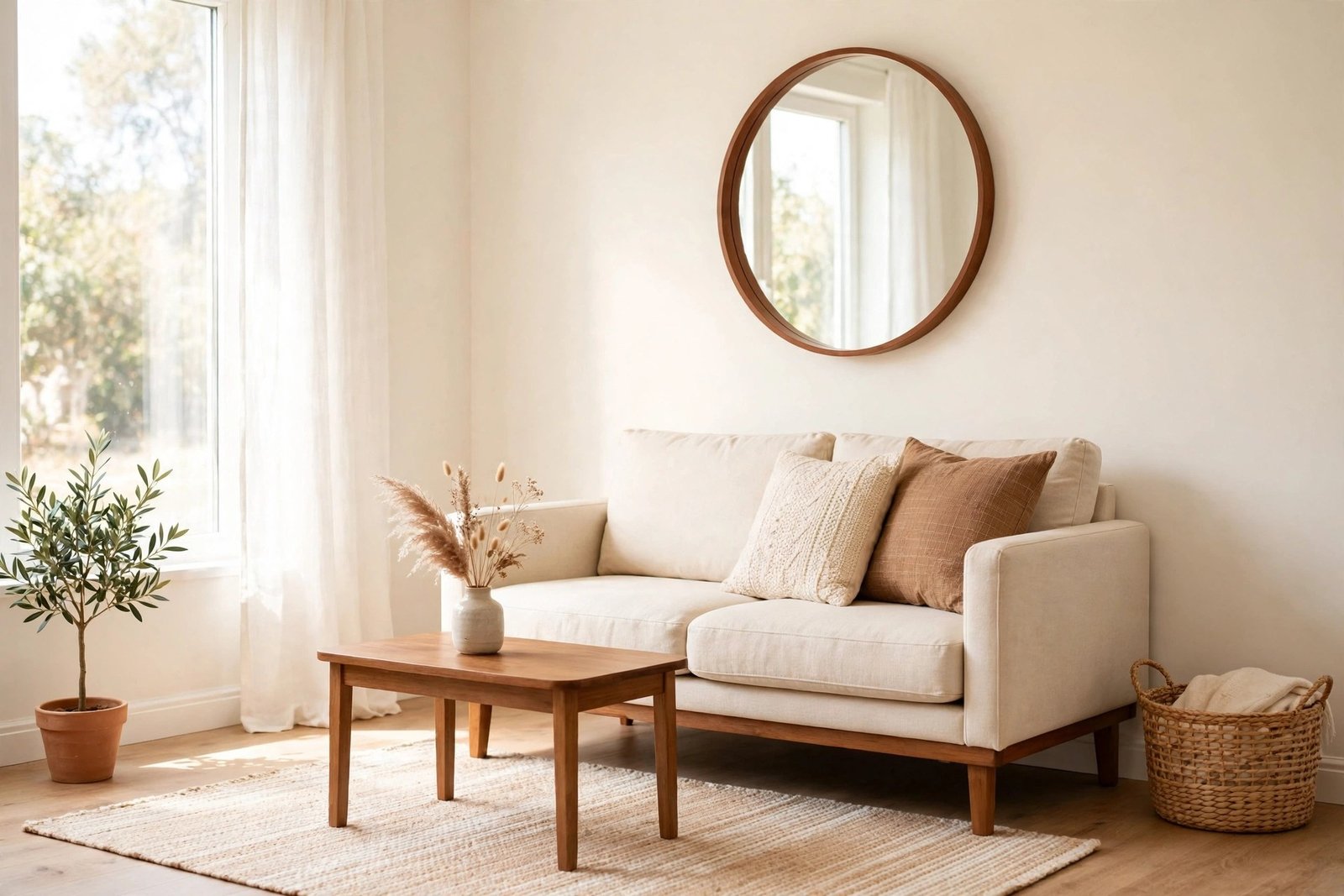
A small living room can measure perfectly reasonably on paper and still feel cramped the moment you sit down in it. Too much clutter gets blamed first, but many cramped-feeling rooms are actually tidy. Their problem is visual: the furniture is the wrong scale, the view across the room is blocked, and the colours are chopped into so many pieces that the eye cannot find one calm surface to rest on. The eye reads those things as “small”, whatever the tape measure says.
That is good news, because visual problems have visual fixes, and most of them are free or cheap. This guide works through the five things that make a small living room feel bigger — furniture scale, open sight lines, colour continuity, visible floor and wall, and light — without a single decluttering routine and without replacing the room.
Quick Answer
To make a small living room feel bigger, decorate for the eye, not the floor plan. Choose fewer pieces at the correct scale — one right-sized sofa beats a sofa plus two bulky armchairs. Keep the sight line from the doorway to the window open and low. Run one continuous light colour family across the walls, curtains, and the largest textiles so the room reads as one surface instead of many fragments. Pick furniture with legs so the floor shows underneath, hang curtains high and wide so the window looks taller, and place one large mirror where it catches daylight. A big pale rug that the front legs of the seating sit on makes the floor read as one generous piece. Most of this costs nothing but rearranging and re-hanging; $40–$80 covers a mirror and curtain changes if you need them.
First, Understand What “Cramped” Actually Means
Stand in your living room doorway and notice where your eye stops. In a room that feels big, your eye travels: across the floor, up the far wall, out of the window. In a cramped room, the eye keeps crashing — into the back of a tall chair, a dark bookcase in the middle of the view, a strongly patterned sofa, curtains closed over half the window. Every crash tells the brain the space ends there. So the method below is about removing the crashes. Scale, sight lines, and colour are not decorating tastes; they are the mechanics of how large a room feels.
Fix 1: Get the Scale Right — Fewer Pieces, Correctly Sized
The most common scale error in small rooms is a bulky three-piece suite: a deep sofa and two wide armchairs designed for a much larger house. Together they fill the floor and leave only narrow gaps, and narrow gaps are what cramped actually looks like. Think instead in fewer, slimmer pieces: one sofa with narrow arms and a low back, plus one light chair that moves easily. If replacing furniture is not in the budget, removing just one bulky chair to another room often opens the room more than any purchase could.
Low is the second scale rule. Furniture with low backs — sofas, chairs, and storage that sit below window height — keeps the upper half of the room open, and the upper half is what makes a room feel airy. One tall piece is fine at the edge of the room; tall pieces in the middle of the view are eye-crashes. And check your walking lines: each should be a comfortable stride wide, with no squeezing sideways past furniture. If a line is too tight, the piece beside it is too big or in the wrong place.
Fix 2: Open the Sight Lines From Door to Window
The longest view in the room — usually doorway to window — should be as clear and as low as possible. Arrange seating so nothing tall stands in that corridor of vision: the sofa back facing the door is sometimes unavoidable, but choose the lowest-backed arrangement you can, and keep plants, lamps, and shelves out of the direct line.
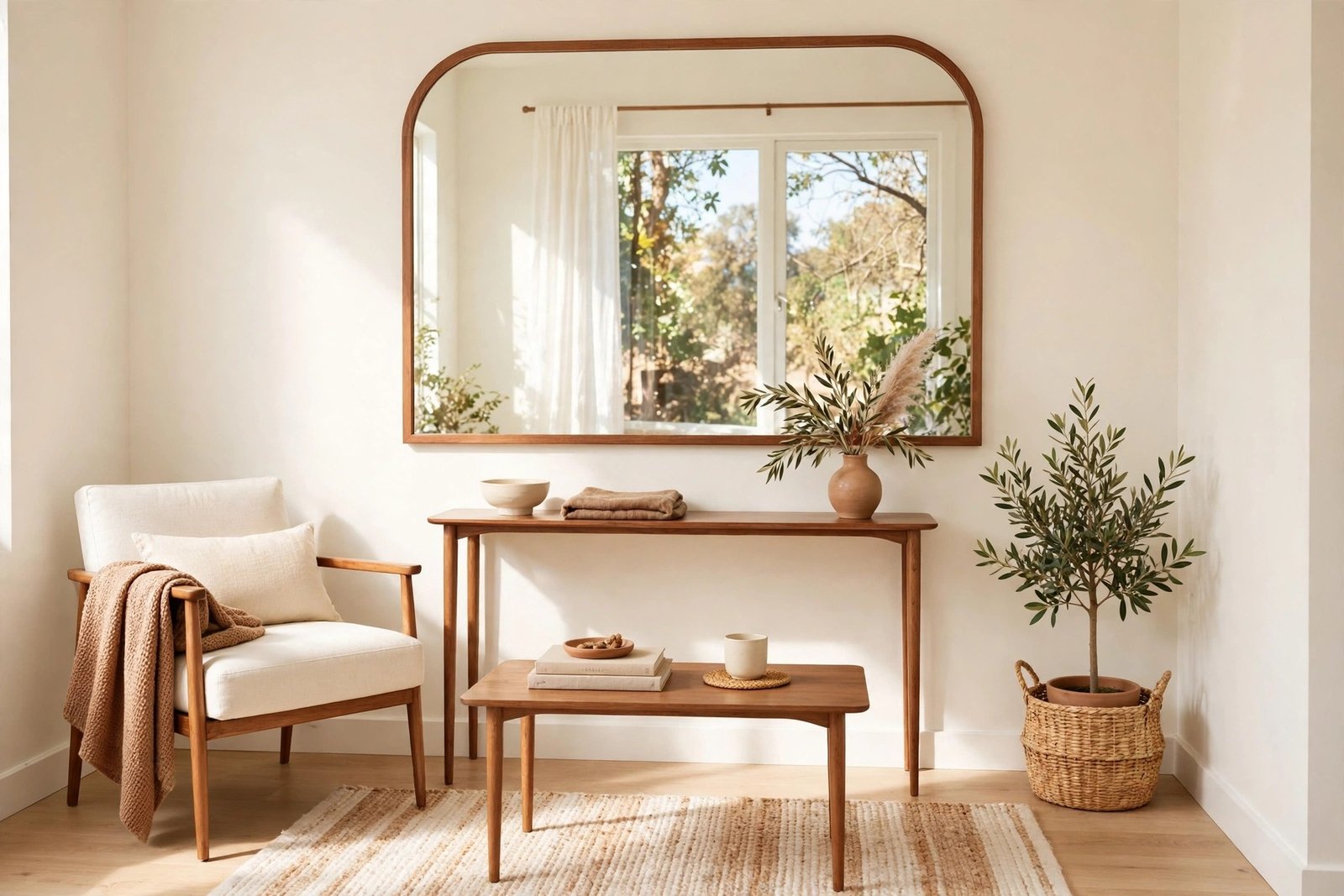
Surfaces you can see through or under help here. A coffee table with an open base or a glass top lets the eye cross the middle of the room instead of stopping at a solid block; a side table with legs does the same at the edges. If a heavy, solid, dark table sits in the centre, swapping it with a lighter piece from another room is one of the highest-value free moves in a small room.
Fix 3: Colour Continuity — One Surface, Not Twenty Fragments
Contrast chops a room into pieces, and pieces feel small. A dark sofa, white walls, patterned curtains, a red rug, and black shelves ask the eye to process five separate blocks in a few square metres. The fix is continuity: choose one light colour family and run it across the biggest surfaces — walls, curtains, sofa throw and cushion covers, and the rug — so the room reads as one calm, connected surface.
The rug does heavy work here. A large, pale rug that extends under the front legs of the sofa and chairs joins the seating into one island and makes the floor read as its full size. A small rug floating in the middle does the opposite: it shows the eye exactly how little floor there is. If you buy one thing for a cramped room, a bigger, plainer rug is usually it.
Keep strong colour and pattern to one item — a single cushion, one picture — where it looks chosen rather than scattered. This continuity approach is also what makes the zones trick work in a studio apartment with no zones, where one shared background holds separate areas together.
Fix 4: Show the Floor and Use the Full Height of the Walls
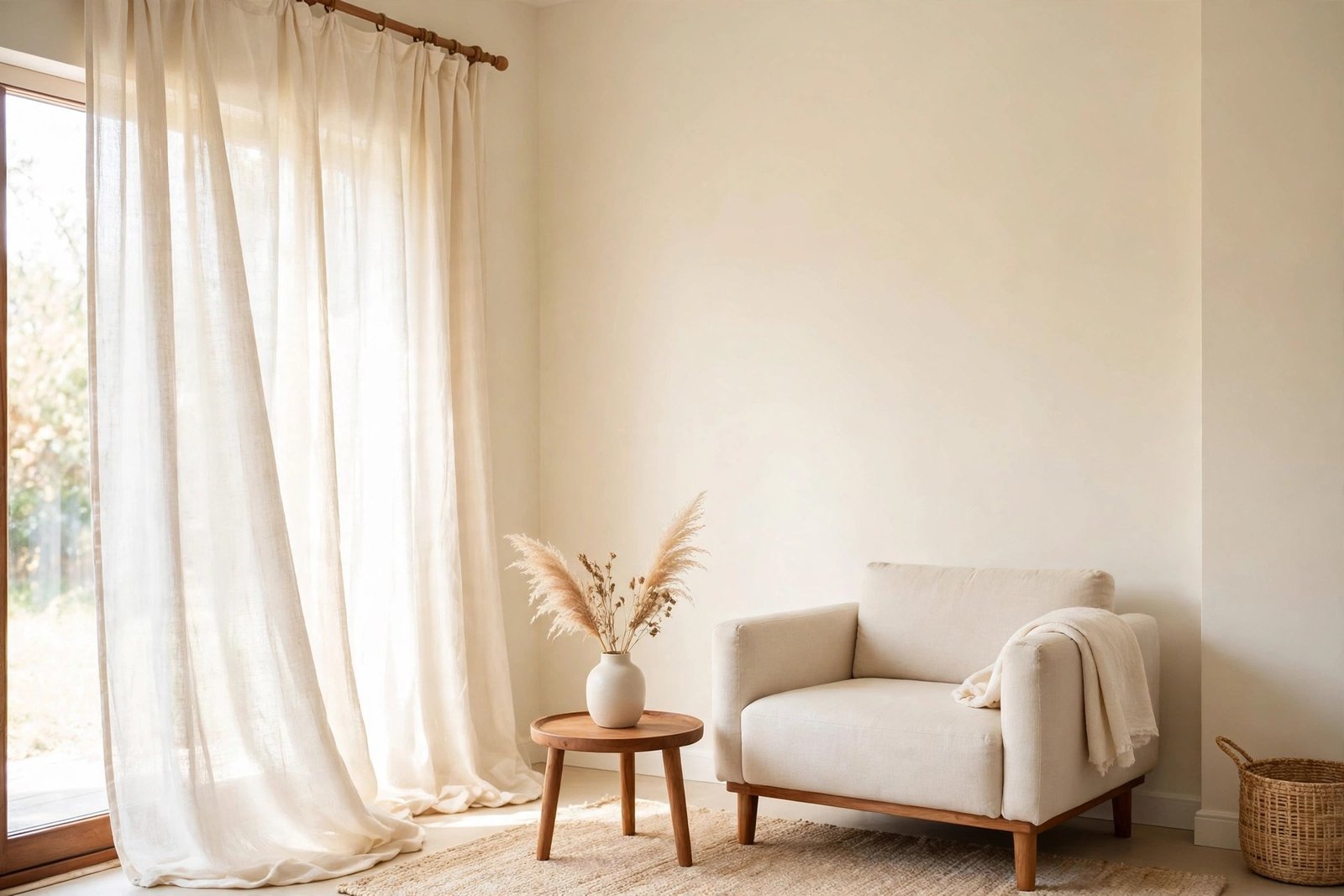
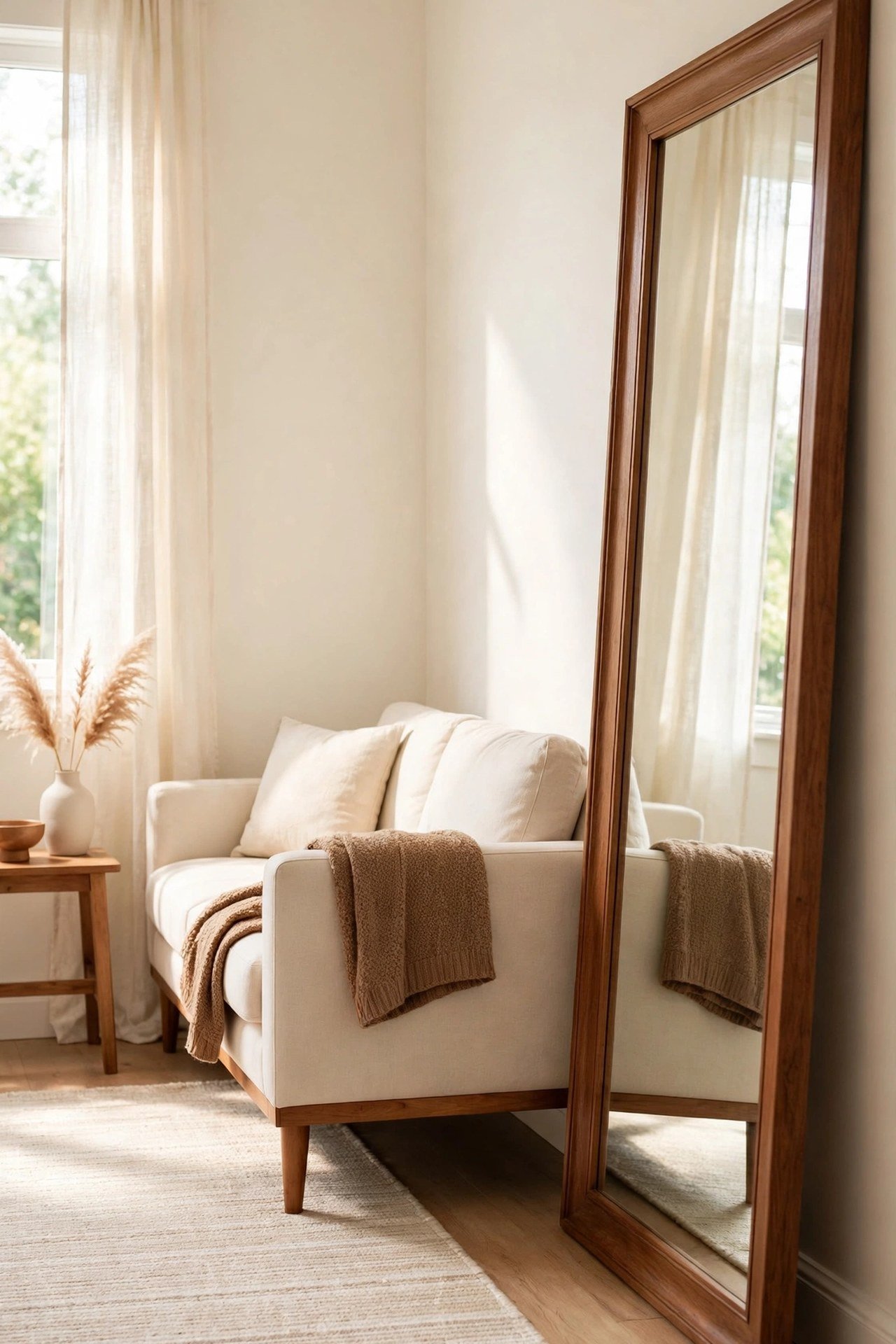
Rooms feel bigger when you can see the edges of the floor. Furniture with legs — sofas, cabinets, and tables raised a hand’s height off the ground — lets light and sight pass underneath, and that visible strip of floor convinces the eye the room is larger. If your sofa sits solidly on the floor, pull it a few centimetres from the wall instead: the shadow line behind it adds surprising depth.
Walls work the same way at the top. Hang curtains as high and as wide as the rod allows — above the window frame and beyond its sides — so the window appears larger and the fabric covers wall, not glass, when open. daylight is the cheapest space-expander there is, and curtains covering a third of the window are quietly stealing it. Art should leave breathing room: one grouped arrangement with empty wall around it looks calmer and bigger than many small frames scattered across every wall.
Fix 5: Light and One Good Mirror
A single ceiling light flattens a small room and pools shadow in the corners, and shadowed corners close the room in. Put a lamp in the far corner from the door and the eye is pulled to the room’s full depth; add light at seated height near the sofa and the room gains a second, wider layer.
Then the mirror: one large mirror placed opposite or beside the window doubles the daylight and hands the room a view it does not have. Size matters more than decoration — a big plain mirror outperforms three small ones, hung at a height that reflects the room and window, not the ceiling. This is also one of the strongest tools in a rental-friendly living room makeover, because it needs one hook and leaves almost no trace.
A Sample Small Budget for a Cramped Room
- Rearranging and re-hanging: $0 — one chair moved out, curtains re-hung high and wide, sight line cleared.
- Mirror: $20–$35 — the largest plain mirror the budget allows, hung to catch the window light.
- Rug: $0–$40 — swap in a larger, paler rug from another room, or buy plain and simple if the current one is small and dark.
- Textile continuity: $10–$15 — one throw or two cushion covers in the wall’s colour family to calm the sofa.
More ideas in this series, including dividing open-plan spaces and decorating narrow rooms, are collected under small-space decor ideas that work.
Mistakes to Avoid
- Filling every wall with small pictures. Visual confetti makes walls advance toward you. One calm group with space around it makes the same wall recede.
- A tiny rug in the middle of the floor. It measures the room’s smallness out loud. Go large and pale, with the seating’s front legs on it, or skip the rug entirely.
- Dark, heavy curtains over the window. They close the room’s main source of light and depth. Light fabric, hung wide so the glass is fully exposed by day, opens the room every morning.
- Matching bulky furniture bought as a suite. Suites are scaled for showrooms, not small rooms. Fewer, slimmer pieces in one colour family feel larger.
- One strong pattern repeated everywhere. Pattern on curtains, cushions, and rug at once shrinks the room into a decorated box. One patterned item is a choice; five are a cage.
- Ignoring the corners. Dark, empty corners shrink the usable room to its lit centre. A lamp or a tall plant in the far corner claims the whole space.
Frequently Asked Questions
Can a small living room ever suit a dark colour?
Yes, but it is an advanced move: one dark wall works when everything else is pale and continuous, and the light is good. All-over dark in a small room with weak daylight usually reads as smaller and heavier. If you love dark colours, use them in the one accent item rather than the surfaces.
How big should the rug actually be?
Big enough that at least the front legs of the sofa and chairs rest on it, with rug visible on all sides. As a rule of thumb, if the rug only fits under the coffee table, it is a mat, not a rug — and it is making the room look smaller, not cosier.
Should I remove a piece of furniture I like?
Try moving it to another room for a week before deciding anything permanent. Rooms often feel cramped because of one piece too many, and living with the gap tells you the truth faster than measuring does. If the room breathes without it, the piece was the problem.
Do mirrors really make a room feel bigger, or is that a myth?
They really work, for two plain reasons: they return daylight into the room, and they show the eye a reflected depth beyond the wall. The effect fails when the mirror is small, hung too high, or reflects a dark corner or the ceiling. Large, at eye level, reflecting the window or the lit part of the room — that is the version that works.
1 thought on “Small Living Room Looks Cramped: How to Decorate It So It Feels Bigger”