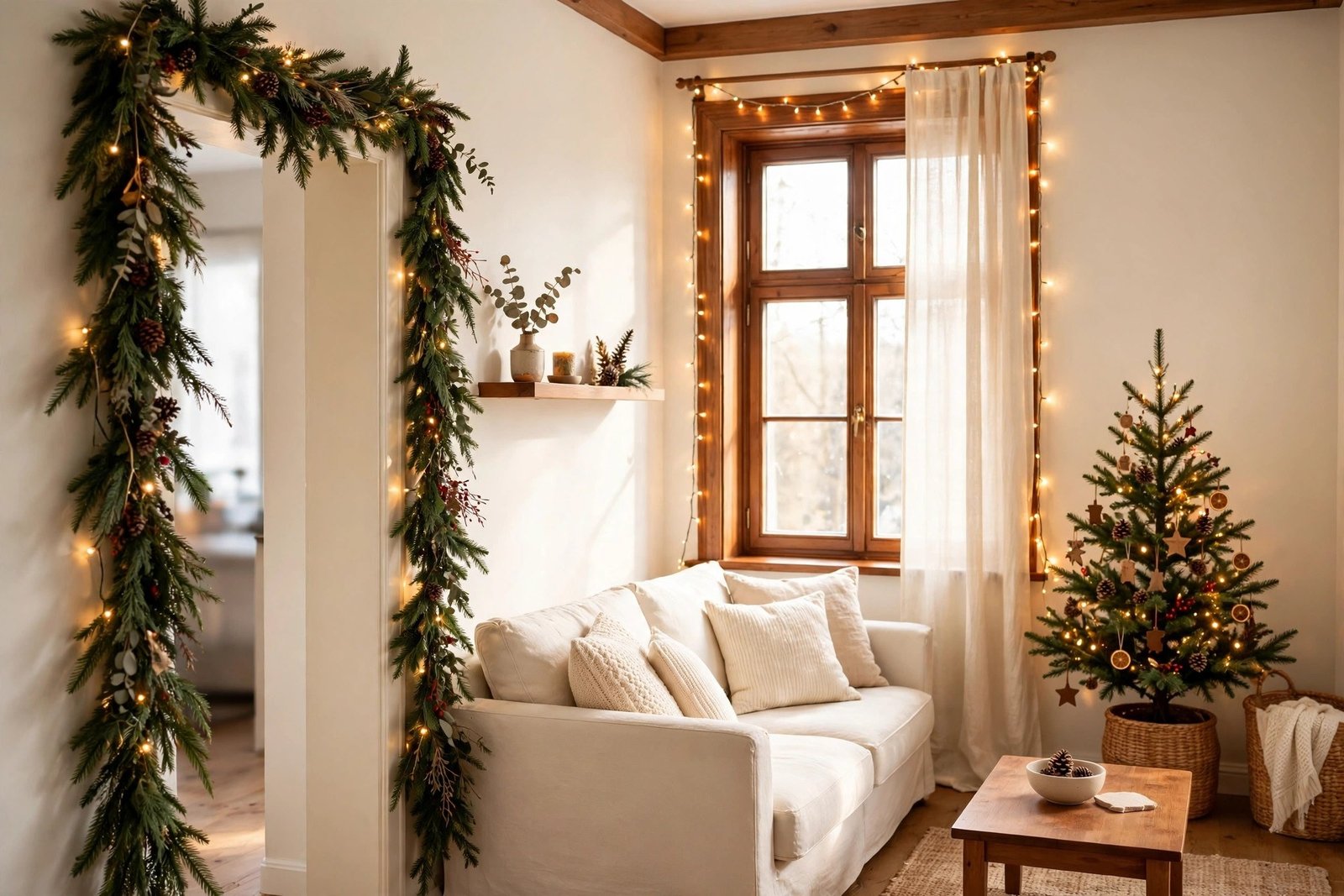
A celebration is coming, the guests are invited, and you are standing in a small living room wondering where everything is supposed to go. The decorations need a home, the food needs a surface, the guests need somewhere to put a drink — and in a small home, every one of those things is fighting for the same coffee table.
The usual result is a room that looks decorated for about ten minutes and then feels like a storage unit with people in it. The fix is not fewer decorations. It is a zoning system: celebrate upward instead of outward, concentrate the festive pieces in one zone, choose decorations that flatten away, and keep the surfaces your guests actually use completely clear. This guide walks through that system step by step.
Quick Answer
Decorate a small home for a holiday by working in zones, not across the whole room. Pick one celebration zone — usually the wall and corner guests face when they enter — and put most of the decor there. Move the rest of the decorating upward: door frames, window frames, shelves and wall space above head height, where decorations are seen but never in the way. Choose pieces that fold, roll or flatten for storage, keep every guest-flow surface (coffee table, entryway, serving spots) functional, and finish with a fifteen-minute reset routine so the room is normal again the same night.
Why Small Homes Feel Overwhelmed at Celebration Time
In a large home, holiday decor spreads out and each piece gets breathing room. In a small home, the same number of pieces lands on the same few surfaces that daily life already uses. The coffee table holds decorations and drinks. The entryway holds a festive display and everyone’s shoes and bags. The dining table holds a centrepiece and the meal. Nothing is wrong with the decor itself — the problem is that decoration and function are competing for identical space.
That is why the answer is zoning. The same thinking that makes a small living room feel bigger all year — clear surfaces, one focal point, vertical emphasis — matters even more during a celebration, when the room also has to hold extra people.
Step 1: Choose One Celebration Zone
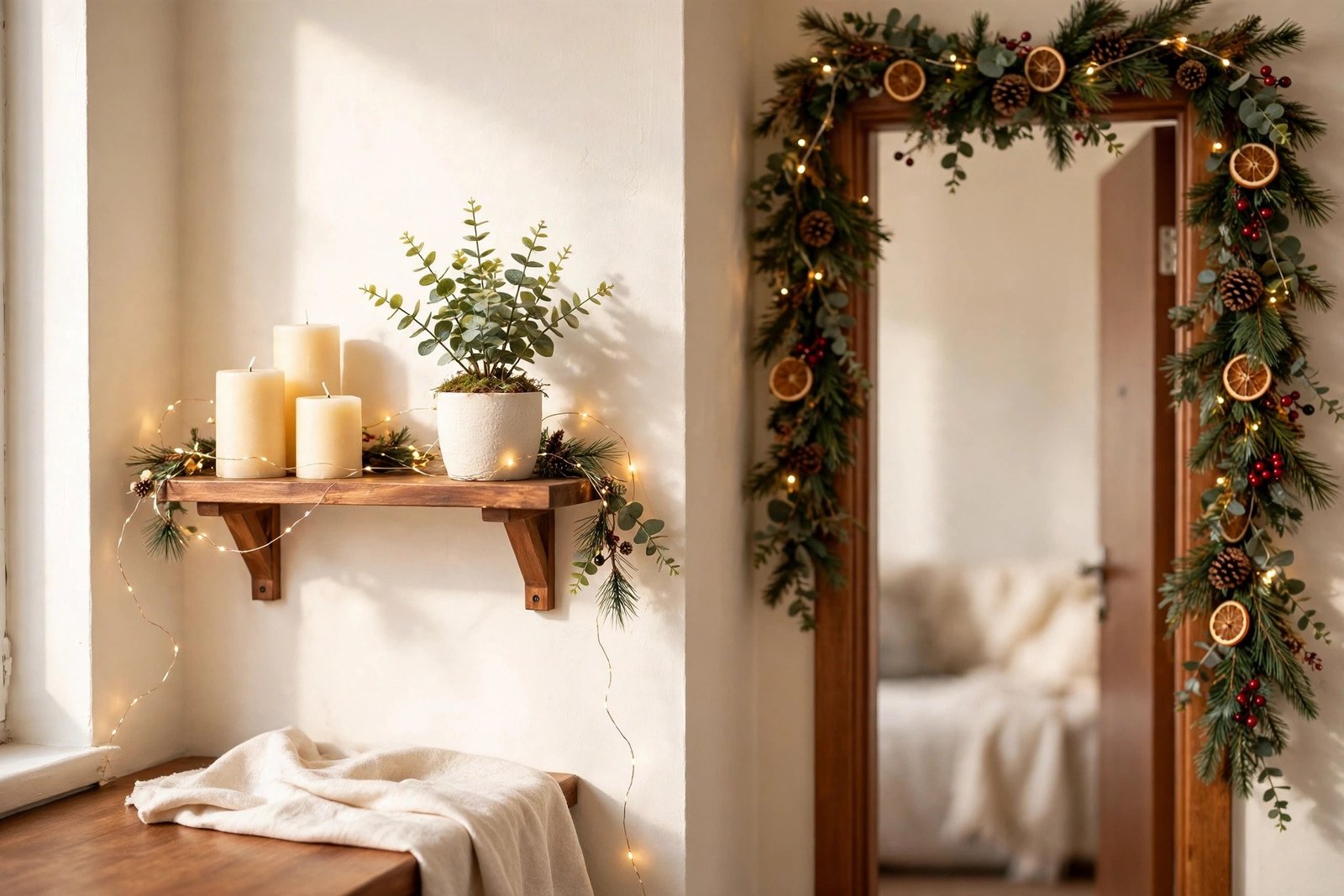
Stand at the door of the room where guests will gather and look at what they will see first. That wall, corner or fireplace area is your celebration zone. Roughly 70 to 80 percent of your festive decor goes there, gathered into one generous, layered display instead of spread thinly across the room.
A concentrated zone does three jobs at once. It looks more impressive than the same pieces dotted around, because grouped decorations read as one styled arrangement. It gives guests a clear “the celebration is here” signal. And it leaves the rest of the room calm and usable, which is what makes a small space feel welcoming instead of chaotic.
Typical celebration zones in small homes: the wall behind the sofa, one corner with a small tree or branch arrangement, the top of a bookcase or sideboard, or the wall around the main window. Pick the one guests face on entry — that is where the eyes go anyway.
Step 2: Decorate Height, Not Surfaces
Once the zone is full, every remaining decoration goes up, not out. Vertical space is the small home’s free real estate: it is highly visible and completely unused by daily life.
- Door frames: a garland, a string of lights, or hanging ornaments over the main doorway frames the room like a picture and takes zero surface space.
- Windows: decorations on the glass or frame — hanging stars, a wreath on a suction hook, lights around the frame — read from both inside and outside.
- Above furniture: the wall space above a sofa or bookcase holds a banner, a row of cards, or a shelf display without touching the seating.
- Curtain rods and picture rails: a natural hanging line for lightweight garlands and ornaments, already installed.
- The ceiling corner: one cluster of hanging paper decorations or ornaments on thread in a corner adds height and drama for almost no cost.
A good rule: if a decoration needs a flat surface, it has to earn that surface. If it can hang, pin, hook or lean against a wall, it almost always should.
Step 3: Choose Decor That Flattens Away
In a small home, a decoration’s storage size matters as much as its display size. Favour pieces that fold, roll, stack or flatten:
- Paper and fabric garlands and banners — roll into a tube, store in a drawer.
- Foldable or flat-pack trees and branch arrangements instead of bulky artificial trees.
- Textile-based decor — festive cushion covers, a table runner, a throw — which fold into the same box as ordinary linens.
- Window clings and removable decals instead of standing figures.
- One wreath that changes its ribbon and add-ons per celebration, instead of a different bulky wreath each time.
This is also the kindest rule for your future self: everything you put up has to come down and live somewhere for the other eleven months. Flat decor lives in a single slim box; bulky decor takes over a closet — and if storage is already your pain point, the guide to storing seasonal decor without it taking over a closet pairs directly with this one.
Step 4: Protect the Guest-Flow Surfaces
Some surfaces are not decor surfaces during a celebration — they are infrastructure. Keep these completely functional:
- The entryway drop zone: guests need somewhere for bags, coats and keys. One festive touch here (a wreath on the door, a small bowl for keys in a seasonal colour) is enough.
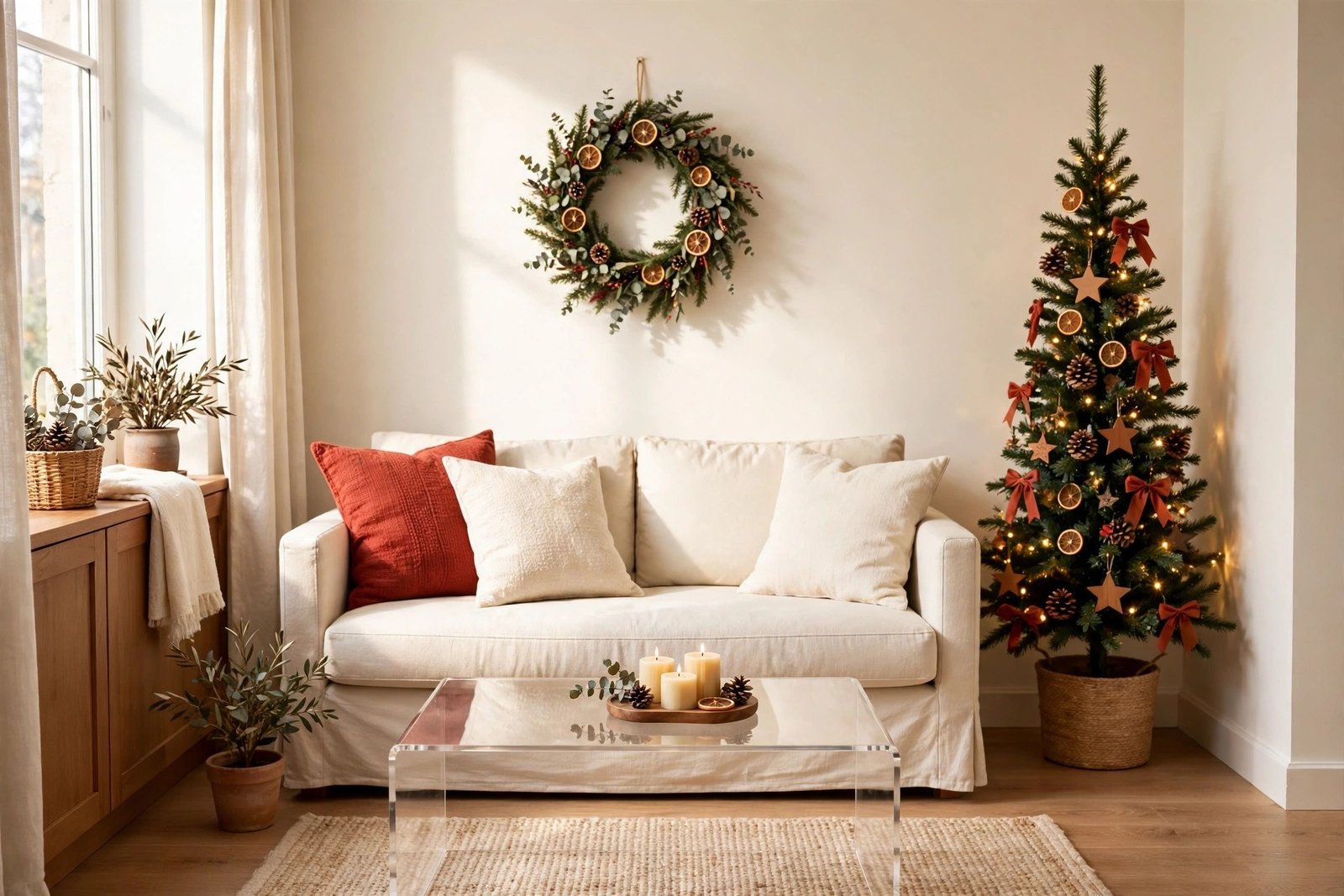
- The coffee table: at most one small, movable centrepiece that can be lifted off in one hand when drinks and plates arrive. Better: decorate the wall behind the sofa and leave the table bare.
- The serving surface: wherever food and drinks will be set down — sideboard, kitchen counter, a folding table — stays clear except for one low, sturdy piece at the back edge if there is genuinely room.
- The path: the route from door to seating to kitchen should hold nothing breakable at ankle or hip height. Guests carrying plates do not see low decorations.
Before guests arrive, walk the route they will walk, carrying an imaginary plate in each hand. Anything you nearly bump into moves up or moves out.
Step 5: The Same-Night Reset Routine
The secret weapon of small-home celebrating is that it ends cleanly. Fifteen minutes after guests leave:
- Flat-pack first (5 minutes): garlands unhooked and rolled, banners folded, paper decor flattened into its folder.
- Zone sweep (5 minutes): everything from the celebration zone into one box or basket — carried to its storage spot in a single trip.
- Textiles swap back (3 minutes): festive covers and runners off, everyday ones back on.
- Surface reset (2 minutes): coffee table and entryway back to their everyday state.
Because the system uses one zone and flat-away pieces, the reset is fast — which means you decorate more willingly next time, instead of dreading the aftermath. The same concentrate-don’t-spread logic works at a bigger budget scale too, as the Christmas decor on a budget guide shows for the living room’s focal point, mantel and entryway.
Materials and Costs
- Removable adhesive hooks and clear hanging clips — $4–$8 (renter-friendly, no holes)
- One string of warm fairy lights for the door frame or window — $6–$12
- Paper or fabric garland/banners — $0–$10 (homemade from paper and string is $0)
- Festive cushion covers and a table runner — $10–$20, reused every year
- One slim storage box or flat folder for the flat-away pieces — $3–$6
- Suction hooks for window decorations — $3–$5
A complete small-home setup usually costs $15–$40 once, and nearly everything stores in one slim box afterwards.
Mistakes to Avoid
- A little decor in every room. One ornament per surface across five rooms looks thin everywhere and still takes over your storage. One strong zone beats five weak ones.
- Decorating the serving surfaces. The moment food arrives, those decorations become obstacles that get moved, knocked and stained.
- Buying bulky pieces for a small home. A decoration you cannot store flat is a decoration you will trip over for a year. Check the storage size before the display size.
- Blocking the guest path. Floor-level decor in walkways is a tripping and breakage risk, especially with children and carried plates.
- No reset plan. Decor that takes three evenings to put away stays up too long, and the room feels chaotic long after the celebration ends.
- Forgetting the door itself. The front door and entryway are the first impression of the celebration and need no surface space at all — a wreath or bow there does the work of a whole display.
More zoning, systems and budgets for every celebration are gathered in the site’s seasonal and holiday decor collection.
Frequently Asked Questions
Where should the celebration zone go if the living room is tiny?
Choose the wall or corner guests see first when they enter — usually the wall opposite or beside the door. If even that is tight, go fully vertical: a decorated door frame plus a window display plus one shelf top can carry a whole celebration without using a single extra surface.
How do I decorate with small children or pets in a small home?
The height rule solves most of it: decorations above reach stay safe, and surfaces stay clear for daily life. Keep anything fragile, small or chewable in the high zones, choose soft or unbreakable pieces for the one low display, and skip floor-level decor entirely while children are small.
Can I still have a tree in a small home?
Yes — scale it to the zone, not to the catalogue photo. A slim or tabletop tree, a wall-mounted flat arrangement, or a branch in a heavy vase all give the same focal-point effect in a fraction of the floor space. What a small home cannot spare is a wide tree in the middle of the guest path.
How much decor does a small home actually need for a celebration?
Less than you think: one layered zone display, one vertical feature (door frame or window), festive textiles on the sofa and table, and warm light. Concentrated and layered, that reads as fully decorated — and it all packs into one slim box when the night ends.