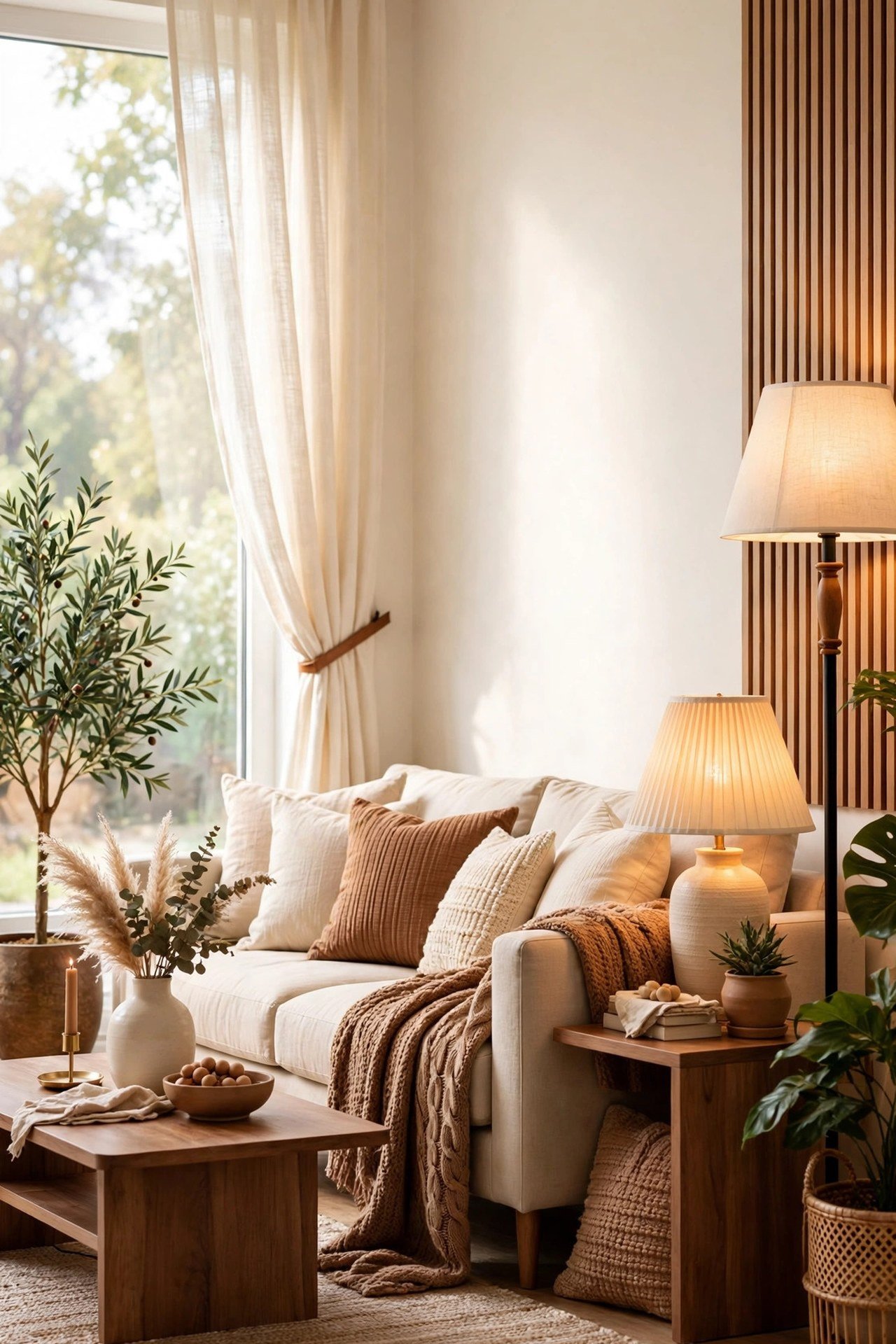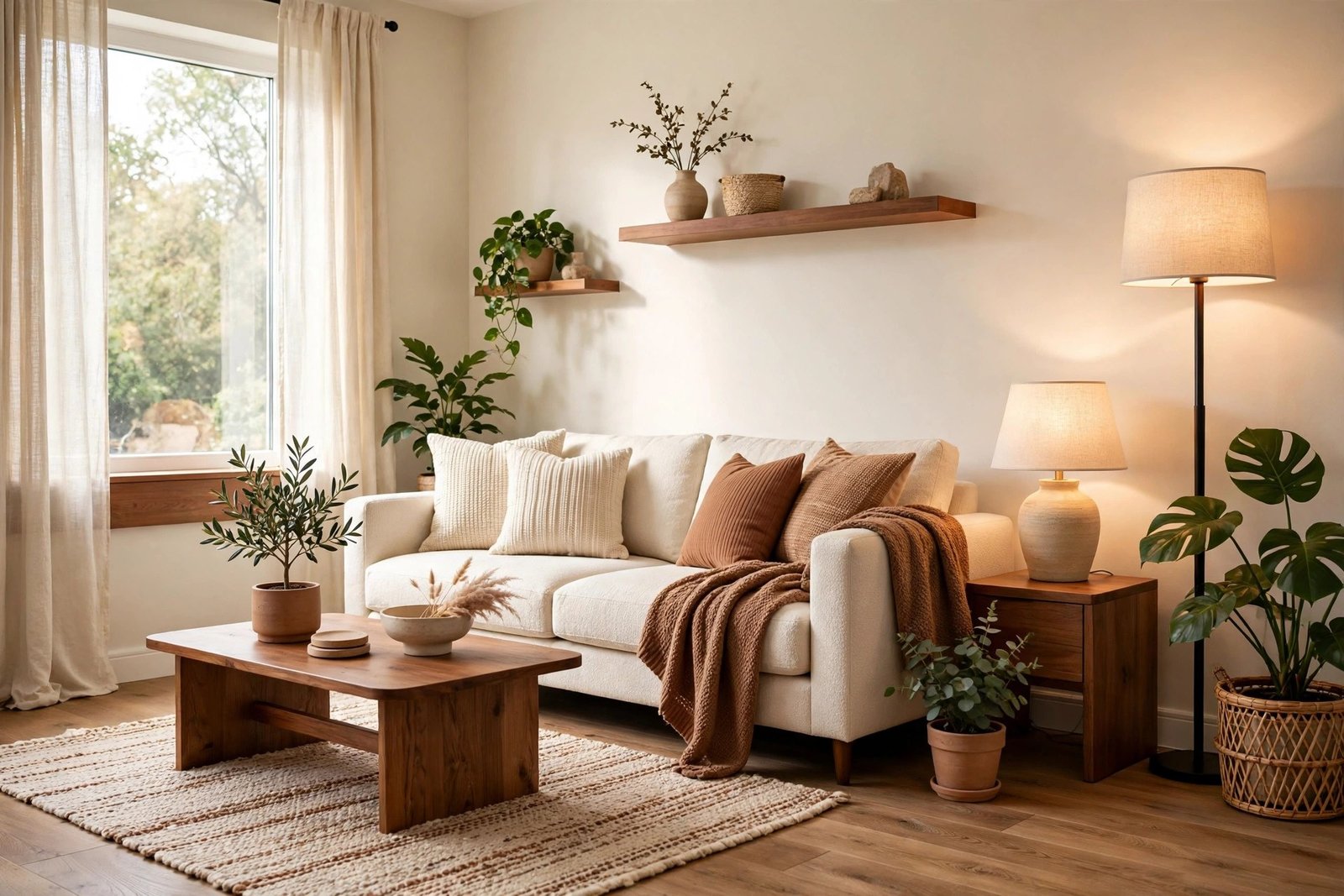
Most homes have one room that belongs to another decade. The rest of the house is fine, but this one room still has the yellowed paint, the single cold ceiling bulb, and the heavy curtains that were fashionable fifteen years ago. It is easy to assume the whole room needs replacing. In reality, a room rarely looks dated because of its furniture or its layout. It looks dated because of three surface things: its colour, its light, and its textiles. Those are also the three cheapest things to change.
This guide works differently from a general refresh. Instead of tidying the same look, you first diagnose exactly what is dating your one problem room, then apply the three upgrades in a strict order — paint, lighting, textiles — ranked for your specific room type, because a dated bedroom and a dated kitchen do not need the money spent in quite the same way. If the budget is zero right now, start with how to redecorate a room using only what you already own, and come back to these upgrades when there is a little money to spend.
Quick Answer
When one room looks dated, the three cheapest upgrades that modernise it are these, in this order. First, paint: one fresh coat in a clean, modern neutral covers the largest surface in the room and costs roughly $25–$45. Second, lighting: warm bulbs and at least one lamp, so the room stops depending on a single ceiling light — about $10–$30. Third, textiles: refresh the biggest soft items — curtains, cushion covers, a throw, or bedding — for about $20–$40, in colours that match the new paint. Done in this order, the three usually cost $60–$110 in total and change the room more than any single piece of new furniture would.
Step 1: Diagnose the Room Before You Spend Anything
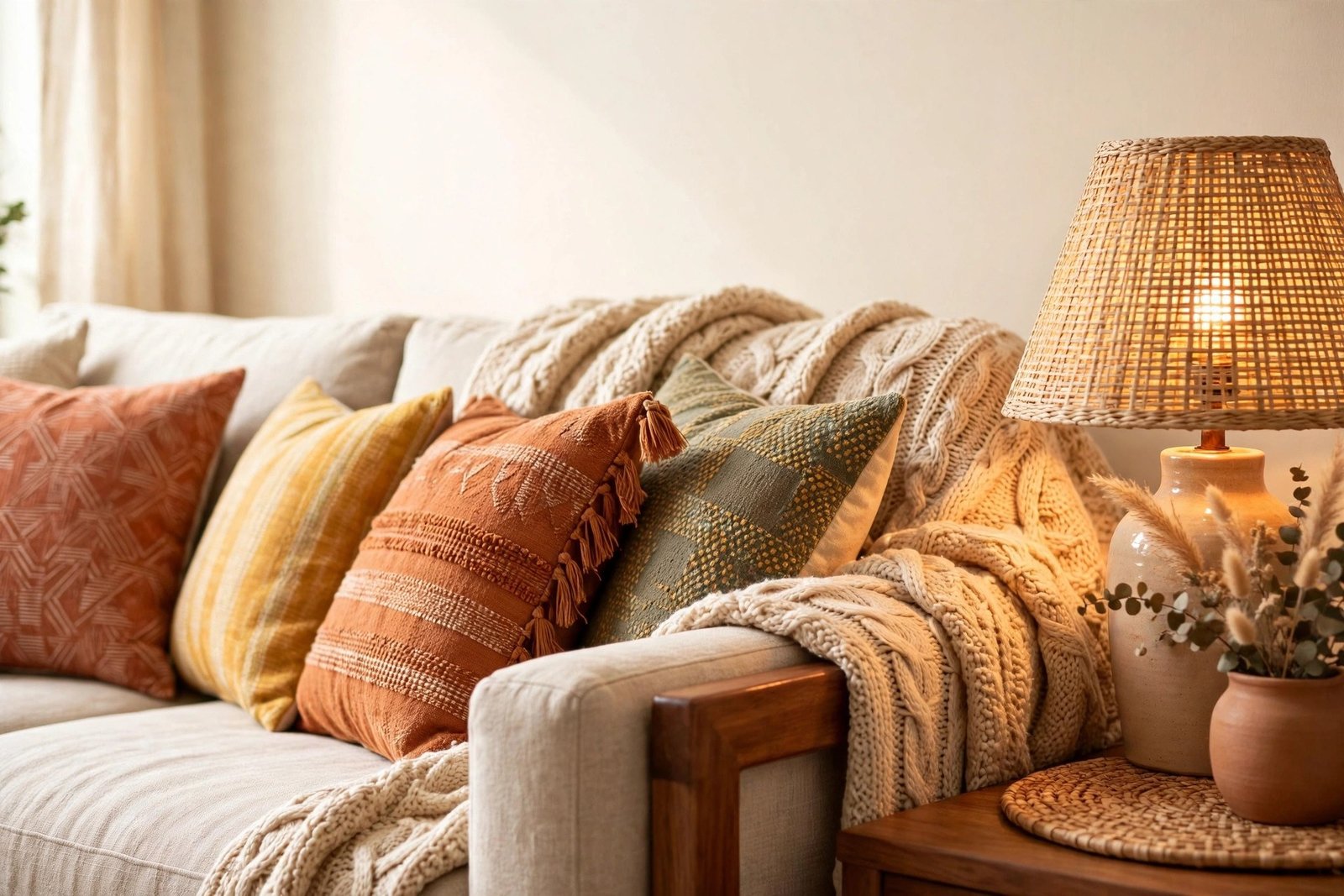
Do not start by shopping. Start by standing in the doorway and looking at the room the way a visitor would. Your eye has learned to skip the problems, so use this trick: take a photo of it on your phone. Photos are honest in a way eyes are not, and the dated items usually jump out of a picture immediately.
Then check the room against the three dated signals. Signal one is colour: yellowed magnolia, a cold blue-grey, or one bold “feature wall” in a strong colour that was fashionable years ago — colour dates faster than anything else, because taste in wall colours changes every few years. Signal two is light: a single ceiling bulb, cool white light that makes the room feel like an office, or a yellowed plastic shade. Signal three is textiles: heavy lined curtains, shiny or strongly patterned cushion covers, a worn throw, or bedding in a faded print. Nearly every dated room shows at least two of the three, and the worst one is where the first money should go if you cannot afford all three upgrades at once. Write them down in order — that short list is your whole plan.
Upgrade 1: Paint — the Biggest Surface in the Room
Walls are the largest visible surface in any room, which is why one coat of paint gives more modernising change per dollar than anything else you can buy. A dated colour makes new-looking furniture look old; a fresh neutral makes old furniture look intentional.
Choose a clean, warm neutral: warm white, soft cream, or pale greige. These sit happily beside almost any floor and furniture, and do not fight with the textiles you will add later. Avoid cold blue-greys, which read as dated office paint in most home light, and avoid replacing one bold feature wall with another — a single strong wall is exactly the look that dated the room in the first place. If the old colour is a similar depth to the new one, one coat is often enough; going from dark to light usually needs two, so budget for that before you start.
Paint the wall you see from the doorway first if money or time is genuinely short — that wall sets the tone for the whole room. And while the paint is out, look up: a stained or yellowed ceiling makes fresh walls look dirty by comparison, and a quick coat of plain white ceiling paint is one of the cheapest upgrades in this guide.
Upgrade 2: Lighting — Change How Everything Looks
Dated rooms almost always rely on one central ceiling light, and that single flat light is a large part of why the room feels old. Modern rooms are lit in layers: a general light, plus lower light at the height where people actually sit and live. You do not need new wiring to get that effect.
Start with the bulbs. Swap cool white bulbs for warm white ones in every fitting; the change costs a few dollars and instantly makes wood warmer and paint cleaner. Then add one lamp at seated height — a table lamp or a simple floor lamp in a corner — roughly $15–$30 if you do not already own one you can move from another room. A lamp creates a pool of light at living level, and the eye reads that as a designed, current room rather than a lit box.
If the ceiling shade itself has yellowed or cracked, a plain replacement for $5–$10 removes the last obvious clue about the room’s age every time someone looks up.
Upgrade 3: Textiles — the Finishing Layer
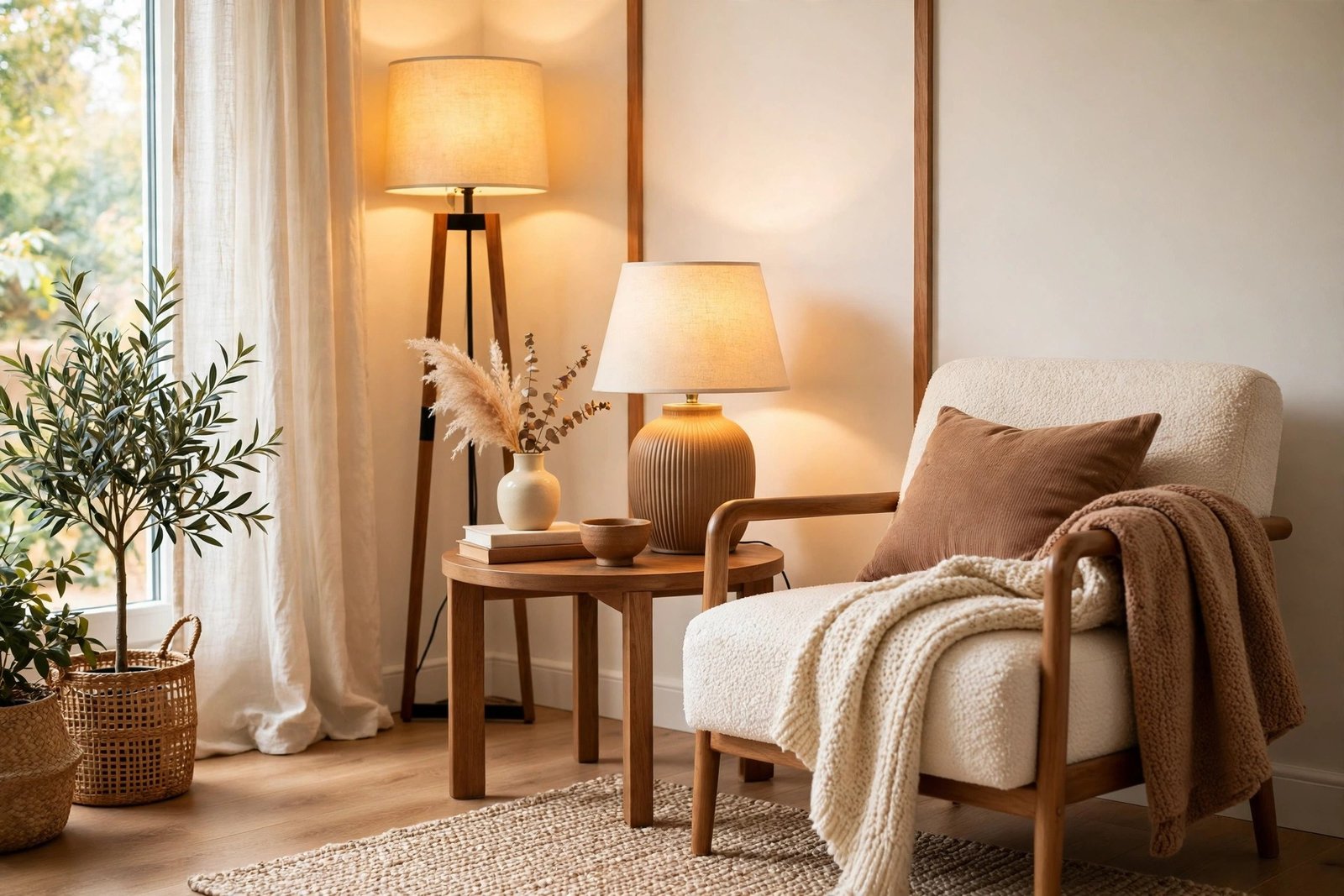
Textiles are the layer the eye touches last and remembers most. They are also where dated rooms confess their age loudest: heavy swagged curtains, satin-finish cushions, and busy prints were the fashion of their time, and they still are — that is the problem.
Work on the largest textile item first. In a living room, that is usually the curtains: simpler, lighter curtains hung plainly will modernise the wall they cover more than any ornament. Wash and re-hang what you own first; replace only if the fabric is faded or the style is very heavy. Next, cushion covers: two or three plain covers in colours pulled from your new paint, about $10–$20, calm the whole sofa. In a bedroom, the largest textile is the bedding, so a plain duvet cover set in a fresh light colour does the same job there.
Keep patterns few and quiet. One patterned item looks chosen; five look inherited. Remove dated textile items rather than adding new ones over them — modernising is mostly subtraction at this stage.
The 3 Upgrades Ranked by Room Type
The order above is the default, but the emphasis shifts slightly by room:
- Living room: Paint first, lamps second, curtains and cushion covers third. This is the room the full version of this plan was built for, and it follows the same spend-on-what-the-eye-sees-first logic as a small budget plan for a whole apartment.
- Bedroom: Paint and bedding swap places in importance — a fresh plain duvet set can modernise a bedroom before the walls are done, because the bed is most of what you see. Lamps at the bedside replace the ceiling light in the evenings.
- Kitchen: Paint still leads, but it means cabinet fronts or the one visible wall rather than all four walls. Lighting means warm bulbs plus light under the wall cabinets. Textiles shrink to tea towels, a runner, and a simple blind.
- Bathroom: Paint (or renewed grout lines) first, a warm bright bulb second, plain fresh towels third — towels are the bathroom’s largest textile and its loudest dated signal when they are grey or mismatched.
And if more than one room looks dated, do not split a small budget across all of them. Finish one room completely with these three upgrades, then move on.
A Sample Budget for One Dated Room
- Paint: $25–$45 — one tin for the walls, plus ceiling white if yours is stained.
- Lighting: $10–$30 — warm bulbs everywhere, one lamp if the room has none, a plain shade if the old one has yellowed.
- Textiles: $20–$40 — the largest item first: curtains, a duvet set, or cushion covers plus a throw.
- Kept back: $5–$10 — for the small thing the finished room turns out to need.
More room-by-room projects in this series are collected under budget room makeovers, each one spending a small amount in a deliberate order instead of all at once.
Mistakes to Avoid
- Buying new furniture for a dated room. The dated look lives in colour, light, and textiles. A new sofa in a yellowed, flat-lit room is just an expensive guest in an old room.
- Choosing textiles before painting. Curtains and cushions chosen against the old colour will fight the new one. Paint first, then choose the soft items.
- Replacing one feature wall with another. A single bold wall is the signature look of the last decade. Plain walls with colour in the textiles age far more slowly.
- Judging the new paint under the old cold bulb. Change the bulbs before deciding the colour is wrong — cold light makes warm neutrals look grey.
- Adding more decor instead of removing dated items. New ornaments placed among heavy old curtains and shiny cushions just add noise. Subtract first.
- Splitting the money across three rooms. Three half-modernised rooms still look dated. One finished room proves the method.
Frequently Asked Questions
If I can only afford one upgrade, which one?
Paint, in almost every room. It covers the largest surface, removes the most dated signal, and makes everything you own look newer. The only common exception is a bedroom, where a plain fresh duvet set can rival paint because the bed fills most of the view.
How do I pick a “modern” colour without following a trend that will date too?
Choose warm neutrals — warm white, soft cream, pale greige — rather than any fashionable colour of the moment. Neutrals are the background in almost every era of decorating, so they date slowest. Put colour in textiles and art instead, which are cheap to change when tastes move.
Does this work in a rented room where I cannot paint?
Mostly, yes. Lighting and textiles are fully reversible: warm bulbs, a lamp, curtains on the existing rod, cushion covers, and bedding change the room completely and leave with you. If painting is banned, lean harder on textiles — a large plain throw over a dated sofa and fresh curtains do much of paint’s work.
How long does the whole three-upgrade job take?
One weekend for most rooms: paint on Saturday, bulbs and a lamp in an hour, textiles whenever they arrive or are washed. The diagnosing and choosing take longer than the doing, which is why the doorway photo test at the start is worth its ten minutes.