Every small home has them: the corner behind the door, the angle beside the wardrobe, the dead triangle where two walls meet and nothing happens. In a large home a wasted corner is a shrug. In a small home it is a real loss — a reading chair’s worth of space, a plant’s worth of life, quietly going unused while every other centimetre is fought over.
Corners fail for predictable reasons: they are dark, they have no job, and everything put in them is the wrong scale — either a small sad object rattling in a big angle, or furniture shoved in at the wrong rotation. Fix those three things and a corner becomes a decor spot: a small, deliberate scene that makes the whole room look more designed. This guide gives the rules first, then the three most useful corner types.
Quick Answer
To turn a wasted corner into a useful decor spot, give it one job, one light source, and one correctly scaled anchor piece. Choose the job first — reading, plants, display, or a small work spot. Angle the anchor piece across the corner rather than stuffing it flat against one wall. Add light at the height of the activity, because corners are where light dies first. Then layer only two or three supporting pieces, and stop: a styled corner is a small scene with breathing room, not storage that escaped. Done this way, most corners cost little or nothing, because the pieces usually already exist somewhere in the home.
Why Corners Die: Dark, Jobless, and Wrongly Scaled
Light reaches corners last. Ceiling light pools in the middle of rooms, lamps sit beside sofas and beds, and the corner keeps the leftovers — which is why anything placed there looks dull rather than displayed. Corners also collect the home’s undecided objects: the plant that fits nowhere, the chair waiting for a purpose. An object without a job reads as stored, not styled.
Scale is the third killer. A corner is a diagonal space, but people furnish it as if it were a flat wall. A small item centred in a corner looks lost; a wide item jammed straight in looks punished. The fix is to work on the diagonal: angle the main piece at roughly 45 degrees, so it addresses both walls and claims the triangle properly. It is the same proportion thinking used in the decor fixes for a tiny bedroom — use the walls and the angles, because the floor will not give you more.
The Three Rules Before You Style Any Corner
Rule 1: One corner, one job
Decide what the corner is for and let everything in it serve that purpose. A reading corner holds a chair, light, and a place for a book and a cup — nothing else. The moment a corner serves three half-jobs, it serves none, and it looks like the place things were put down.
Rule 2: Light it at the height of the job
Reading needs light at shoulder height, plants need daylight or a lamp above them, display needs light from the front or above. A corner without its own light will slide back into gloom within a week, however well it is styled on day one. A plug-in wall lamp or a slim floor lamp usually solves it; in a rented home, a lamp on a small table does the same job with no fixing at all.
Rule 3: Anchor, layer, stop
One anchor piece at the right scale — a chair, a tall plant, a set of shelves, a desk. Then two or three supporting layers: a cushion, a small table, a picture above. Then stop, and leave visible empty space around the group. The emptiness is what makes it read as a scene rather than a pile.
The Reading Corner: The Most Loved Square Metre in the Home
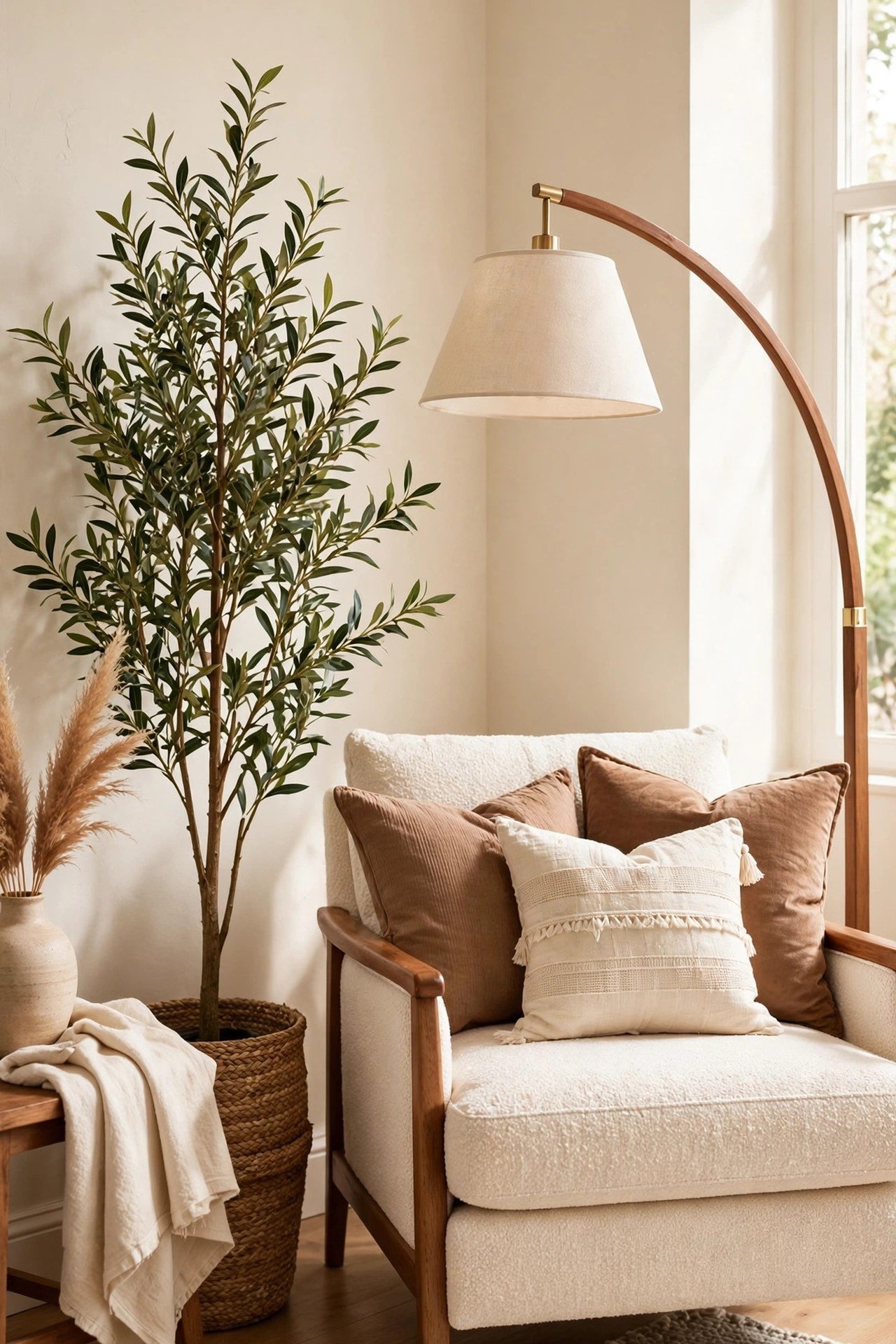
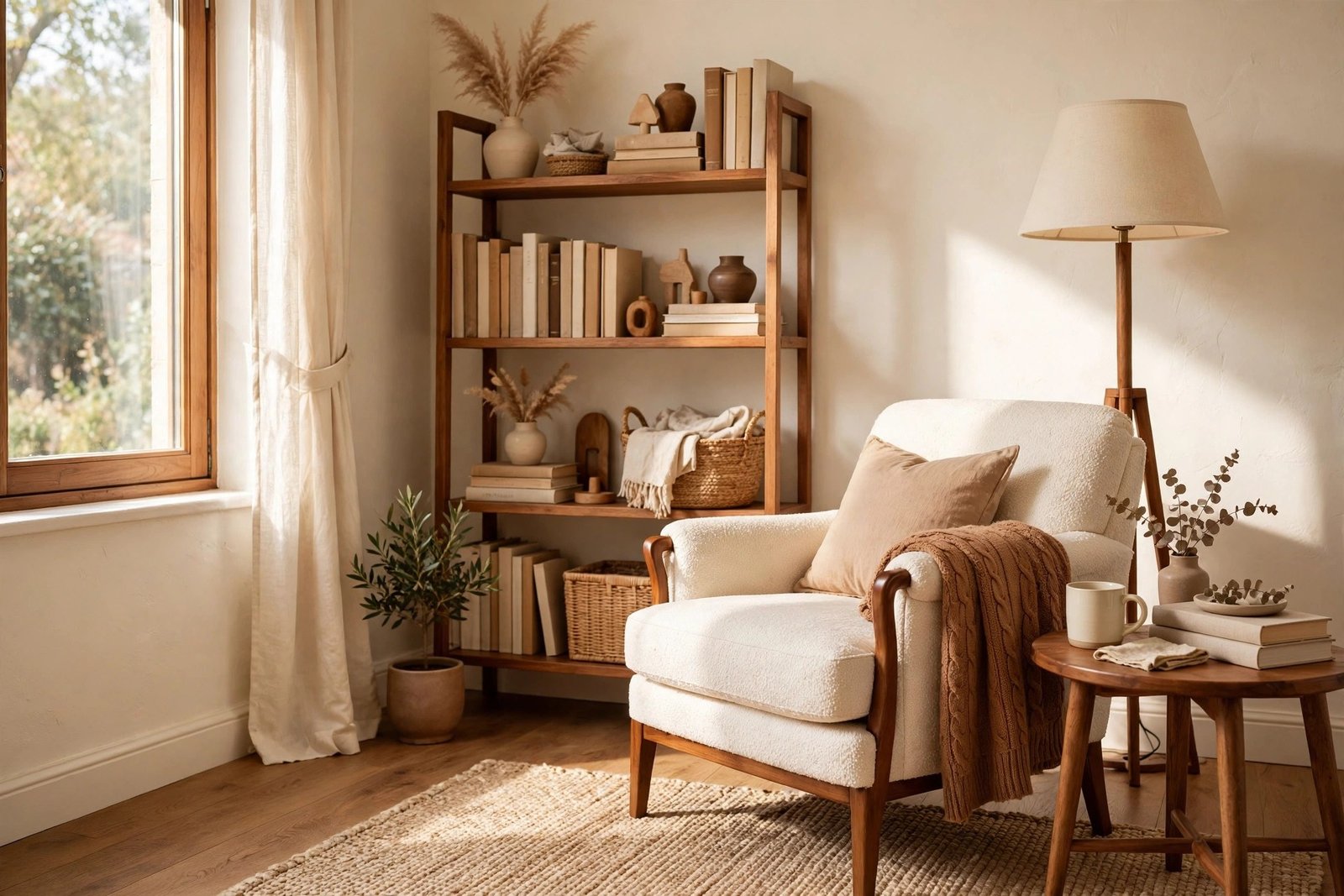
If a corner can hold one chair, it can be a reading corner — often the most-used seat in a small home. Angle a comfortable chair across the corner, add a floor lamp or wall lamp behind the shoulder, and a small round side table within reach. A cushion and a throw in the room’s colour family settle it in. Hang one picture above and slightly toward the chair, at seated eye level, to finish the scene on the wall.
Choose the chair by its footprint, not its comfort in the showroom: a slim armchair or a generous dining-style chair often beats a bulky recliner. In many homes this corner works best in the bedroom or beside the living room’s quiet wall — anywhere the door’s swing and the television do not argue with it.
The Plant Corner: Height, Light, and Honesty
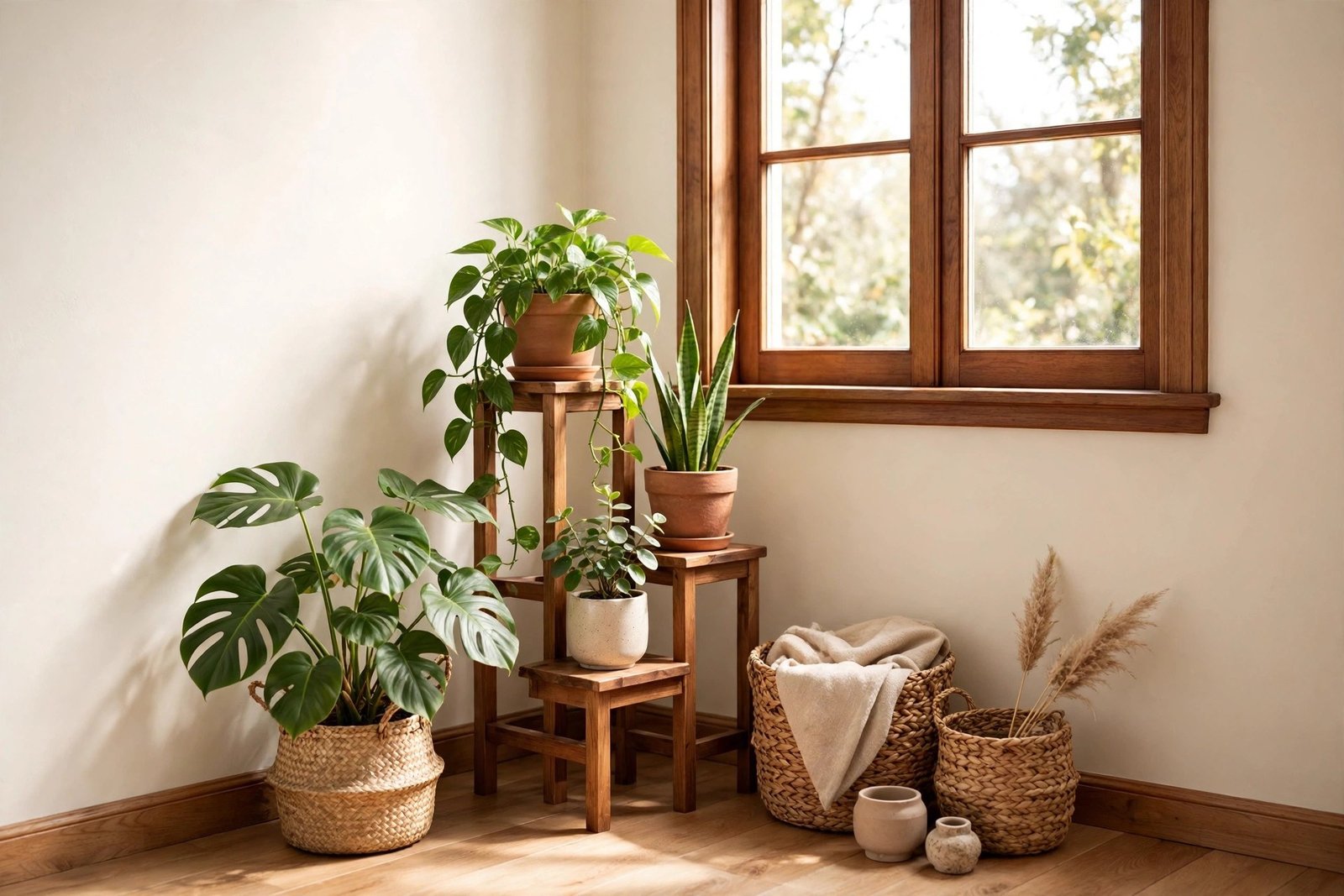
Corners suit plants because plants are the rare decor that enjoys being grouped. Build the group in heights: one tall plant to claim the vertical space, one medium on a stand or stool, and one small trailing plant on a shelf or the floor. Odd numbers and varied heights look natural; three same-sized pots in a row look like a queue.
Be honest about light. A dark corner will not keep a sun-loving plant alive, however good it looks in week one. Choose plants that tolerate low light for dim corners, or give the corner a lamp the plants can share — many grow happily under an ordinary warm bulb used for a few hours a day. Grouping plants also helps them: shared humidity, one watering trip, and one place for the watering can to live nearby.
The Gallery or Display Corner: Use Both Walls
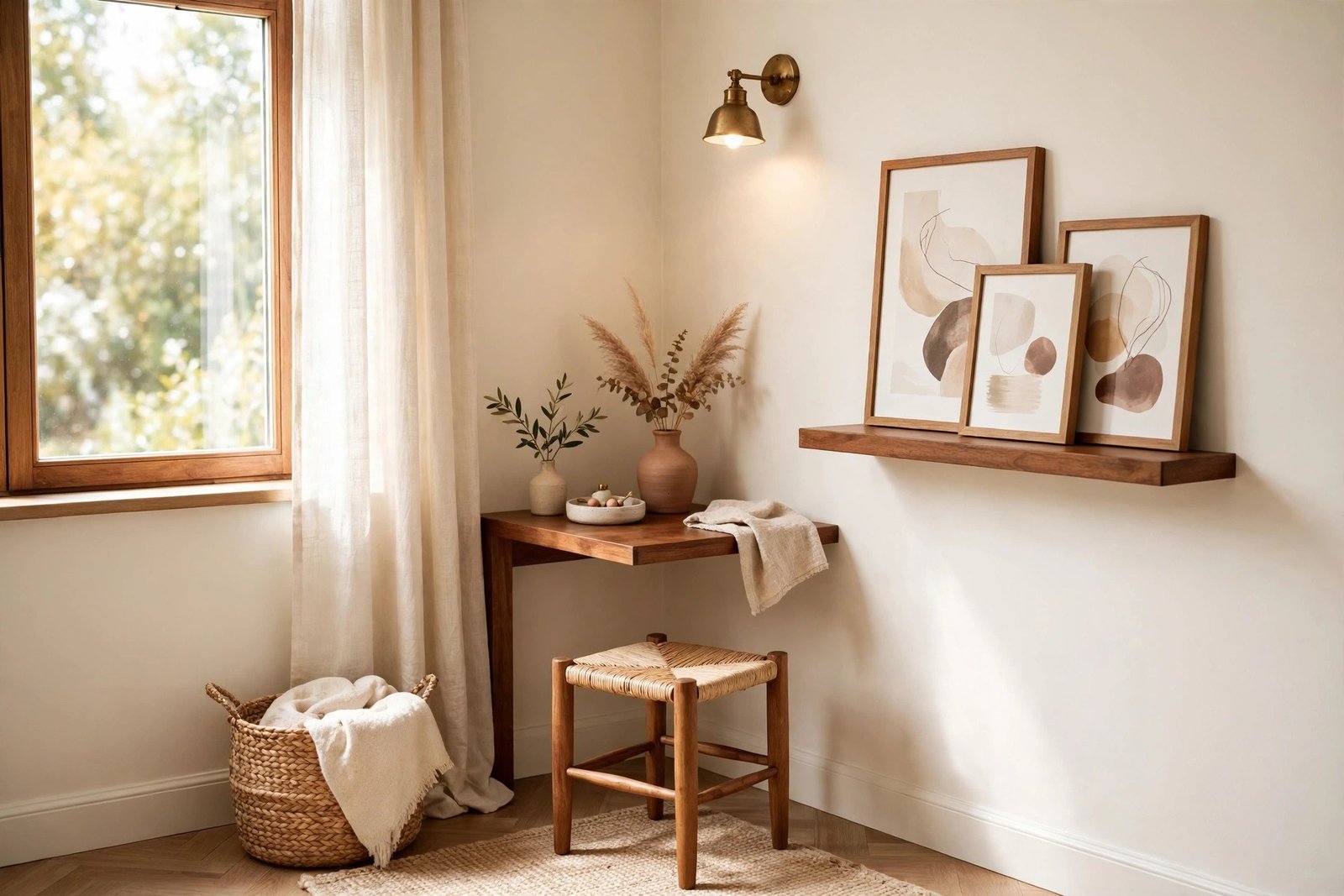
A corner is the one place where pictures can turn a bend, and that makes it a natural display spot. Two slim picture ledges, one on each wall meeting in the corner, create a wrap-around shelf for prints, small objects, and books that feels deliberate and gallery-like. Or hang one tall piece on the diagonal wall space above a low piece of furniture — a small chest, a stool with a stack of books, a basket of throws.
Keep the display to one colour family and leave gaps. A display corner works like the zones in a studio apartment divided with decor: the eye reads a consistent group as one intentional place. Too many unrelated objects and the corner reverts to what it was — the place things ended up.
Small Work and Dressing Corners: Jobs That Fit an Angle
Some corners can hold a real job. A narrow desk or a wall-mounted drop-leaf table across a corner makes a laptop spot for homes with no office room — pair it with a chair that tucks under and a lamp, and close the laptop into a drawer or lidded box when work ends so the corner rests. A dressing corner works the same way in a bedroom: a mirror on one wall, a small stool, one hook row for tomorrow’s clothes, and good warm light at face height.
What both versions share is a closing ritual: when the job is done, the corner returns to looking like decor. If a work corner stays visibly “at work” all evening, it will spread — corners, like clear tables, attract whatever is in your hands.
Corners to Leave Empty
Not every corner wants a job. The corner in a walkway, the one the door opens into, and the one directly in a main sight line from the sofa are often better simply clean, lit, and bare — in a small home, a calm empty corner is breathing room, and breathing room is a feature. Style the corners that sit still, beside seating and at the ends of rooms, and let the traffic corners be.
A Sample Small Budget for a Corner Makeover
- Anchor piece: $0–$40 — move the best spare chair, plant, or shelf from elsewhere in the home first.
- Light: $10–$30 — a plug-in wall lamp or slim floor lamp at the height of the corner’s job.
- Layers: $5–$20 — one cushion or throw, a small side table or plant stand, second-hand where possible.
- Wall finish: $0–$15 — one picture moved from a crowded wall, or two slim ledges for a display corner.
Every small-space method used here is gathered in one place: small-space decor ideas that work.
Mistakes to Avoid
- One small object alone in a big corner. A single small plant or stool rattles in the angle and advertises the waste. Anchor at scale, or group in heights.
- Furnishing flat against one wall. Corners are diagonal spaces. A chair or desk angled across the corner claims it; pushed flat, it just blocks a wall.
- No light of its own. Corners keep leftovers of the room’s light, which is never enough. Every styled corner needs a lamp at the job’s height.
- Letting the corner become storage. The styled corner and the dumping corner differ only in discipline. If it has no job this week, clear it rather than fill it.
- Sun-loving plants in a dark corner. They fade slowly and make the corner look sadder than empty. Match the plant to the light, or add a lamp.
- Styling a traffic corner. If people brush past it daily, anything there will be knocked, moved, and resented. Leave walkway corners bare.
Frequently Asked Questions
What is the best use for a corner in a small living room?
Usually a reading corner: one angled chair, a lamp at shoulder height, a small table, and a picture above. It adds a seat the room did not have, it suits the diagonal shape of a corner, and it gives the room a second focal point so the television is not the only event.
How do I style a corner without buying furniture?
Shop your own home first: the bedroom’s spare chair, the tall plant from the hallway, the picture crowded off another wall. Add light — often a lamp moved two metres — and group what you have in heights with empty space around it. Most good corners are rearrangements, not purchases.
My corner is very dark. Can it still work?
Yes, if you bring the light with you: a plug-in wall lamp or a floor lamp makes a dark corner usable for reading or display, and shade-tolerant plants manage well under a lamp used a few hours a day. What a dark corner cannot do is host a sun-loving plant or unlit storage and still look good.
How many items should a styled corner have?
One anchor, two or three supporting pieces, and visible empty space. As a test, you should be able to name the corner’s job and point to the lamp that lights it. If you are counting past five objects, the corner has started turning into storage.