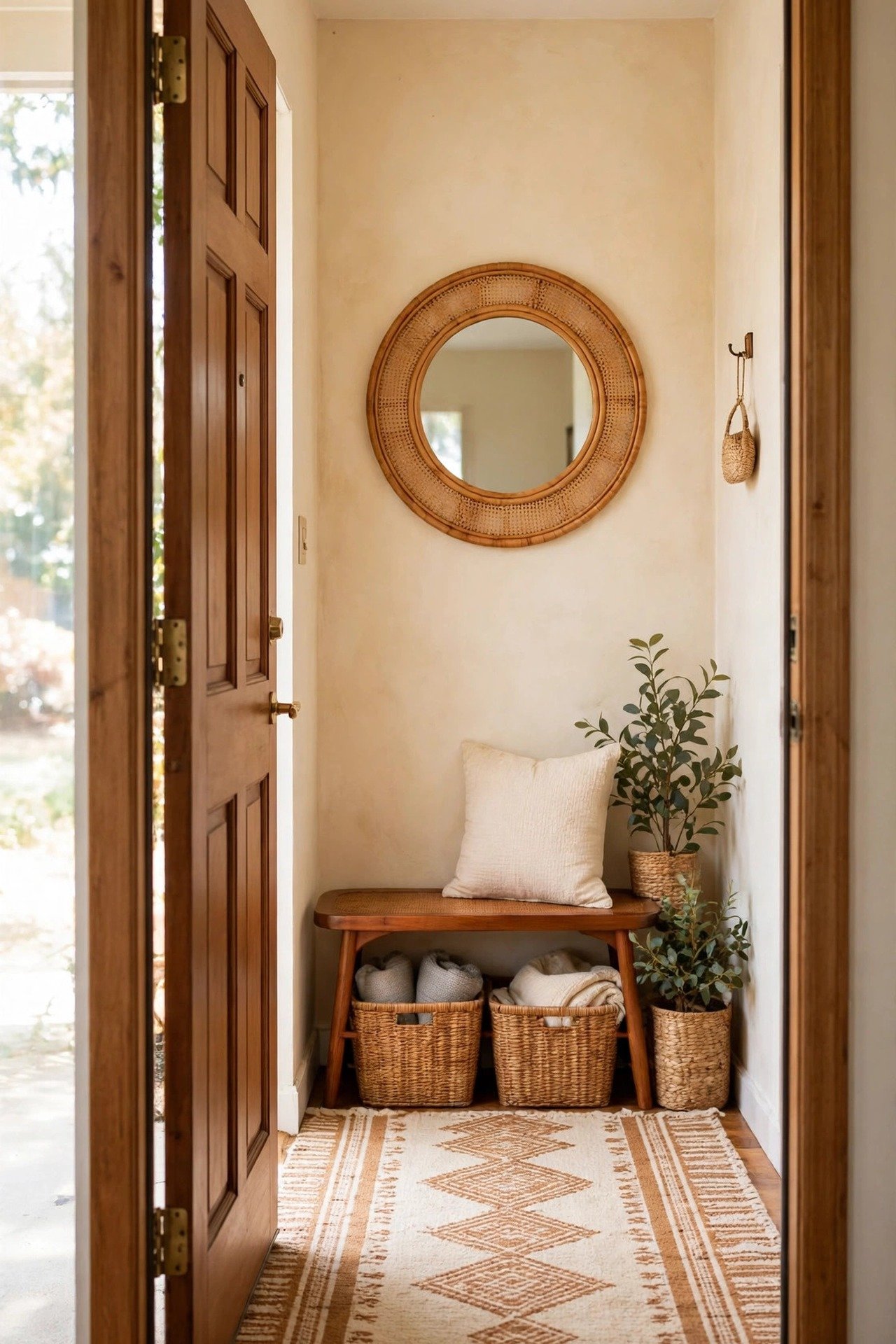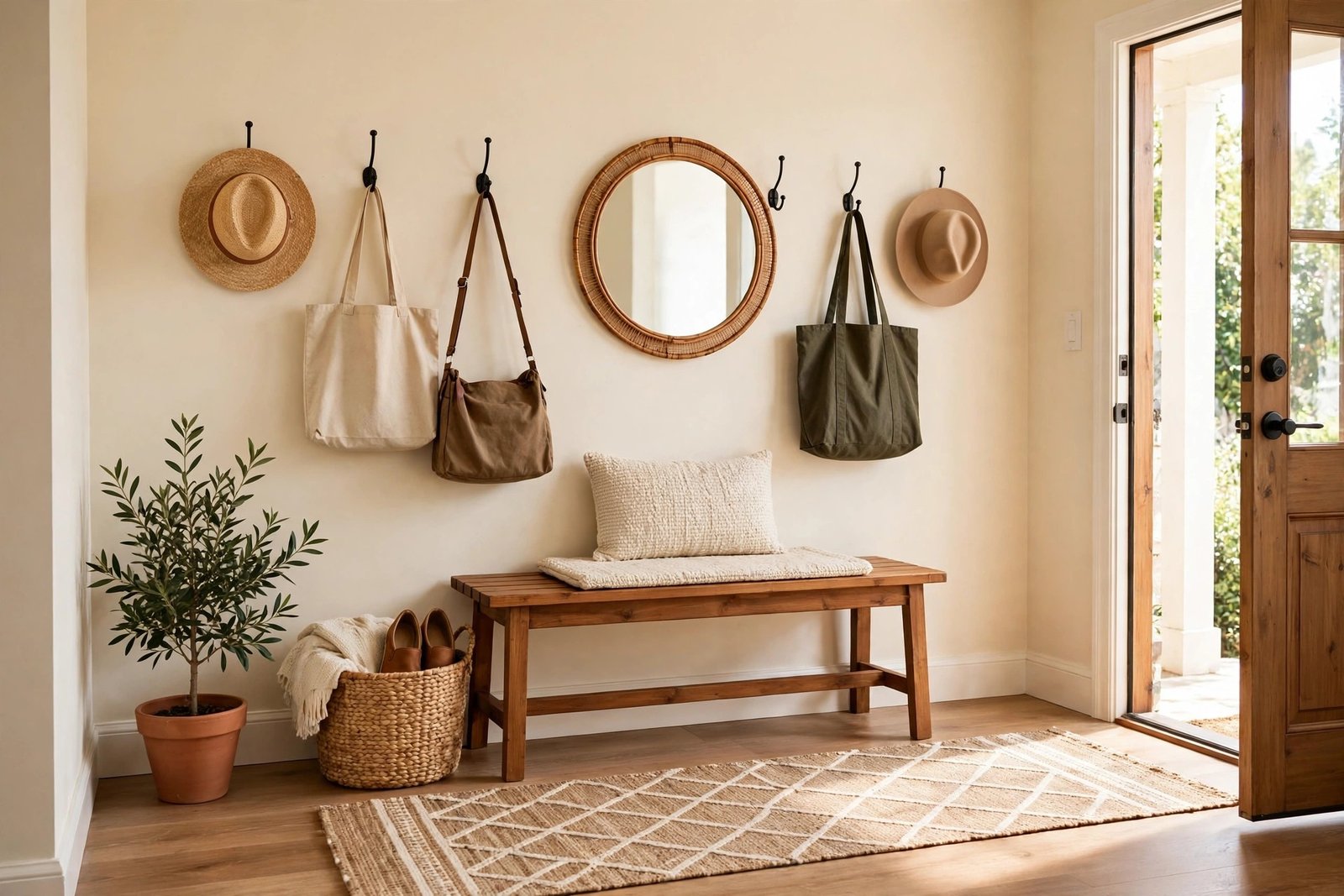
The entryway is the smallest space in most homes and the one that sets the mood for all the others. It is where shoes land, post piles up, bags are dropped, and keys vanish — and because you pass through it ten times a day, you stop seeing the mess, while every guest sees nothing else. The good news is that an entryway rarely needs decorating. It needs a system, a clear floor, and two or three deliberate touches that say the mess is handled.
This makeover works on any budget, including almost no budget, because the main material is decisions, not purchases. Every item that enters your home through the front door gets one defined home within arm’s reach of that door. What cannot get a home there leaves the entryway entirely. It is the same thinking behind a kitchen makeover on a tight budget: fix how the space works first, and only then spend on how it looks.
Quick Answer
To stop an entryway looking messy on a budget, give the five everyday things — shoes, coats, keys, post, and bags — one fixed home each, close to the door. Limit shoes to the pairs actually worn this week, in one row, one rack, or one basket (about $0–$15). Put up enough hooks for the coats in daily use and move the rest to a wardrobe. Drop keys into one bowl, dish, or wall hook, always the same one. Stand post in one tray or wall pocket and sort it the day it arrives. Then clear the floor completely, add one mirror or picture to make the space feel intentional, and finish with a washable mat or runner that can take the dirt. Total spend is usually $0–$30, because most entryways already own everything they need.
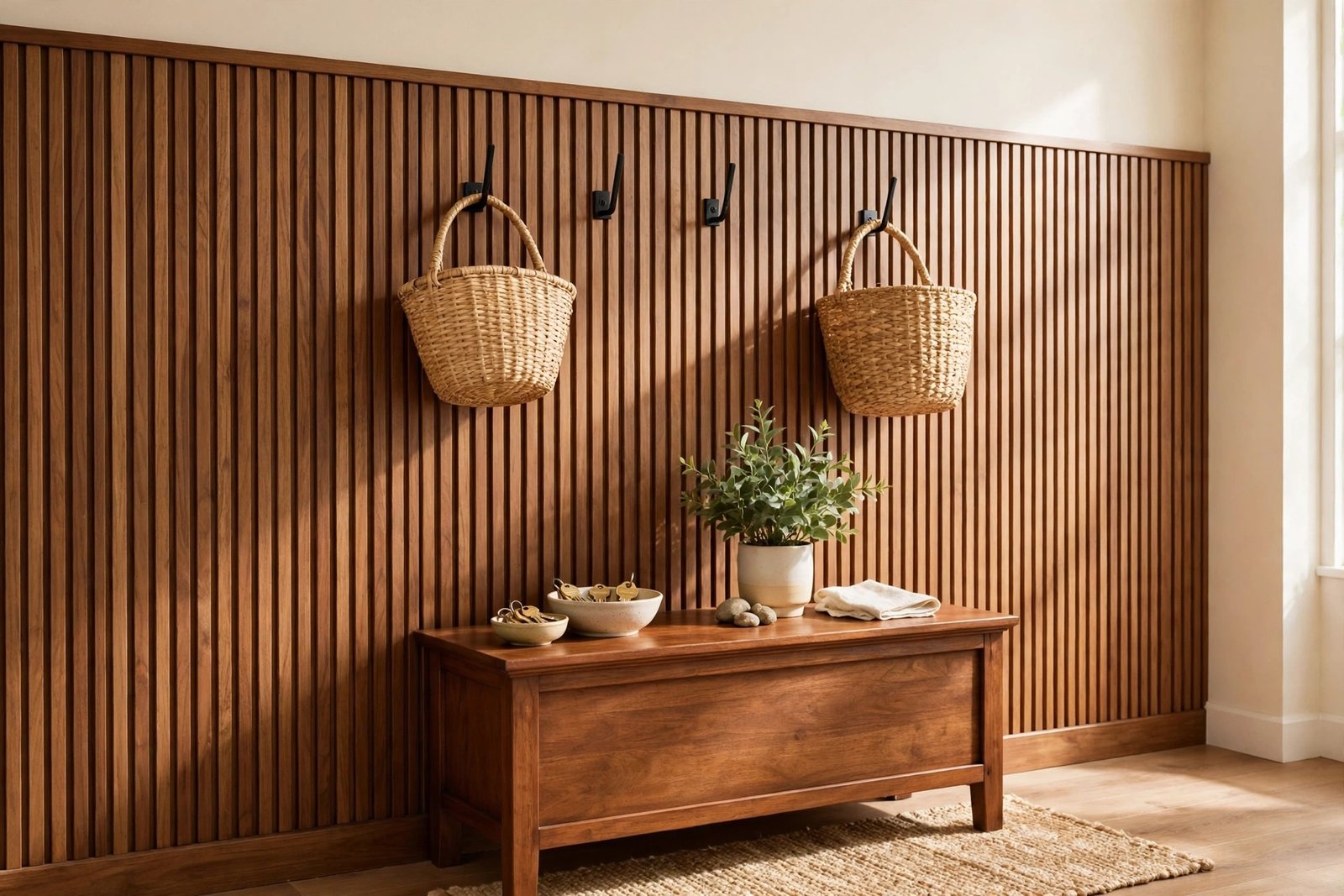
Step 1: Empty It Completely, Then Let Back Only What Earns Its Place
Start by taking everything out — shoes, coats, bags, umbrellas, post, the lot — and cleaning the empty space: shake the mat outside, wash the floor, wipe the door and the light switch, and clean any mirror. Entryways collect grit and scuffs faster than any other area, and a clean, empty threshold already looks like a different home.
Now be strict about what returns. The entryway is a passing-through space, not storage. Only items used on the way in or out, in the current season, belong here. Off-season coats, shoes kept for one occasion a year, sports kit used monthly, and the bag of things meant for donation all go somewhere else — a wardrobe, a bedroom cupboard, an under-bed box, or out of the house entirely. Every item you exile makes the daily items easier to keep tidy.
Step 2: Shoes — One Row, One Rack, or One Basket
Shoes scattered across the floor are the single biggest reason entryways look messy, because they spread, topple, and collect dirt in full view. The fix is a boundary. Choose whichever suits your space and household: one single-layer rack, one large basket or crate for family shoes, or one marked row along the wall for a small household. Single-layer matters — stacked shoe racks in a narrow hall become a second mess of their own, with pairs buried and forgotten underneath.
Set a number and hold it. Two pairs per person in the entryway is generous for most homes: the everyday pair and one alternative. Everything else lives with the clothes, where shoes actually belong. Put a washable mat or tray under the shoe spot if your weather is wet, so grit and drips land on something you can shake out and wash instead of on the floor itself.
Step 3: Coats and Bags — Hooks at the Right Height, and Enough of Them
A single hook asked to hold five coats will drop three of them, and dropped coats become floor mess. Count the coats in daily use and provide at least that many hooks, plus one spare for a guest. Simple hooks cost a few dollars each, need one screw each — or none, on an over-door rack in a rental — and they transform the wall from a pile into a row.
Hang the longest coats where they will not brush against shoes or block a door, and give bags a hook of their own at the height you naturally take them off. If children use the entryway, one low hook each, at their height, works far better than asking them to reach adult hooks — a system people cannot reach is a system that fails by Friday.
If you cannot add hooks, a single sturdy coat stand in a corner does the same job for about the price of a takeaway meal, and it can move with you. What does not work is the chair. Every home has tried it: coats on a chair breed more coats, then bags, then everything, and the chair becomes the mess with legs.
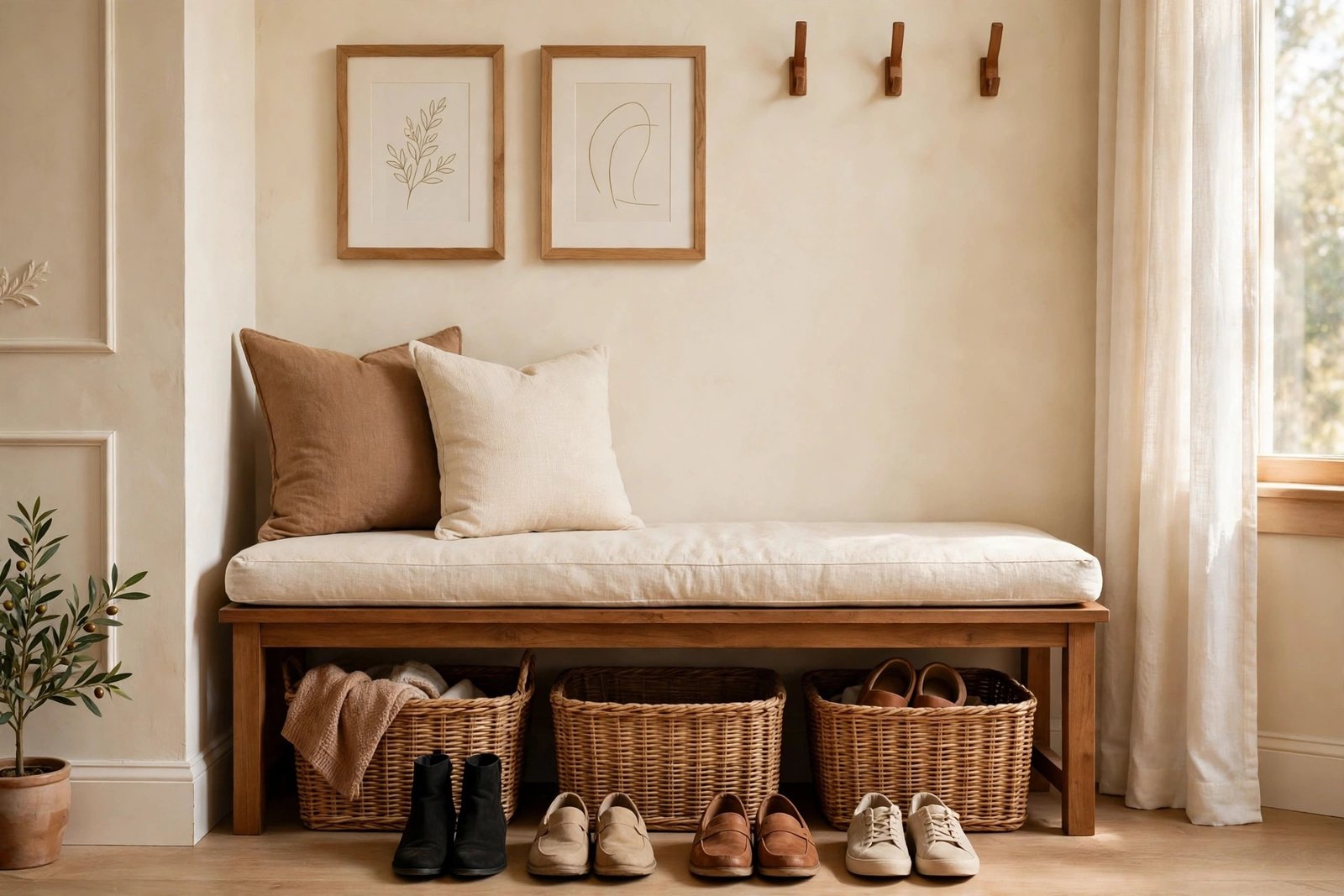
Step 4: Keys and Post — the Two Small Things That Look Like Chaos
Keys and post are tiny, but spread across a surface they signal disorder instantly. Keys need one home: a bowl, a small dish, a tray, or a single hook, placed exactly where your hand wants to drop them as you come in — not across the room, because a system that fights your habit loses. Use something you already own; a small cereal bowl has served many entryways perfectly well.
Post needs the same treatment: one tray, wall pocket, or upright file where all of it lands, and a two-minute rule — junk out the same day, bills and letters into the house to their real home weekly. A tray that is emptied weekly stays a system; a tray that is never emptied becomes a paper shelf, and then a second surface to dump things on.
Step 5: Make It Look Deliberate — Light, Mirror, and a Clean Threshold
Once everything has a home, two touches make the space feel designed rather than merely tidied. The first is a mirror or one decent-sized picture on the main wall. A mirror earns its place twice in a small entryway: it bounces light into a space that often has no window, and it gives you a last check on the way out. Hang or lean one item at eye level rather than scattering several small frames, which add visual noise to a working space.
The second is light. Entryways often keep the bulb they were built with — dim or cold. A warm, reasonably bright bulb makes the area feel welcoming in the evening and makes white paint and clean floors read as clean. If the space has a small table or shelf, a tiny plant or a single bowl for loose change is enough styling. Restraint is the style here, in the same way a rental-friendly living room makeover relies on a few large, removable pieces rather than lots of small ones.
Finally, the mat. A washable mat or runner sized to the door’s swing catches the dirt that makes entryways look grubby by Wednesday. Shake it weekly, wash it monthly, and the whole area stays fresher with almost no effort.
Keeping It Tidy: the Two-Minute Reset
Systems fail without a rhythm, and the entryway rhythm is short: two minutes, once a day, ideally when you come in for the last time. Shoes into their row or basket, coats onto hooks, keys in the bowl, post in the tray, floor clear. That is the whole job. Weekly, shake the mat and move out anything that has migrated in — the entryway creeps because objects drift toward the door, and a weekly eviction keeps the drift from becoming the system.
Browse the rest of the series in the budget room makeovers category for the same kind of small-space, small-budget fixes in the rooms beyond the front door.
Mistakes to Avoid
- Buying storage before removing anything. Bigger racks and more baskets for the same amount of stuff give you a tidier pile, not a tidy entryway. Edit first, then buy only for what remains.
- Keeping every shoe and coat by the door. The entryway is for this week’s life, not the whole wardrobe. Off-season and rarely worn items belong with the clothes.
- A keys system in the wrong place. A beautiful bowl in the living room loses to habit every time. Put the key home where your hand actually drops them — at the door.
- Too many small decorations. Little frames, signs, and ornaments crowd a working space and gather dust and knocks. One larger piece looks calmer and survives longer.
- No landing rule for post. Post put down “for now” spreads across every surface. One tray, emptied weekly, or the tray becomes the problem.
- Forgetting the floor. If anything lives permanently on the entryway floor besides the mat and one shoe solution, the space will always read as messy, however tidy the walls are.
Frequently Asked Questions
My entryway is just a small hallway. Can this still work?
Yes — a hallway simply means everything goes vertical. Hooks in a row, one slim single-layer shoe rack or a basket, a wall pocket for post, and a mirror are a complete system in less than a metre of wall. Keep the floor entirely clear and choose a washable runner instead of a thick mat, so doors still swing freely.
How do I handle a family’s worth of shoes without a big rack?
Limit pairs per person, not storage per shoe. Two pairs each by the door, the rest in bedrooms with the clothes. One large basket or crate per household works well for children, who will drop shoes into a basket far more reliably than they will line them up on a rack. Review it monthly, because outgrown and out-of-season pairs creep back in quietly.
What can I do in a rental where I cannot drill hooks?
Use an over-door hook rack on the hall or a nearby cupboard door, a freestanding coat stand, adhesive hooks rated for the weight of one coat, and baskets on the floor for shoes. Keep the original condition in mind: fill nothing, drill nothing, and photograph the walls when you move in, so any small mark is documented from the start.
How much should an entryway makeover cost?
Often nothing, and rarely more than about $30. The expensive version of an entryway — bench, unit, matching baskets — is furniture for a problem that is mostly about numbers and habits. Spend only where a real gap exists: hooks if you have none, a washable mat if yours is worn out, or one basket if shoes currently have no boundary at all.