Some rooms feel hot before you even check the temperature. You walk in and the air seems thick: dark colours on every surface, heavy fabrics on the sofa, shelves crowded with objects, curtains closed against the day. The room is not necessarily warmer than the rest of the home — but it feels degrees hotter, and nobody wants to sit in it.
Let us be honest first: decor cannot lower the temperature of a room. What it can do is remove the visual signals your brain reads as “hot” — deep warm colours, heavy textures, blocked air, clutter — and replace them with the signals it reads as “cool”: light colours, bare surfaces, moving air and green life. A couple of the changes below, like sheer curtains and clearing the path of air through the room, help real comfort a little too. The rest work on perception — and perception is most of what makes a room feel unbearable.
Quick Answer
To cool a room down visually, lighten everything the eye touches: swap deep warm colours for pale neutrals with blue or green accents, replace heavy fabrics with thin cotton and linen-look layers, clear surfaces until the room looks spacious, add one mirror or pale surface to bounce light, open a clear path for air between windows and doors, and finish with green plants. Work in that order and a heavy room can feel several degrees lighter in one afternoon, at almost no cost.
Why the Room Feels Heavy: A Quick Diagnosis
- The palette is warm and deep. Rust, burgundy, dark brown and heavy gold are beautiful in the cold season; in summer the brain reads them as heat.
- The fabrics are heavy. Thick throws, velvet-look cushions and dense curtains look like they hold warmth — because their winter job was exactly that.
- Every surface is full. Clutter traps the eye the way it traps dust. A crowded room feels airless even when it is not.
- The air has no visible path. Furniture pushed against windows, curtains that hang closed, doors blocked by storage — the room looks sealed, and sealed reads as hot.
- The light is warm and dim. Yellow-toned bulbs and shaded corners add to the sense of a close, heavy evening in the middle of the day.
If your room has three or more of these, the fixes below will make a dramatic difference. They are the summer turn of the same layers used in the simple decor rotation system — textiles, nature and light, this time aimed at coolness.
Fix 1: Cool the Colour Temperature
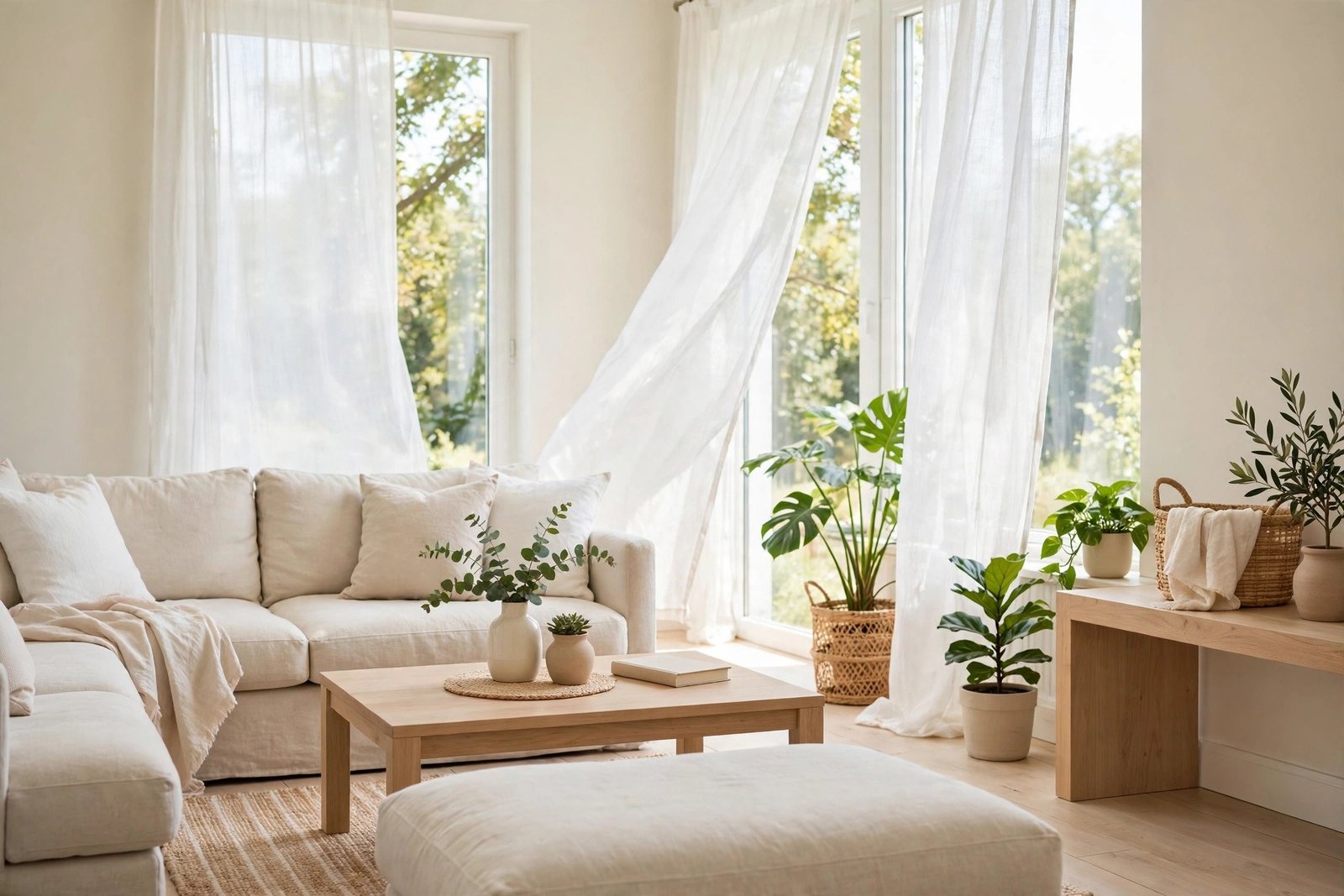
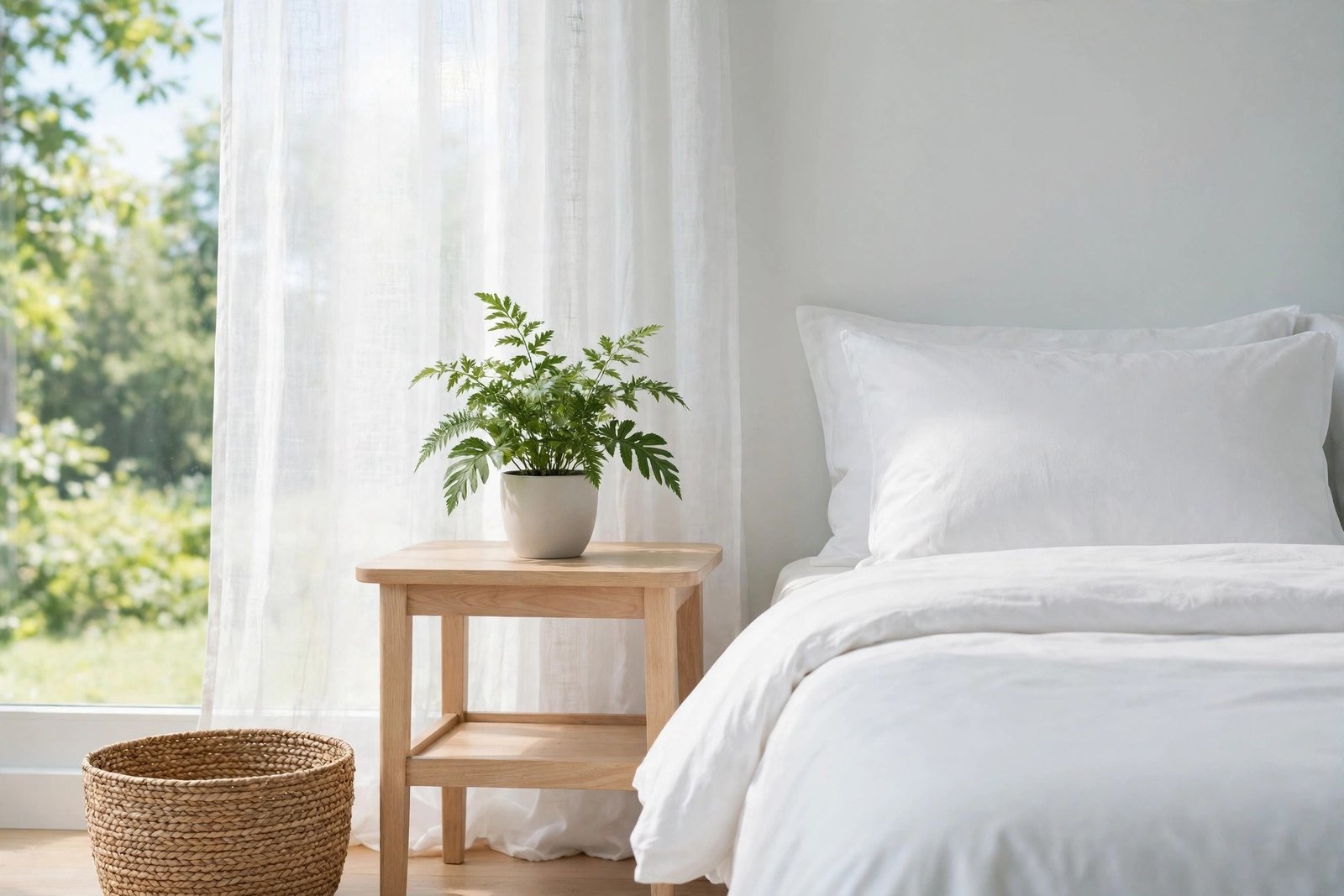
You are not repainting the room. You are changing the colours the eye lands on most: the sofa layer, the table surface, the bed or the cushions. Swap deep warm covers for pale neutrals — white, cream, pale stone — and choose accents from the cool side of the wheel: soft blue, sea green, sage, pale grey. Keep the warm colours, if you love them, to one small accent only. The same swap-first logic from the spring refresh swap order applies here, pushed further: summer wants the lightest, coolest version of every layer you own.
Fix 2: Lighten the Fabrics
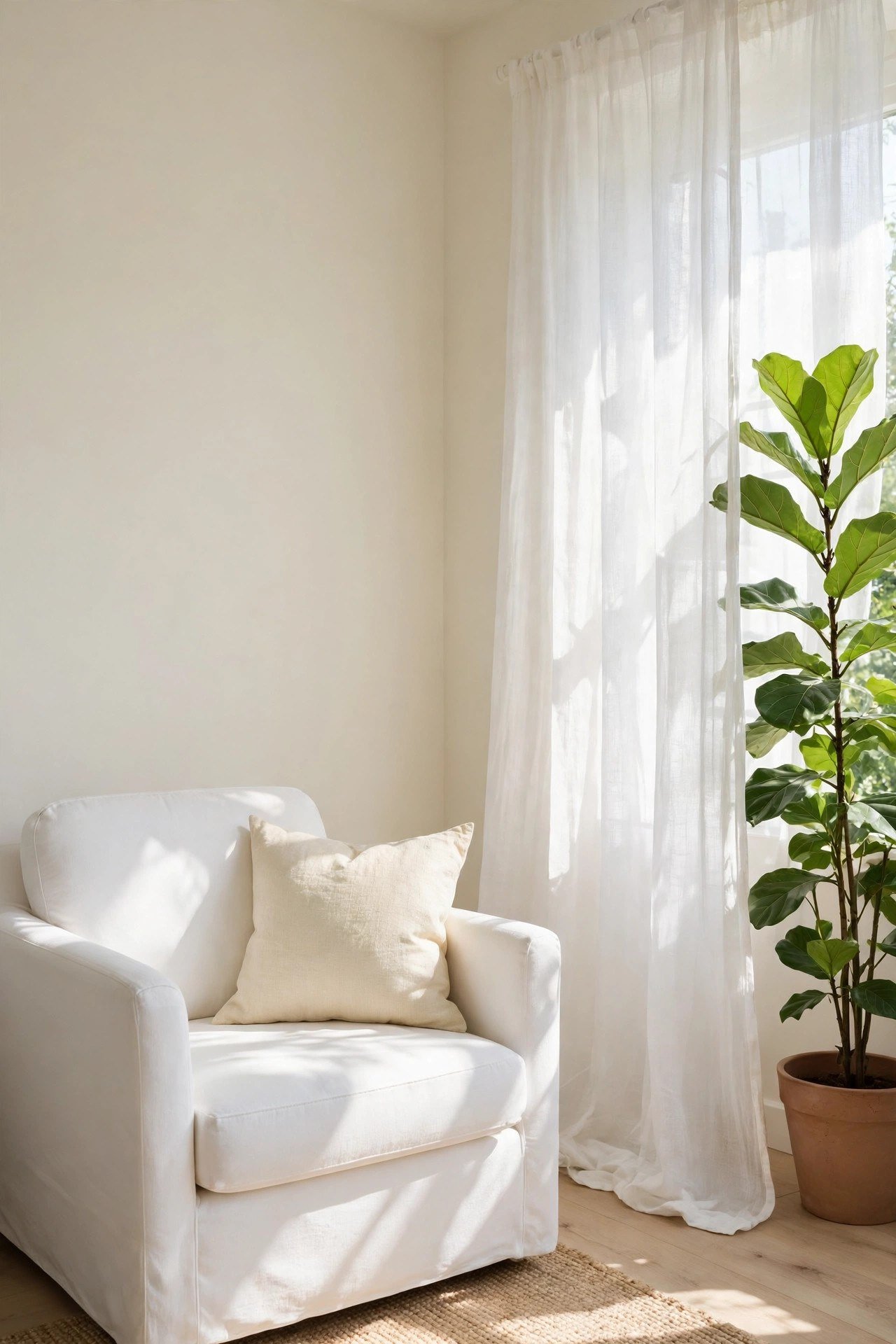
Pack the heavy textiles away — thick throws, dense cushion covers, the winter-weight curtains — and dress the room in the thinnest fabrics in the house: cotton, linen-look weaves, anything that would flutter if a window opened. Fewer layers, too: one flat throw folded small, or none. Sheer or light curtains that can be drawn fully open in the day and closed for privacy at night make the window feel like a source of air instead of a blocked wall. Bare floors help as well; rolling up a heavy rug for the season exposes the coolest-looking surface in the room.
Fix 3: Clear the Visual Weight
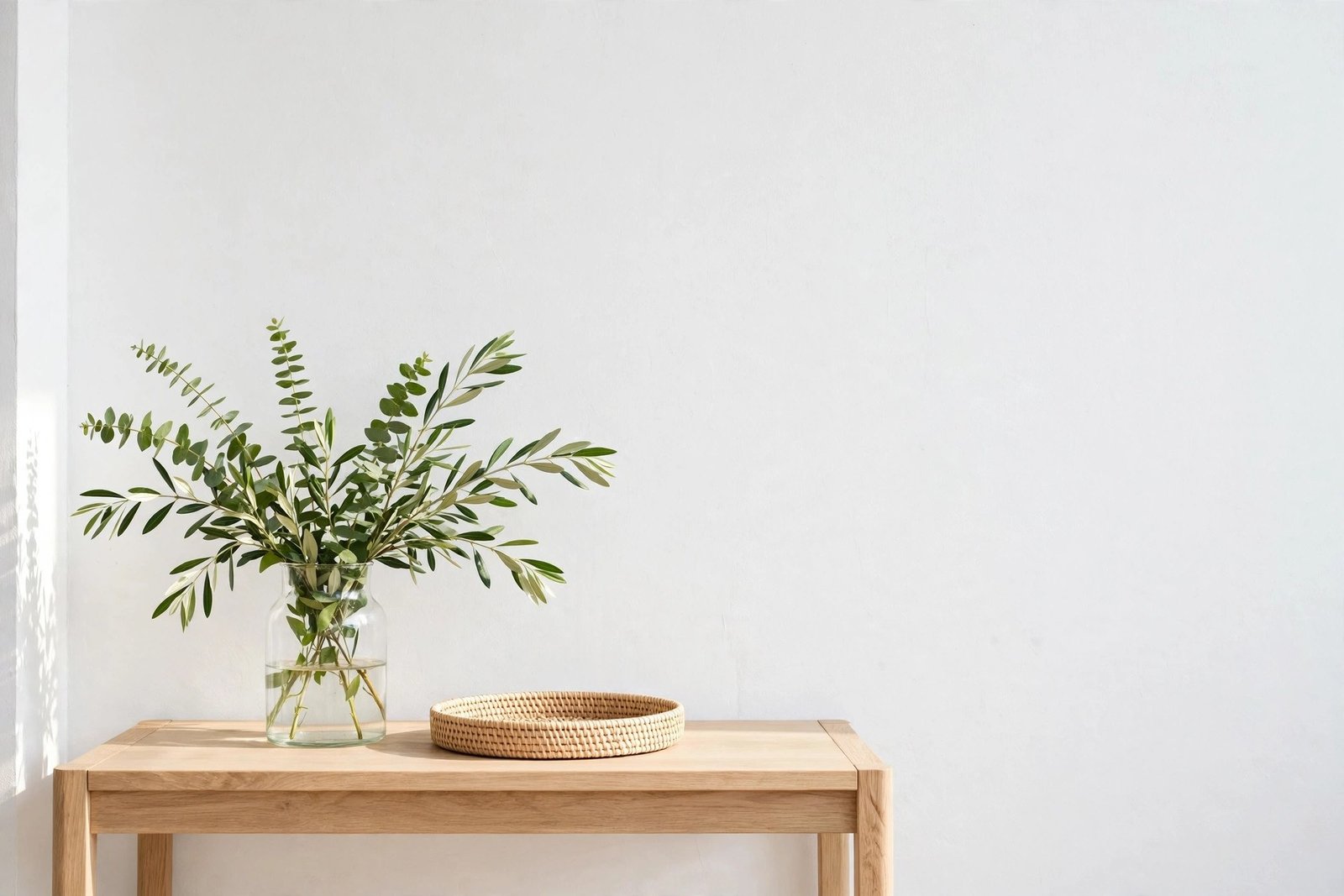
Edit the room like a hotel would: every surface keeps one useful or beautiful thing, and the rest goes into a cupboard or the summer box. Bare surfaces look cool because they suggest space, and space suggests air. Pay special attention to the surfaces nearest the seating — the coffee table, the side tables, the windowsill — because those are inside the sitter’s field of view. This is editing, not minimalism: the pieces that stay can be as characterful as you like, they just need room around them.
Fix 4: Add Light, Reflective Surfaces
A mirror opposite or beside a window doubles the daylight and instantly makes a room feel airier. Glass, pale ceramic and light metal do the same work in smaller doses — a glass vase instead of a dark ceramic one, a pale tray instead of a wooden board. If the room has one very dark, heavy piece of furniture you cannot move, lighten what sits on and around it: a pale cloth, a light cushion, a plant. You are breaking up the dark mass the eye reads as heat.
Fix 5: Open the Airflow Path
Look at the room as air would. It enters at windows and doors and wants a clear route through. Pull furniture a few centimetres off the wall under windows, move anything stored in front of vents or radiators, and keep the line between the window and the door free of tall pieces. Curtains should stack back clear of the glass when open. None of this changes the decor style — it changes whether the room looks like air can move through it, which the brain reads as coolness within seconds.
Fix 6: Greenery — The Coolest Colour There Is
Green is the colour the eye rests on longest without tiring, and living green carries an extra message: shade, water, outdoors. One large plant near the seating, or a group of two or three at different heights, cools a room’s look more than any object you can buy. Choose leafy shapes over spiky ones for softness, and put the plant where it catches daylight so the leaves glow a little. If a real plant is impossible, a generous vase of green branches does the job for a week at a time.
Step by Step: The One-Afternoon Cool-Down
- Strip the warm layer (25 minutes). Heavy throws, dark covers, dense curtains and the heavy rug out; washed and into the summer-season storage box.
- Dress it light (20 minutes). Palest covers on, thin throw or none, light curtains hung and drawn fully back.
- Clear the surfaces (20 minutes). One thing per surface in the seating zone; everything else boxed or cupboarded.
- Open the air path (15 minutes). Furniture off the windows and vents, curtain stacks clear of the glass, window-to-door line walked and unblocked.
- Light and green (15 minutes). Mirror angled to catch the window if you have one, pale pieces swapped in for dark ones, plant placed by the seating.
- Evening check (5 minutes). Lamps on: the room should still feel light. Choose the coolest-white bulbs you find pleasant for the main lamp if the glow still reads hot.
Materials and Costs
- Pale cotton or linen-look cushion covers, if the home owns none — $10–$18
- Sheer or light curtain panels, per window — $8–$15
- One large leafy plant — $8–$15 (or $0 for cuttings from an existing plant)
- Storage box for the packed-away warm layer — $3–$6
- A mirror, only if the room has none at all — $10–$25 second-hand
- Laundry for stored textiles — $2–$4
Most of the change is swapping and storing, so a typical spend is $0–$25. The packed-away warm layer is not waste — it is the cold season’s decor, already bought.
Mistakes to Avoid
- Painting everything blue. A room of cold blue and grey can feel chilly and unwelcoming rather than fresh. Cool the accents and textiles; keep some natural warmth in wood and cream so evenings still feel kind.
- Removing every soft thing. Bare is good; empty is not. One thin throw and two cushions keep the room sittable while still reading light.
- Blocking windows with plants. A jungle on the sill stops the light and the air you just freed. Plants belong beside the window, not across it.
- Sheer curtains where privacy matters, with no backup. Pair sheers with the existing curtains or a blind for the evening, so the fix survives real life.
- Expecting decor to do an appliance’s job. If the room is genuinely overheated — sun blasting a west-facing window all afternoon — shading outside the glass and real ventilation matter more than any colour change. Decor fixes the feeling; check the physics too.
More ideas for every season’s turn live in the seasonal and holiday decor collection.
Frequently Asked Questions
Do cool colours really make a room feel cooler?
They change the feeling, not the temperature — and the feeling is real. People consistently judge pale, blue-green-leaning rooms as cooler than deep, red-leaning rooms at the same measured temperature, and they relax in them sooner. It is the same reason hotels dress summer rooms in white and pale blue. Expect comfort, not air conditioning.
What is the single most effective change?
The textile swap combined with clearing the surfaces. Heavy dark fabrics are the loudest “hot” signal in a room, and clutter is the loudest “airless” one. Together they take under an hour, cost nothing if you already own light covers, and change the room more than any single purchase.
My room has dark furniture I cannot replace. What can I do?
Break up the dark mass instead of fighting it. A pale throw across the sofa back, light cushions, a pale cloth or runner on the dark table, and a plant beside the darkest piece all interrupt the eye’s reading of “heavy”. Dark furniture in a light-dressed room reads as contrast and quality; dark furniture in a dark-dressed room reads as heat.
Should I roll up my rug for the summer?
If it is thick or deep-coloured, yes — bare floors are the coolest-looking surface in the room, and the rolled rug stores easily. If the floor is unattractive or the room echoes, swap instead to the thinnest, palest flatweave you own. Either way, the floor is a large share of what the eye sees, so lightening it counts double.