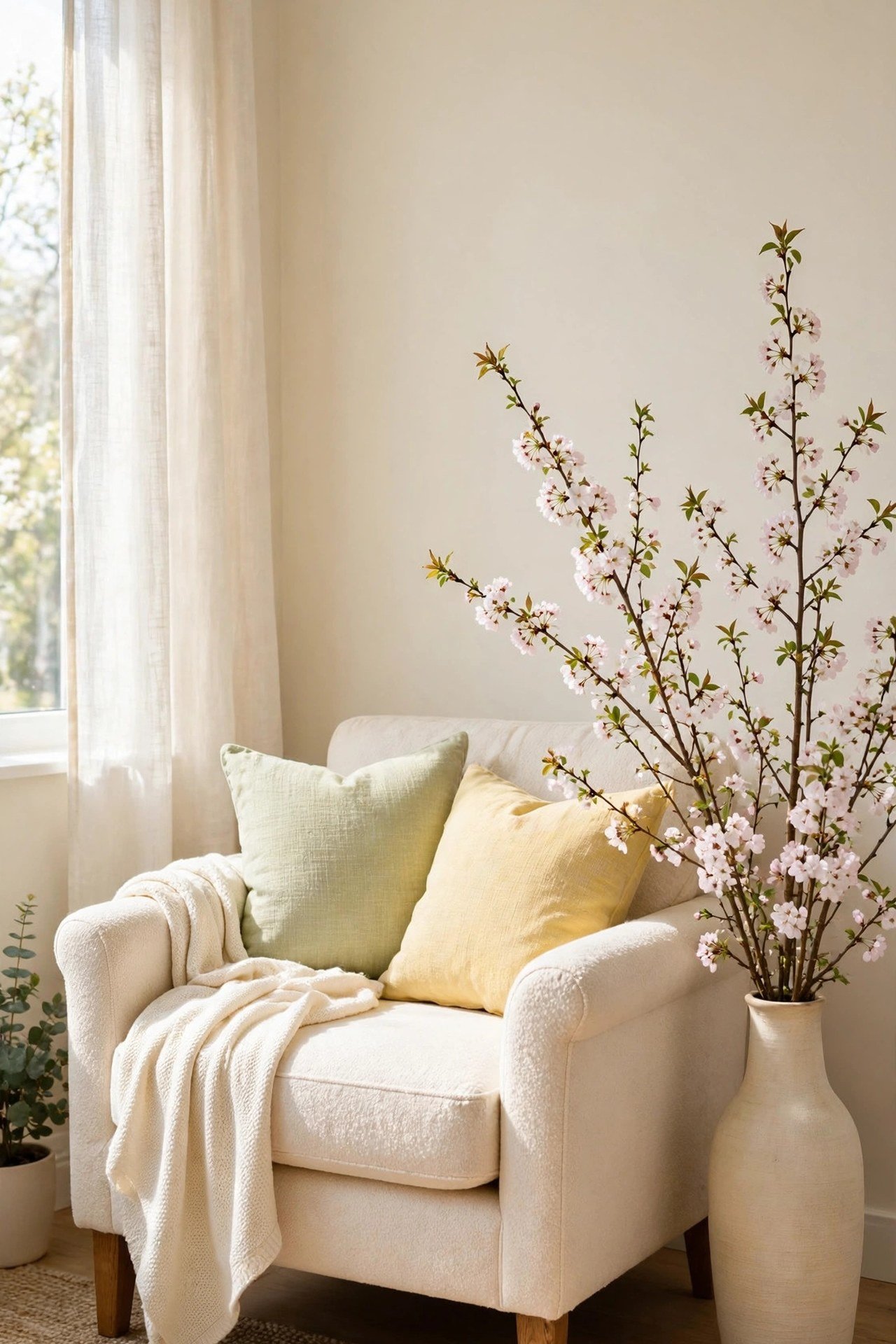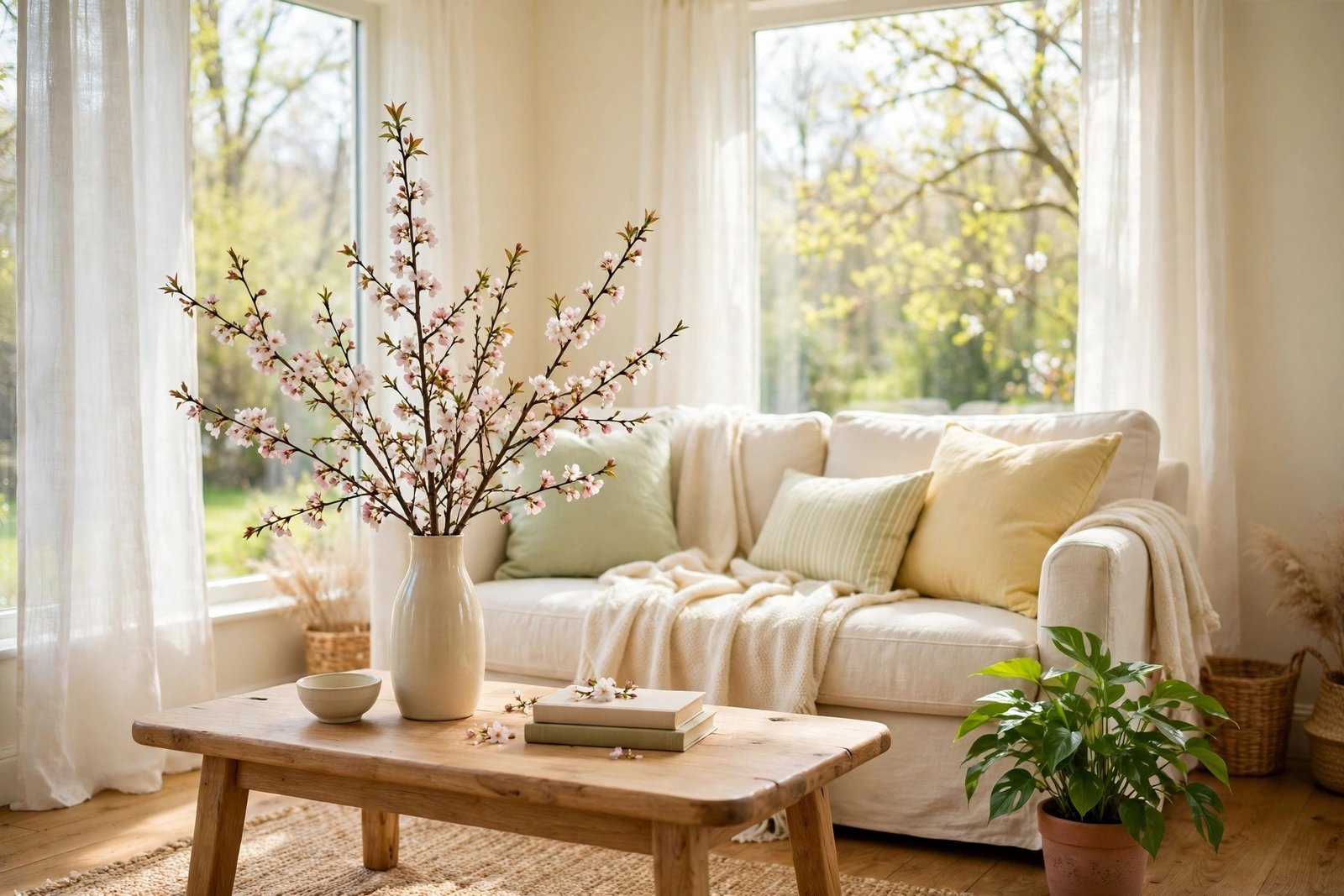
There is a particular moment each year when the room suddenly looks wrong. The light through the window has changed, the air feels different, and the heavy throws, dark covers and closed-in feeling that were cosy a few weeks ago now just look tired. The shops would love you to solve this by buying a whole new look. You almost never need to.
A spring refresh is mostly swapping, not shopping. The trick is the order: swap the layers the eye reads first, in the sequence that gives the biggest change for the least money. This guide gives you that order — four swaps, most of them free — plus a weekend plan for doing them.
Quick Answer
Refresh a room for spring by swapping in this order: first the textiles (cushion covers, throws, bedding and curtains — the heaviest visual layer), then nature and greenery (branches, fresh stems, plants moved back into the light), then light colour accents (pale versions of small decor, a lighter rug or cloth), and finally scent and light (brighter bulbs where needed, windows fully opened up, one fresh scent). Work through the swaps with what you already own before spending anything; most homes need only one or two tiny purchases to finish the job.
Before You Swap: The Ten-Minute Sort
Do not start by buying, and do not start by decorating. Start by editing. Take the winter layer off the room — the heaviest throws, the darkest covers, the dense arrangements — wash what needs washing, and store it. Then look at the bare room. A spring refresh fails when it is layered on top of winter; it works when winter is genuinely packed away first. If you keep a simple decor rotation system, this is simply its spring changeover, and the swaps below are the order to do it in.
While the room is bare, do the two free jobs that make everything after them look better: wipe the surfaces the decor sits on, and clean the window glass. Spring light is stronger and lower-angled than winter light; it shows every dusty shelf and dulls itself on dirty glass.
Swap 1: Textiles First — The Biggest Change for the Least Money
Textiles are the layer the eye reads first, and in winter they are the heaviest: thick throws, deep-coloured covers, heavy curtains. Swapping them changes the room’s temperature more than any other single move.
- Cushion covers: bring out the lightest set you own — cream, pale green, soft yellow, a clean stripe or a faded floral. If your light covers look tired, the no-sew refresh methods for cushion covers that look flat and boring — washing, re-filling, a pale dye bath — revive them for a few dollars.
- Throws: one light throw, folded small, replaces the layered winter stack. In warm climates it may be purely for looks, so choose the thinnest you have.
- Curtains and bedding: swap heavy curtains for the lightest pair you own, or simply tie the existing ones fully back so the window is clear. On the bed, a pale cover or even the plain underside of a reversible one reads as a new room.
If you buy only one thing this spring, buy it here — one set of pale covers in a washable fabric will serve every spring for years.
Swap 2: Nature and Greenery — The Free Layer That Proves the Season
Nothing says spring like something alive. This swap is nearly free and takes minutes:
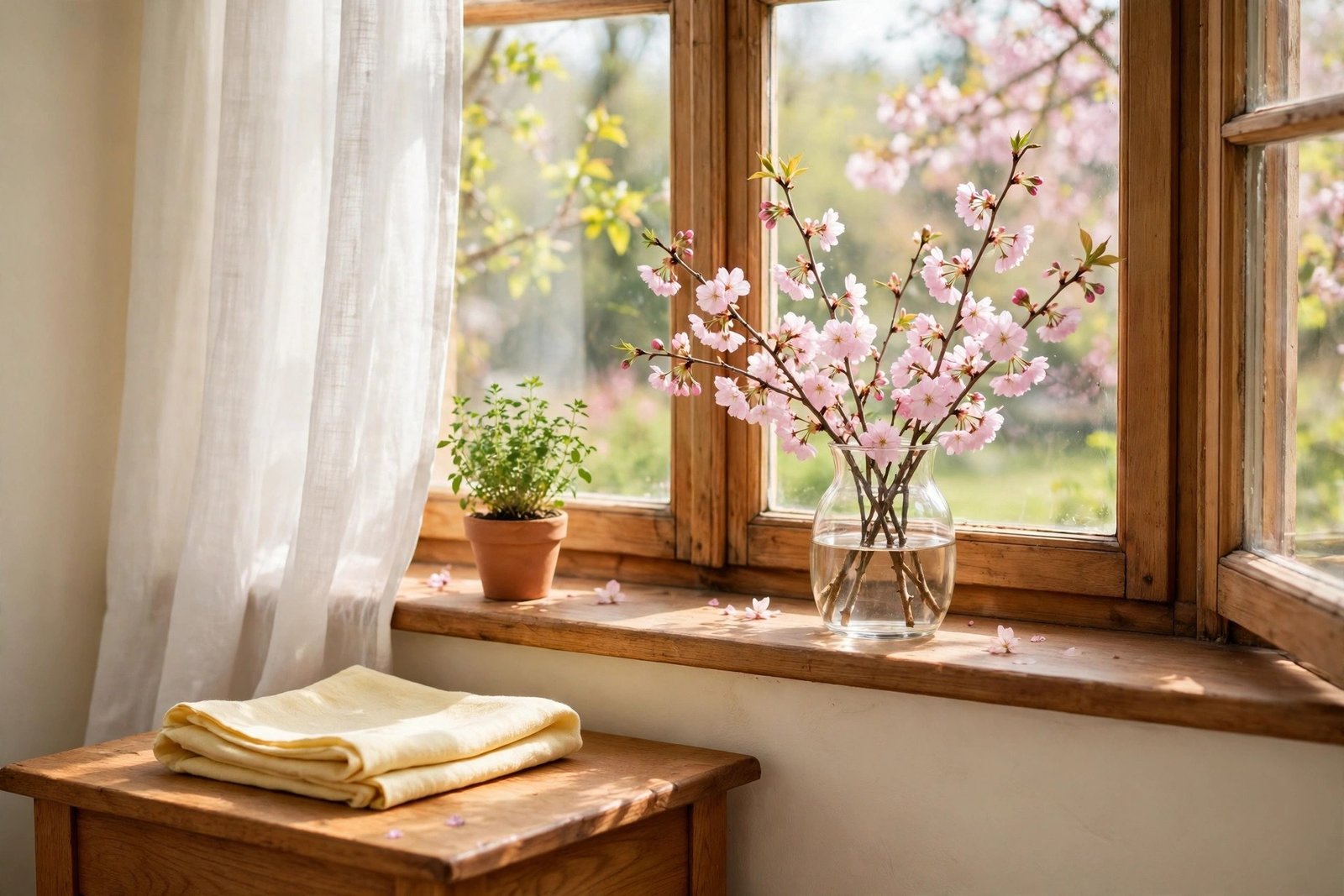
- One generous vase of stems. Blossom branches, fresh green branches, tulips or any flowering stems from the garden or market. One large, loose arrangement beats several small tight ones.
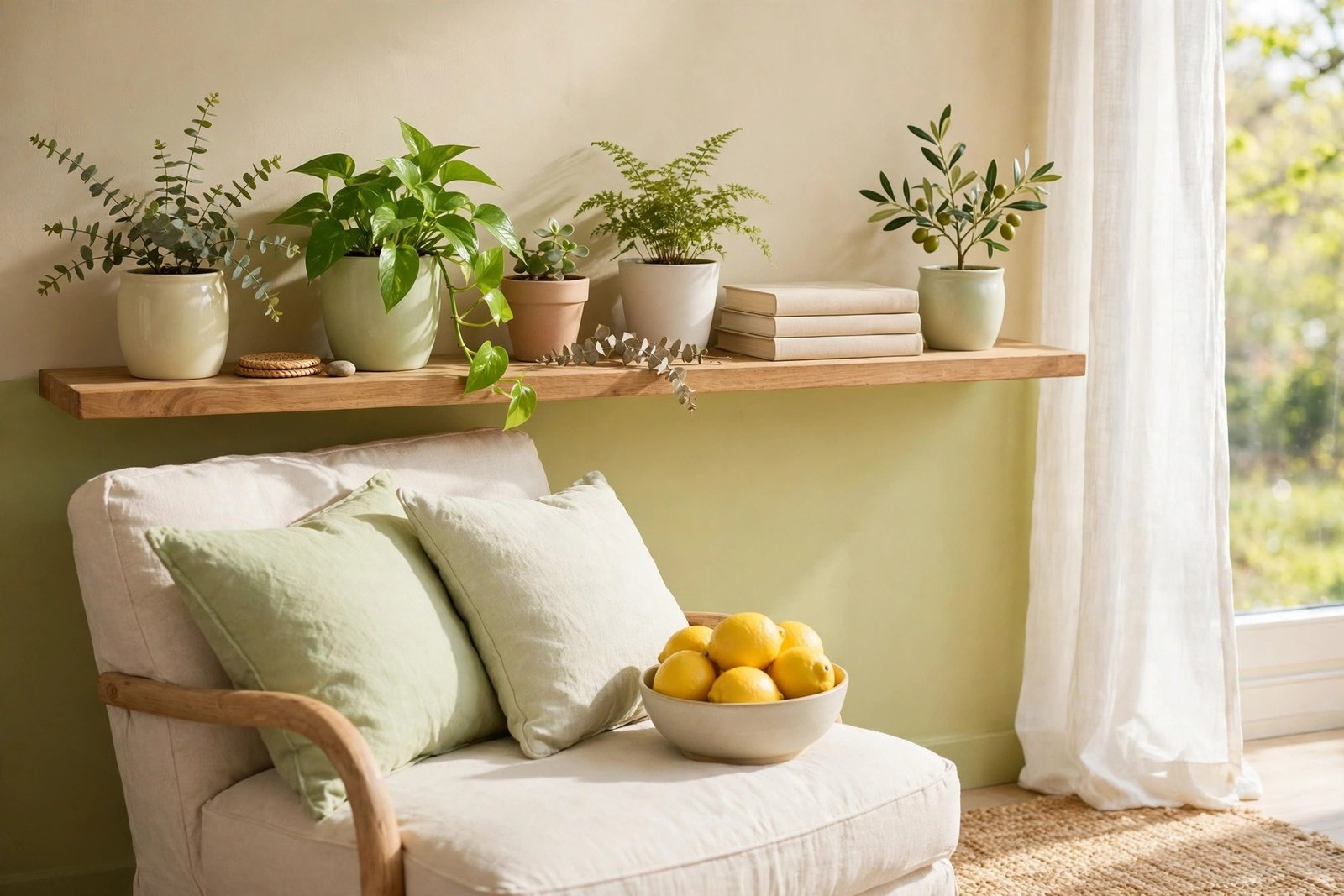
- Houseplants back into the light. Move plants that spent winter in dim corners back toward the windows, clean their leaves, and group two or three at different heights where they will be seen.
- A bowl of the season. Citrus fruit, green apples or eggs in a plain bowl on the table — colour, freshness and zero storage needed afterwards.
Keep it to one or two natural displays. The goal is a breath of the outdoors in the room’s focal spots, not a garden centre on every shelf.
Swap 3: Light Colour Accents — Small Pieces, Swapped Not Bought
With the textiles light and something green in place, walk the room and swap the small stuff. Most homes already own a lighter version of almost everything — it is just in a cupboard, another room or the wrong season’s box:
- Dark ceramic vases and pots swap for pale, glass or woven ones.
- A heavy dark table runner swaps for a pale cloth, a length of linen-look fabric, or a bare polished table.
- Art can rotate: a light print from another room, or even a page-framed piece you already own, replaces the moodiest winter picture.
- One accent colour repeated twice is enough — the same soft green or yellow in the stems and one cushion ties the room together.
Resist adding anything new until this swap is done. The room usually looks finished at this point, and anything bought afterwards is a genuine gap rather than a guess.
Swap 4: Scent and Light — The Layer You Feel, Not See
The last swap is invisible and essential. Open the room’s light up: curtains fully back during the day, nothing blocking the windows, and lamps repositioned for the longer evenings rather than the whole room’s glow. Change the scent register — put away the heavy spiced and woody candles of the cold season and use one fresh scent: citrus, green herbs, a light floral, or simply open windows and a bowl of citrus peel. The brain registers the new scent within minutes and decides the room has changed, even before the eye agrees.
Step by Step: The Weekend Plan
- Strip and store (30 minutes). Winter textiles off, washed and boxed. Surfaces wiped, windows cleaned.
- Textile swap (20 minutes). Lightest covers on, one thin throw, curtains lightened or tied fully back, pale bedding if the bedroom is included.
- Nature swap (15 minutes). One big vase of stems in the focal spot, plants moved and grouped, a bowl of fruit on the table.
- Accent swap (20 minutes). Walk the room with a basket; swap dark small pieces for pale ones from cupboards and other rooms. One accent colour, repeated twice.
- Scent and light (10 minutes). Fresh scent out, lamps checked, window paths cleared.
- The gap list (5 minutes). Only now write down what is genuinely missing. Buy from the list, nothing else.
Materials and Costs
- Laundry and a pale dye bath for existing covers — $3–$6
- One set of pale cushion covers, if the home owns none — $10–$18
- Market or garden stems for the main vase — $0–$8
- One new plant, only if the room has none — $5–$12
- One fresh-scented candle or a bag of citrus fruit — $3–$7
- Storage box for the winter layer, if needed — $3–$6
Most homes complete the whole refresh for $0–$20. The expensive version of spring — new furniture, new rug, new everything — changes less than this order of swaps, because the eye reads textiles, nature and light long before it reads furniture.
Mistakes to Avoid
- Shopping before swapping. New spring pieces layered over an unedited winter room look like clutter in two seasons at once. Sort first; the gap list comes last.
- Swapping in the wrong order. Buying pale ornaments while heavy dark textiles still cover the sofa is money spent where the eye never lands. Textiles first, always.
- Going all pastel everywhere. Spring light does not mean a room of baby colours. Keep the neutral core, and let pale greens, creams and one fresh accent do the work.
- Forgetting the windows. Dirty glass and curtains that cannot open fully will quietly cancel the entire refresh.
- Throwing winter pieces away in frustration. Washed and boxed, they are next cold season’s free refresh. The system only stays cheap if the layers keep rotating.
For the year-round version of this method — one box per season and a thirty-minute changeover — see the full rotation guide, and browse the rest of the seasonal and holiday decor ideas for each season’s turn.
Frequently Asked Questions
What if I do not own any light-coloured textiles?
Start smaller than a full set. A single pale throw over the darkest sofa, or the plain reverse side of existing covers and bedding, changes more than expected. Then add one inexpensive set of pale covers — they are the highest-value purchase in this guide and will be used every spring. A pale dye bath can also rescue white or cream items that have yellowed in storage.
How do I refresh for spring in a home with no garden?
The nature swap works without one. A few market stems, a supermarket herb pot on the windowsill, or a bowl of citrus all do the same job as garden branches. Even a tall vase of bare twigs with a few green leaves reads as spring if the arrangement is generous and loose rather than small and tight.
When should I do the spring refresh?
When the room starts feeling wrong — when the light through the window changes and the heavy layers stop looking cosy and start looking tired. That moment arrives at different times in different places and homes, so follow the light and the temperature where you live, not a date on a calendar.
Can I do a spring refresh in a rented home?
Yes — every swap in this guide is reversible and needs no fixing, drilling or painting. Textiles, stems, swapped small pieces and scent all come in and out in boxes. It is one of the few full room refreshes a renter can complete in a weekend and undo in an hour.