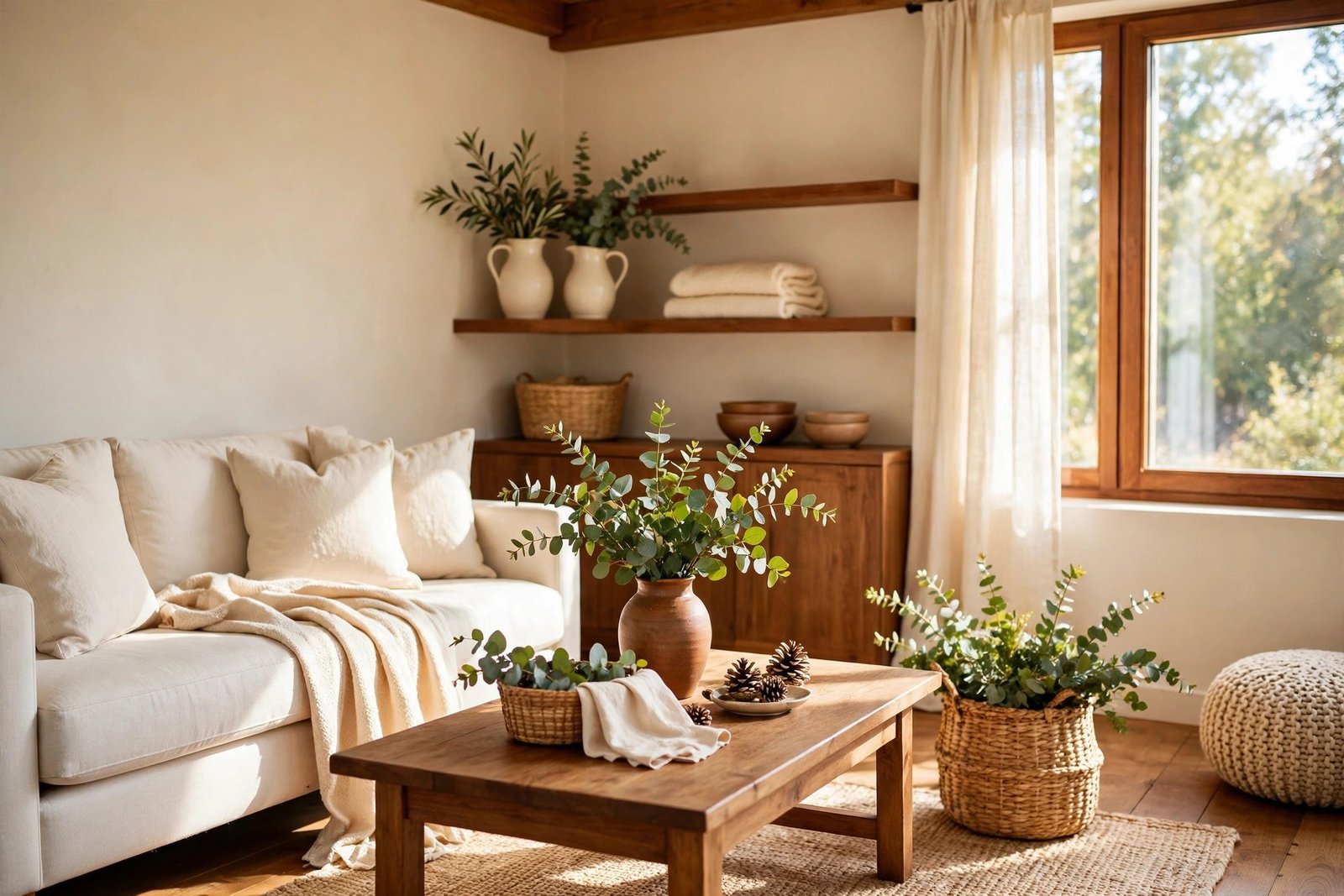
Every home has a version of this moment. The light changes, the weather turns, and a room that felt right suddenly feels flat — not dirty, not messy, just finished in a way that no longer fits the season outside the window. The usual response is either buying a pile of new seasonal decor or doing nothing and living with the flatness until it passes.
There is a third way, and it is a system rather than a shopping trip: a decor rotation. Keep a small, calm, season-neutral core that never moves, then swap just three light layers — textiles, nature, and scent and light — as each season arrives. This guide shows how to set the system up once, store it in one box per season, and run a full changeover in about thirty minutes.
Quick Answer
To stop your home feeling flat at every season change, split your decor into a permanent core and three rotating layers. The core — furniture, large art, lamps, neutral cushions and throws — stays all year. The rotating layers are textiles (cushion covers, throws, a table runner), nature (branches, greenery, fruit, flowers, whatever the season offers free), and scent and light (candles, lamp warmth, one seasonal scent). Store each season’s small pieces in one labelled box. When the season turns, a changeover is three swaps, takes about thirty minutes, and costs little or nothing after the first setup.
Layer Zero: The Season-Neutral Core
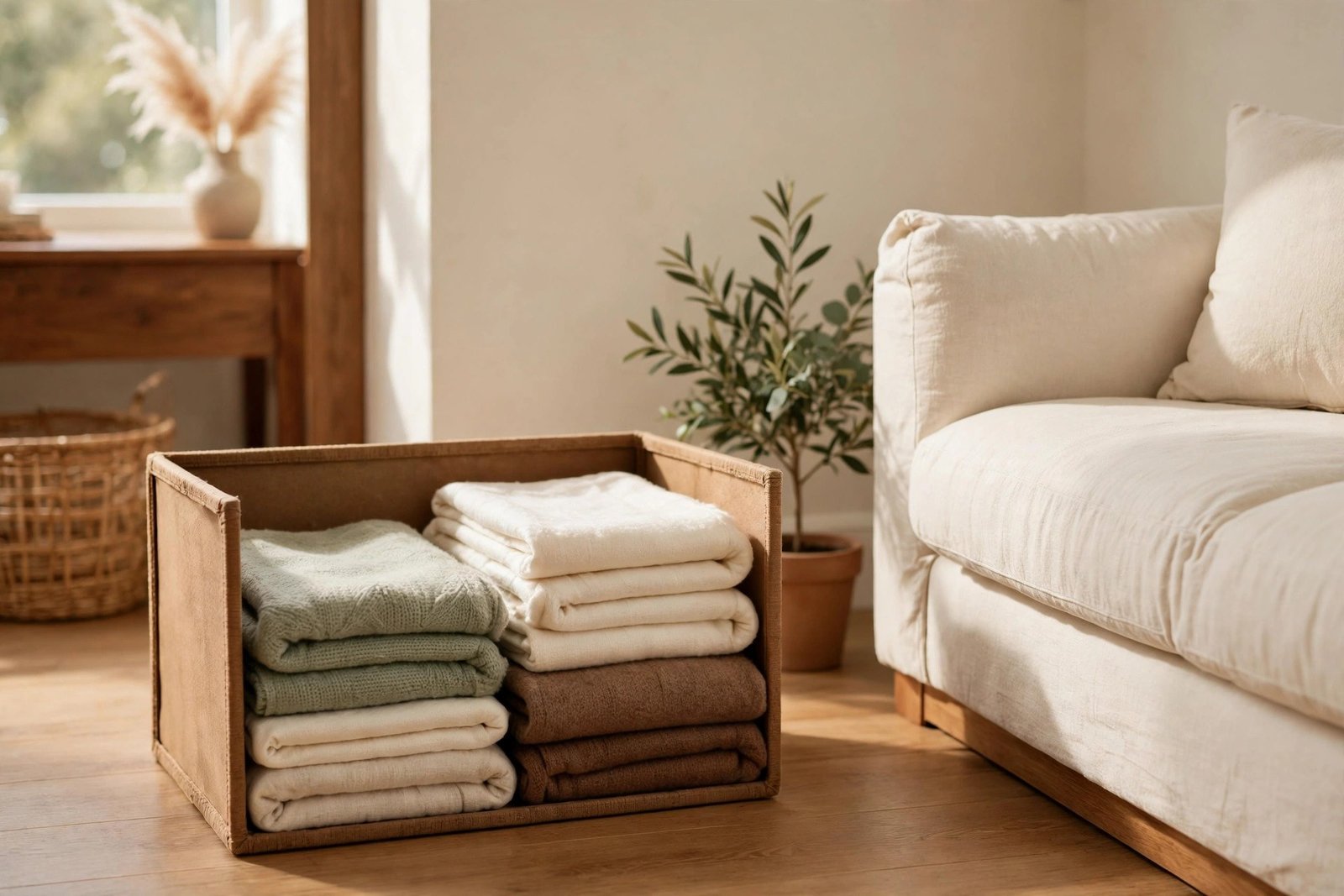
The system only works if most of the room never changes. Choose the biggest, most visible decor — the rug, the main cushions, the largest picture, the permanent plants — in colours and materials that belong to no season: warm neutrals, natural wood, plain woven textures, one metal finish. This core is what makes rotation cheap, because you are never redecorating a room; you are re-dressing a calm base.
If your current base is full of strongly seasonal pieces, do not replace everything at once. As items wear out or get replaced naturally, steer the replacements toward neutral. Within a year most homes drift into a workable core on their own. The core also benefits from the reuse habit — the same pieces, arranged freshly, do most of the work when you redecorate a room using only what you already own.
Layer One: Textiles — the Fastest Season Signal
Textiles are the layer the eye reads first, and they are the cheapest to store. You do not need a set per season; you need a small set of swaps that change the room’s temperature visually:
- Spring: lighter covers, one fresh colour — soft green, pale yellow, a clean stripe.
- Summer: the lightest fabrics you own, fewer layers, cushions reduced rather than swapped.
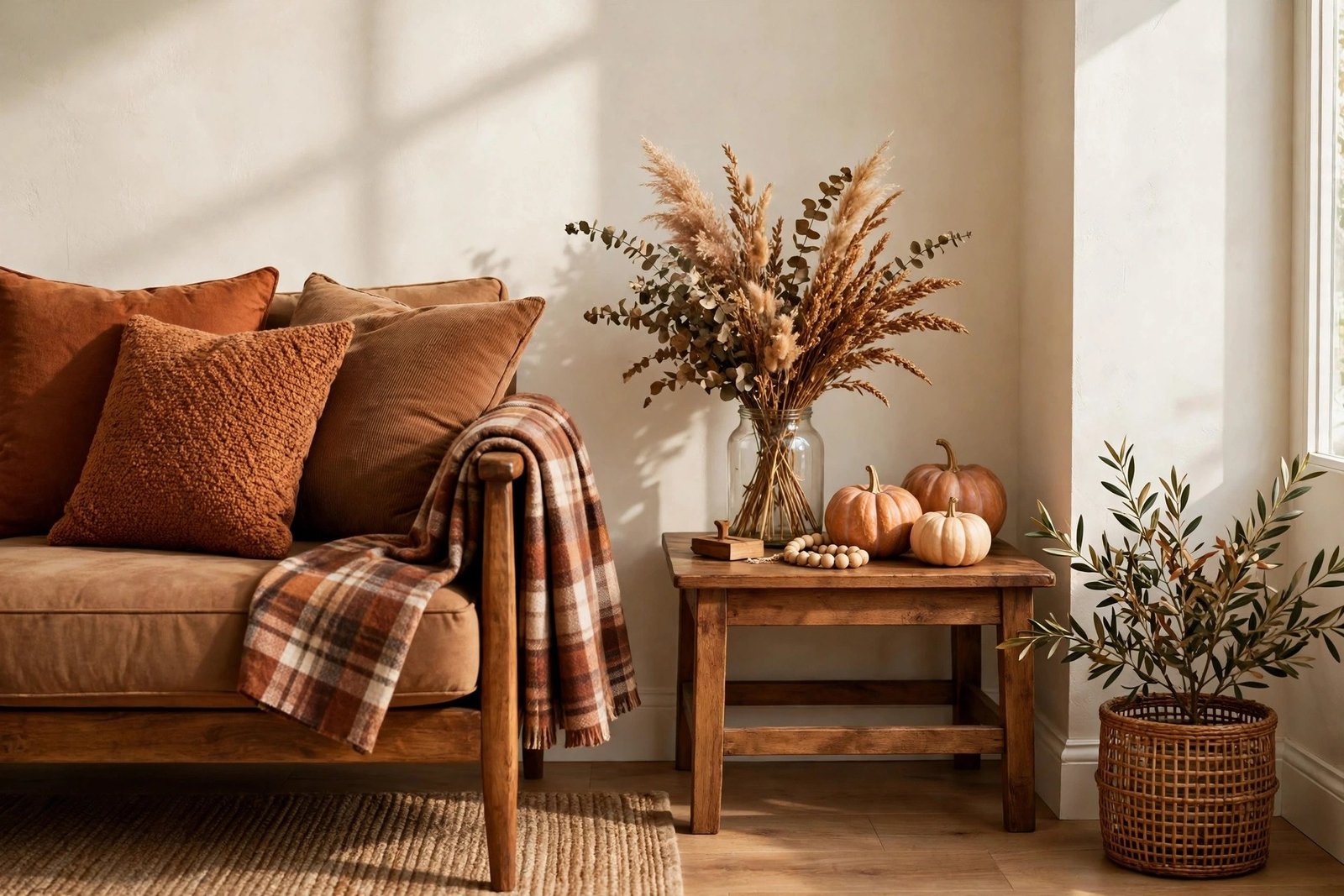
- Autumn: deeper tones and one heavier throw — rust, mustard, warm brown.
- Winter: the heaviest textures, layered throws, the darkest and warmest covers you have.
Two or three cushion covers, one throw and one table runner per season is genuinely enough, and the no-sew refresh methods for cushion covers that look flat and boring mean a “new” seasonal set can be an old set washed, re-filled and re-dyed rather than bought. Textiles fold flat, which is why this layer carries the rotation: it stores in almost no space.
Layer Two: Nature — the Free Layer
Every season offers decor for free; the system is simply remembering to bring it indoors. One vase, kept permanently in the core, gets re-filled four times a year:
- Spring: blossom branches, tulips or any flowering stem from the garden or market.
- Summer: loose greenery, herbs in a jar, a bowl of citrus or garden fruit.
- Autumn: dried grasses, seed heads, branches with turning leaves, a bowl of nuts or gourds.
- Winter: evergreen cuttings, pinecones, bare sculptural branches — and for the festive weeks, the fuller treatment in the guide to Christmas decor on a budget builds directly on this layer.
Keep it to one or two natural displays. A single generous vase of branches changes a room more than six small seasonal ornaments, and it goes on the compost heap afterwards instead of into storage.
Layer Three: Scent and Light
The layer people forget is the one they feel most. Each season has a scent register — fresh and green in spring, light and citrus in summer, spiced and woody in autumn, warm and resinous in winter — and one candle, simmer pot or diffuser scent per season is enough to mark it. Change nothing else about the scent between changeovers; the brain learns the association, and the room feels different the moment the new scent arrives.
Light rotates too. In the darker seasons, move lamps lower and warmer: light the corners, add candles, and let the room glow earlier in the evening. In brighter seasons, clear the windows, swap heavy curtains for the lightest dressing you have, and let daylight do the decorating. A home that only changes its objects but never its light will still feel half flat.
The System: One Box per Season
Storage is where rotation systems usually die, so keep it brutally simple. Four boxes — or fewer, if your seasons are mild — each labelled with one season’s name. Only the rotating layers go in: the textile swaps, any small seasonal objects you genuinely love, and a note card (see below). If a season’s pieces do not fit in its box, the season has too many pieces; edit rather than buying a bigger box.
Inside the lid, tape a note card listing what the changeover involves in your home: which covers go on, where the vase moves, which scent comes out. The card turns a vague “I should refresh the room” into a checklist your future self can finish in half an hour — and it stops the slow drift where one season’s pieces quietly colonise every cupboard in the house.
Step by Step: The 30-Minute Changeover
- Out with the old (10 minutes). Strip the three layers: covers and throws off, the vase emptied, the old scent away. Everything goes straight into the outgoing season’s box — wash textiles first so they store clean.
- Reset the core (5 minutes). While the room is bare, shake out cushions, wipe the surfaces the decor sits on, and put the permanent pieces back neatly. The core always gets its small reset at changeover, which is half the freshness.
- In with the new (10 minutes). New covers on, throw placed, vase filled with the season’s nature, new scent lit or set out.
- Adjust the light (5 minutes). Swap a lampshade, move a lamp, add or remove candles to suit the season’s daylight.
- Store and note (2 minutes). Box closed, labelled, back in its place. Update the note card if anything changed.
Materials and Costs
- Four storage boxes with lids, one per season — $12–$24 total, or free if you reuse sturdy boxes
- Labels and note cards — $0–$2
- Seasonal textile swaps, built gradually — $0–$15 per season, often $0 using dye and refresh tricks
- One candle or scent per season — $4–$8 each
- Nature layer — $0, gathered or from the garden
- One good permanent vase, if the core lacks one — $5–$12
After the first setup, most changeovers cost nothing but half an hour. The running list of what actually earns a place in each box lives in the seasonal and holiday decor collection.
Mistakes to Avoid
- Rotating everything. If the whole room changes each season, nothing anchors it and the cost and storage explode. The core stays; only three light layers move.
- Buying a full decor set per season. Shops sell seasons as collections; the system needs a handful of swaps. Two covers and a throw outperform a trolley of themed ornaments.
- Storing textiles unwashed. Moths and musty smells love stored fabric. Wash, dry fully, then box — and the next changeover starts fresh instead of stale.
- Forgetting the light layer. Objects alone cannot fix flat. A room with winter textiles and summer-bright lighting still argues with itself.
- No note card. Without the checklist, every changeover starts from memory, half the pieces get forgotten, and the system quietly dies within a year.
- Timing by the calendar instead of the weather. Seasons turn when the light and temperature turn where you live, not on a printed date. Change over when the room starts feeling wrong — that feeling is the signal the system exists to answer.
Frequently Asked Questions
How many pieces does each season really need?
Fewer than you think: two or three cushion covers, one throw, one runner or table cloth, one scent, and whatever nature provides. That fills one modest box per season and is genuinely enough to change a room’s feel, because the pieces you chose are the high-signal ones — the textiles at eye level and the vase in the room’s focal spot.
My home is small. Can I still run a rotation?
Yes — small homes benefit most, because one box per season is a tiny storage footprint and a small room changes completely with three swaps. If four boxes are too many, merge: many homes run a two-box system, one for the warm half of the year and one for the cold half, with nature and scent doing the finer seasonal work.
What if I love a strongly seasonal piece, like a festive cushion?
Keep it — the system has room for joy. The rule is about proportion, not purity: one or two beloved seasonal pieces inside the rotating layers are exactly what the layers are for. What the system prevents is the permanent core becoming seasonal, which is what forces a full redecorate every time the weather turns.
How do I start if my decor is currently all one season?
Start with the box, not the shopping. Pack away everything that belongs to the season you are leaving, and look at what remains: that remainder is your core, and it will show you exactly which neutral pieces it lacks. Then add one textile swap for the new season. The system builds itself over two or three changeovers; it does not need a perfect launch day.
3 thoughts on “Home Feels Flat Every Season Change: A Simple Decor Rotation System That Works”