Christmas decorating has a pricing problem. Shops present the festive look as a collection — the wreath, the garland, the matching bauble sets, the themed cushions — and the total quietly climbs into hundreds before the room feels any different. Meanwhile the living rooms that feel genuinely festive in photos usually share something else: not more decor, but decor in the right three or four places, lit warmly.
This guide is the budget version of that look. Start with what you already own, spend only where the impact concentrates — the focal point, the mantel or shelf, the entryway, and the light — and let free greenery and rearrangement do the rest. The total can stay under $50, and most of it is reusable every year.
Quick Answer
To make a living room feel festive on a budget, decorate in order of impact, not by shopping list. First, one strong focal point: a tree if you have one, or a branch, ladder or vase arrangement if you do not. Second, one mantel or shelf vignette built from what you own plus greenery. Third, the entryway — a wreath or a simple bow moment where guests arrive. Fourth, warm light everywhere: every lamp on, candles or fairy lights doing the glow. Spend the budget on light and one or two reusable pieces, gather greenery free, and skip themed extras entirely.
Step Zero: Shop Your Home First
Before spending anything, gather what the house already holds into one place: candles and holders in every material, plain baubles or ornaments from any era, ribbon, jars, baskets, trays, a cake stand, plain white or cream textiles, anything metallic. Most homes own a scattered half-set of Christmas without knowing it — the trick of redecorating a room using only what you already own applies with extra force at Christmas, because festive pieces hide in cupboards all year.
Choose a simple palette from what you found — say, green, warm white and one metal — and put everything outside that palette back. A strict palette is the single cheapest festive upgrade there is: mixed leftovers look like leftovers, while the same objects in one colour story look like a collection you bought on purpose.
Priority One: The Focal Point
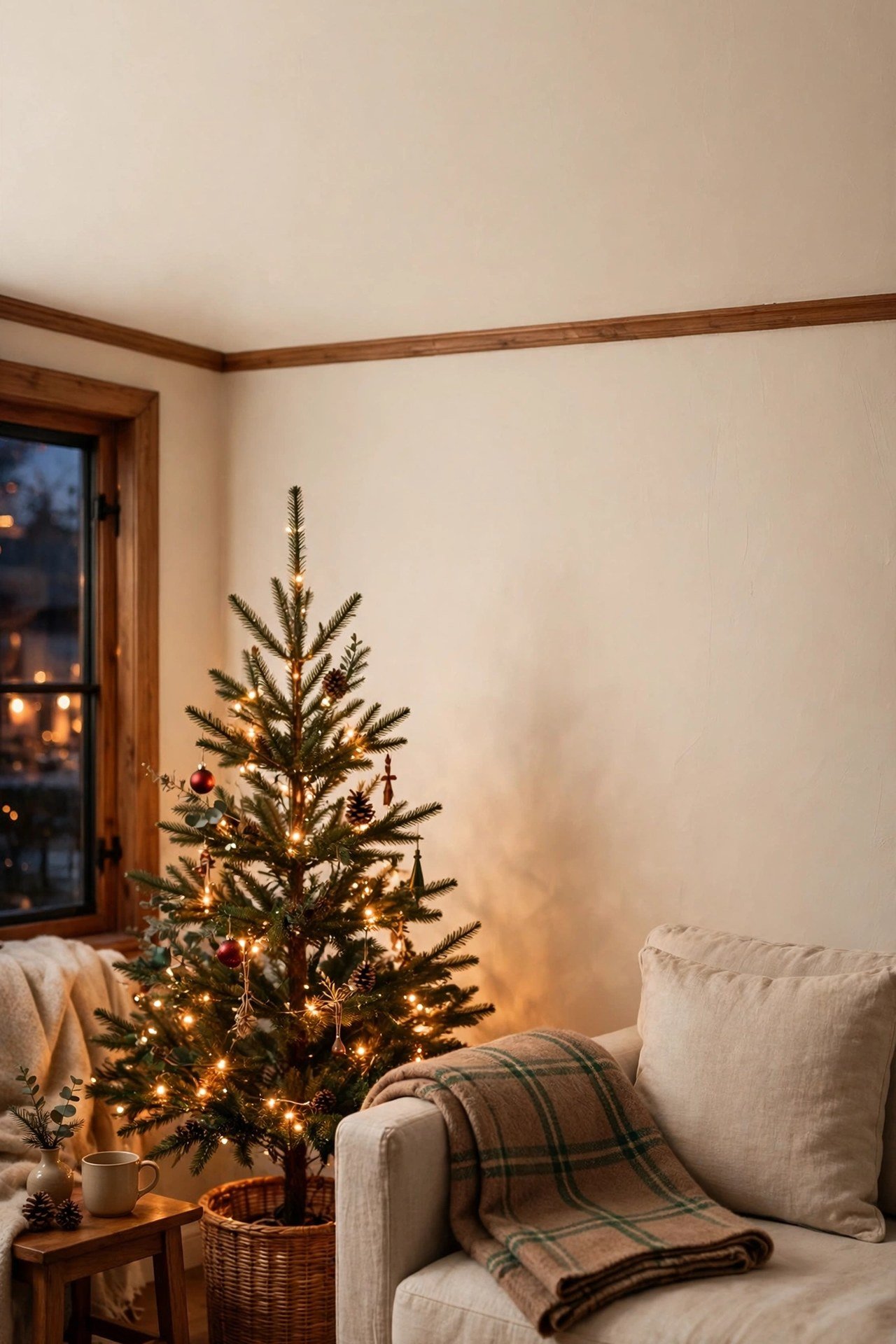
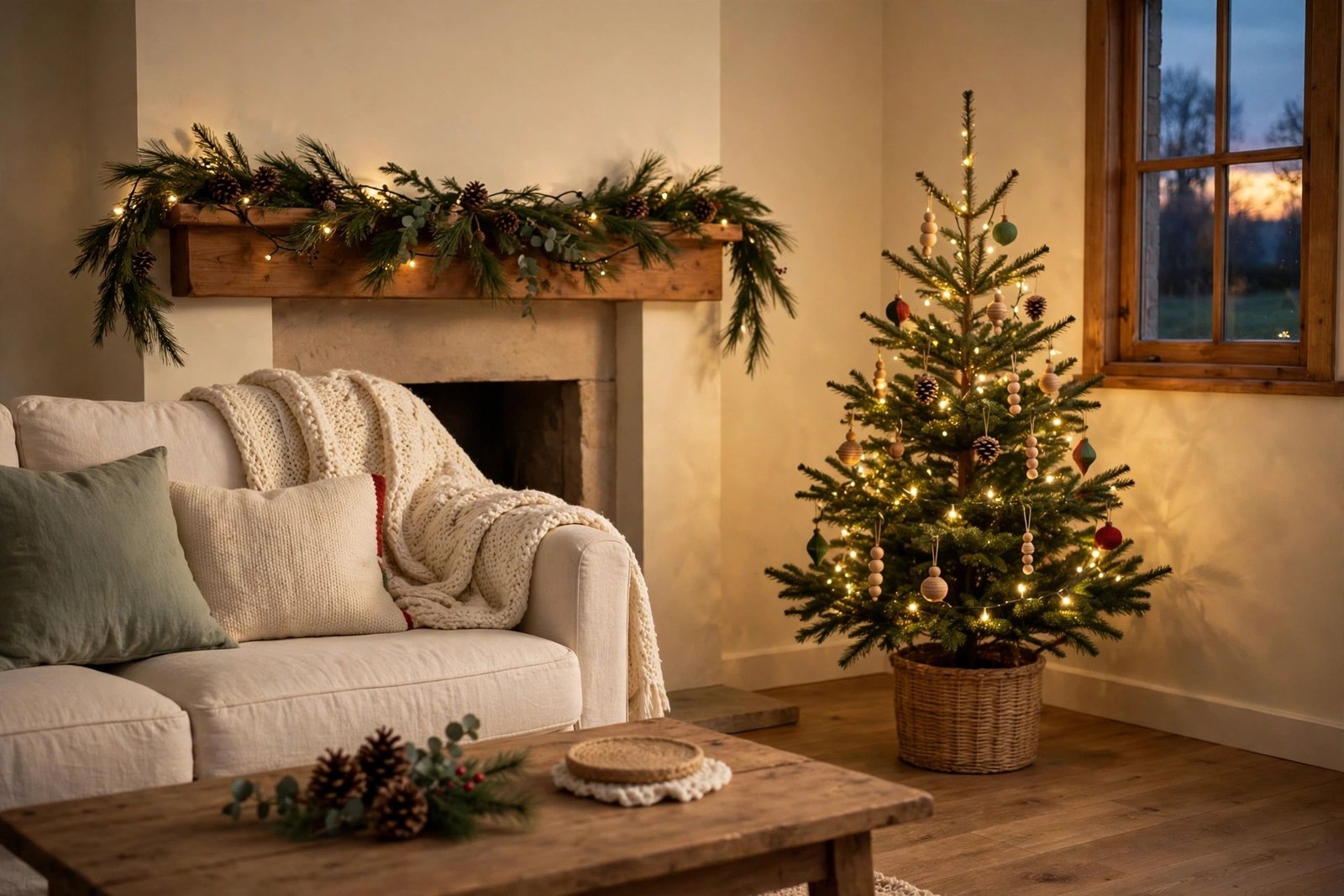
Every festive room has one main event. If you have a tree, it is the tree: spend your effort on making it fuller and warmer rather than bigger — lights first and deep inside the branches, then the largest ornaments near the centre, smaller ones toward the tips, and a topper you already own or one made from ribbon.
No tree, or no room for one? The focal point can be:
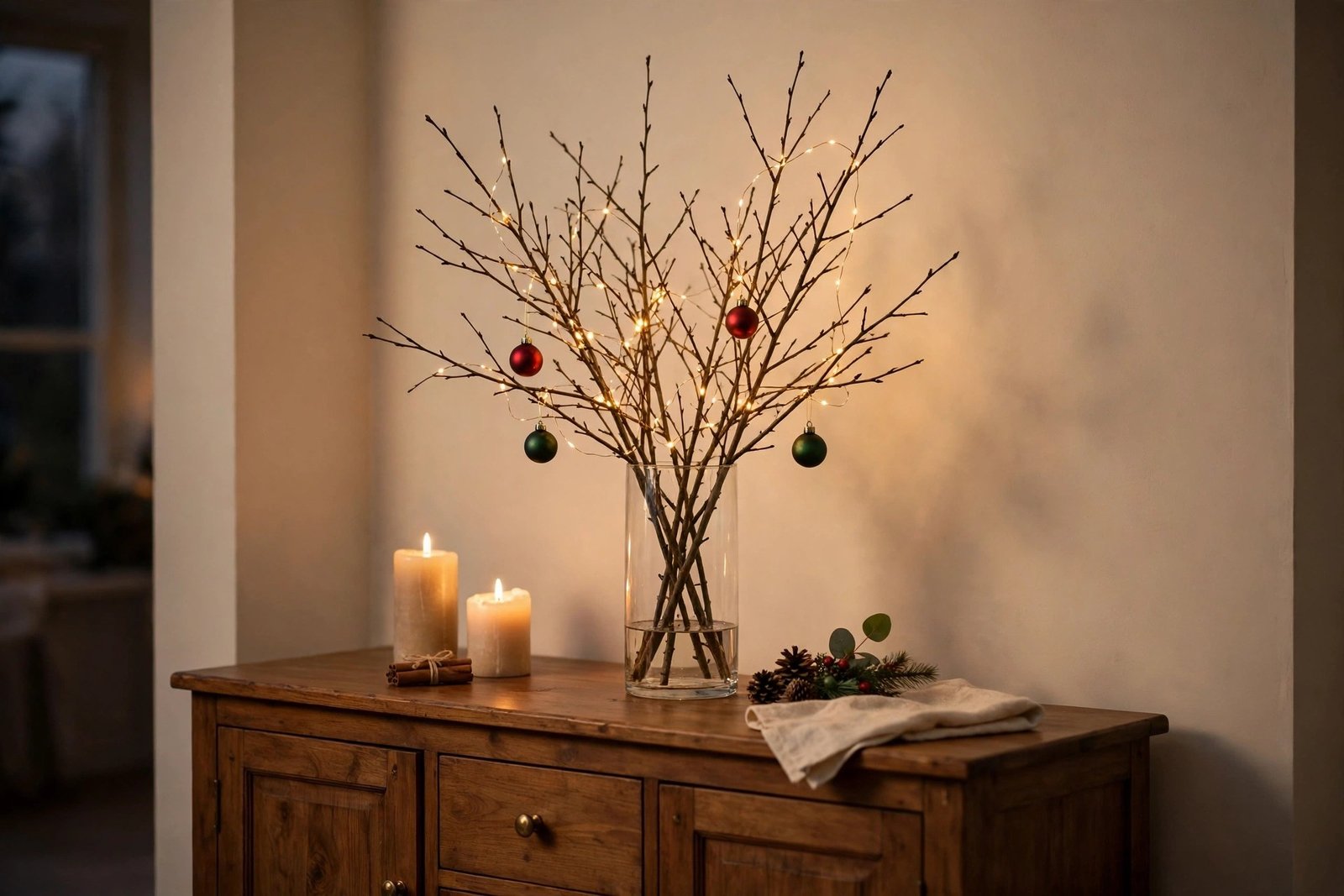
- A branch arrangement: one sculptural bare branch in your heaviest vase or a bucket hidden inside a basket, hung with a handful of ornaments and a string of fairy lights. It reads as modern, costs almost nothing, and takes two square feet of floor.
- A decorated ladder or shelf edge: a leaning ladder or the room’s main shelf draped with greenery and lights, ornaments hung at intervals.
- A window moment: paper stars, a row of candles or a small wreath in the main window — the focal point the room and the street share.
One focal point, done generously, beats five apologetic ones. Choose yours and give it the majority of the greenery and light.
Priority Two: The Mantel or Shelf Vignette
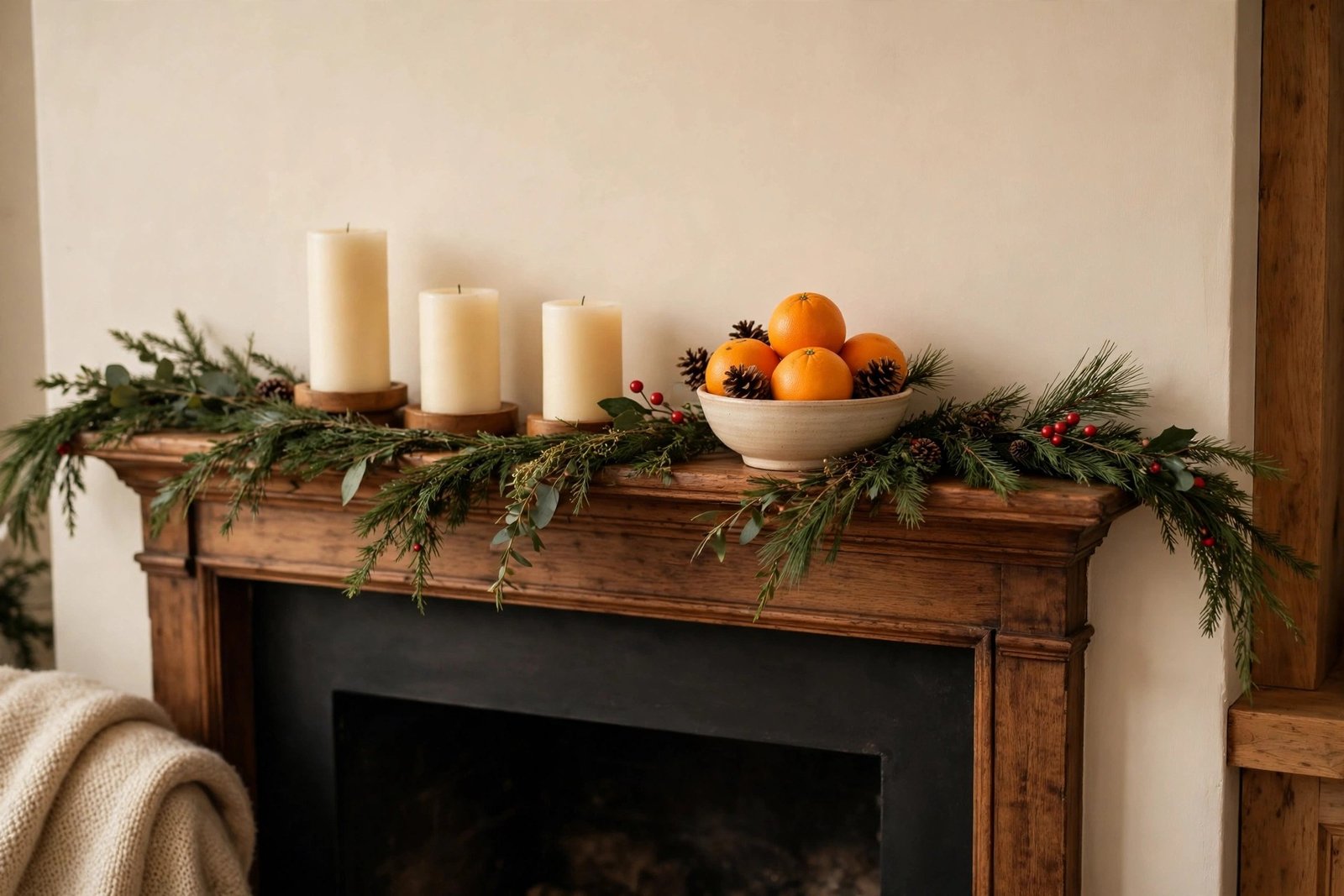
The mantel — or the shelf, sideboard or bookcase top that plays its role — is where the room’s styling shows. Build it in three layers: a base of greenery laid along the length (real cuttings if you can gather them, or the best reusable garland you own), a rhythm of heights from candles, jars or ornaments grouped in odd numbers, and one repeated element — the same ribbon, the same ornament colour — tying it to the focal point.
Work with the system in the simple decor rotation system: the mantel vignette is simply the winter layer done at full strength, and everything reusable goes back into the winter box in January. Leave breathing space in the vignette; a mantel crammed edge to edge looks like storage, while grouped clusters with gaps look like styling.
Priority Three: The Entryway
Guests feel the festivity in the first ten seconds, and the entryway is the cheapest place to create it. A wreath on the door is the classic, and a simple one — a ring of gathered evergreen, or a plain shop ring dressed with your ribbon and three ornaments — costs little and returns every year. No wreath? A big bow on the door handle, a lantern or candle by the door, or a bowl of pinecones and one ornament on the hall table all do the same job: one clear signal at the threshold that this house is celebrating.
Priority Four: Warm Light, the Real Budget Line
If money is going anywhere, it goes here. Festive is mostly a lighting condition: lamps on from afternoon, candles at two or three heights, fairy lights where they outline something — the mantel edge, the branch, a shelf. Warm-white lights only; mixed colour temperatures undo the glow faster than anything. A string or two of warm fairy lights ($8–$15) placed with intention will outperform $50 of extra ornaments, and candles in jars you already own cost nothing at all. Keep flames in stable holders, away from greenery and curtains, and never leave them burning unattended.
Where the Budget Actually Goes
- Fairy lights, warm white, one or two strings — $8–$15. The highest-impact purchase on this list.
- Ribbon in your palette colour — $3–$6. Bows on the wreath, the stair rail, candle jars and gifts; ribbon is the cheapest “designed” signal there is.
- Candles or tealights in bulk — $5–$10. Or $0 if the cupboard raid went well.
- One reusable hero piece — $10–$20. A decent wreath ring, a good garland, or a tree topper: one thing, bought once, used for a decade.
- Greenery — $0. Gathered evergreen, branches and pinecones, with permission where needed; garden centres often give away tree trimmings.
- Ornaments — $0–$10. Only to fill a genuine gap in the palette, bought singly or second-hand.
Total: roughly $25–$50 in the first year, and close to zero in the years after, because everything above stores in the festive box. More seasonal systems and budgets live in the seasonal and holiday decor collection.
Mistakes to Avoid
- Spreading a thin layer everywhere. One ornament per surface makes a room look apologetic. Concentrate: focal point, mantel, entryway, light — then stop.
- Buying themed extras first. Festive cushions, themed tableware and novelty figures are the most expensive way to say Christmas and the first to date. Greenery, light and ribbon say it better for less.
- Five colours competing. A mixed palette reads as clutter at Christmas scale. Two colours plus one metal, repeated everywhere, is what “styled” actually means.
- Cold or mismatched lights. One blue-white string among warm lights breaks the whole glow. Check the colour temperature before you buy, and keep it consistent.
- Ignoring the entryway. A glorious tree behind a bare front door wastes the first impression. The threshold moment is the cheapest one you will ever buy.
- Real candles near greenery, unattended. The one non-negotiable: flames in stable holders, clear of anything that dries out, and out when you leave the room. Battery candles exist precisely for the risky spots.
Frequently Asked Questions
How much should Christmas decor cost per year?
After one setup year of roughly $25–$50 — mostly lights, ribbon and one reusable hero piece — most years should cost almost nothing beyond replacing a candle supply or a broken string of lights. If your yearly spend keeps climbing, the system has sprung a leak: new themed extras are coming in faster than old ones leave. The winter box test applies — if it does not fit in the box, it is not part of the system.
Can a room feel festive without a tree?
Absolutely. The tree is one focal point among several, and a branch arrangement with lights and ornaments, a decorated ladder, or a glowing window moment all carry the same role in a small space. What a room cannot do without is any focal point at all — one clear main event, generously done, plus warm light.
What greenery can I gather safely and legally?
From your own garden: almost anything evergreen — conifer cuttings, holly, ivy, eucalyptus. From elsewhere, only with the landowner’s permission, and never protected species or from nature reserves. Garden centres and tree sellers often give away or cheaply sell trimmed branches in December. Rinse gathered greenery, let it dry, and keep it away from direct heat so it lasts the season.
How do I make old, mismatched ornaments look good?
Sort them by the palette rule: only the ornaments inside your two-colours-plus-metal story come out, and the rest stay boxed this year. Within the palette, mix sizes freely and cluster the same colour together rather than scattering evenly — groups read as design, singletons read as leftovers. A coat of matte paint in the palette colour can also retire a clashing ornament into the set for a few cents.