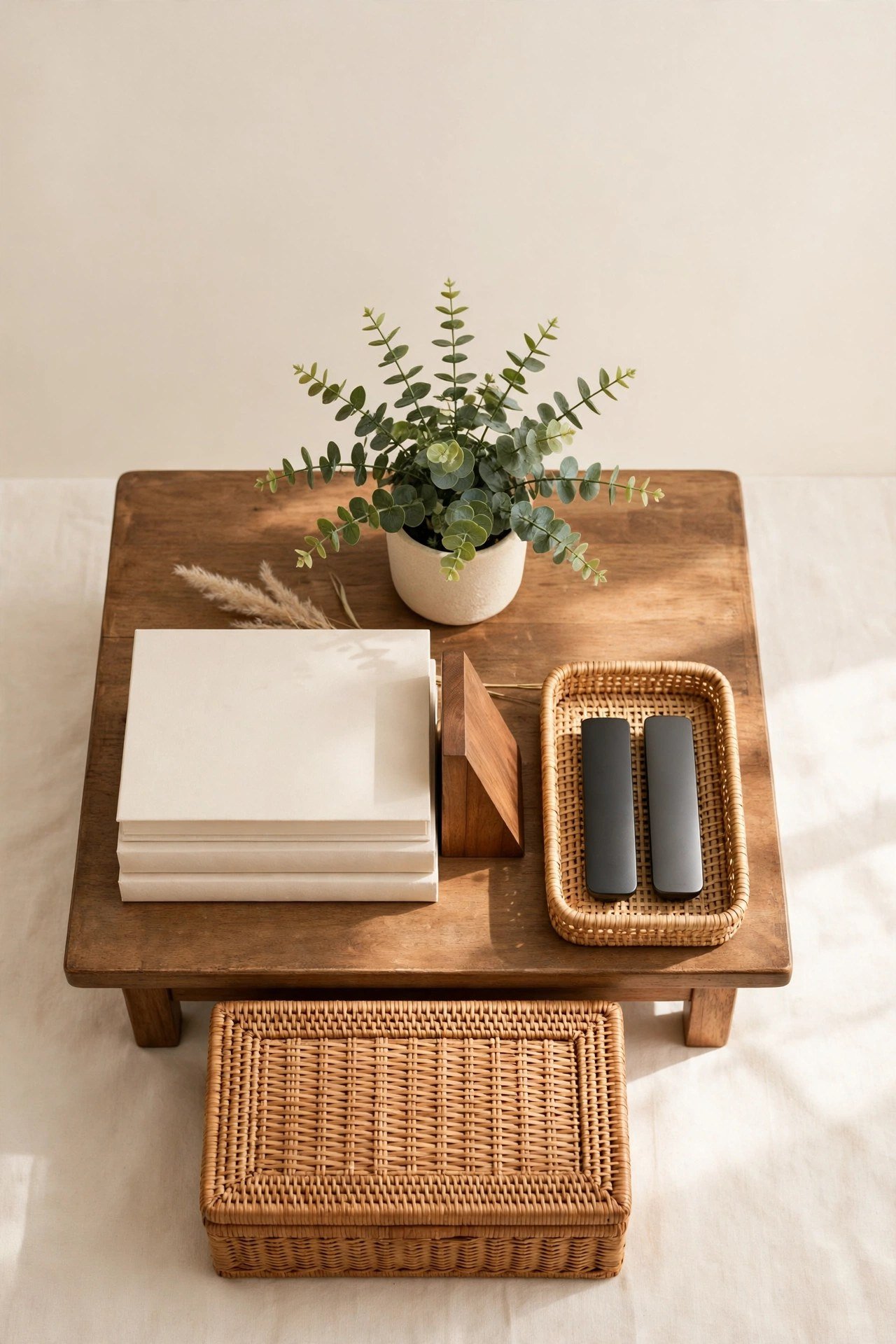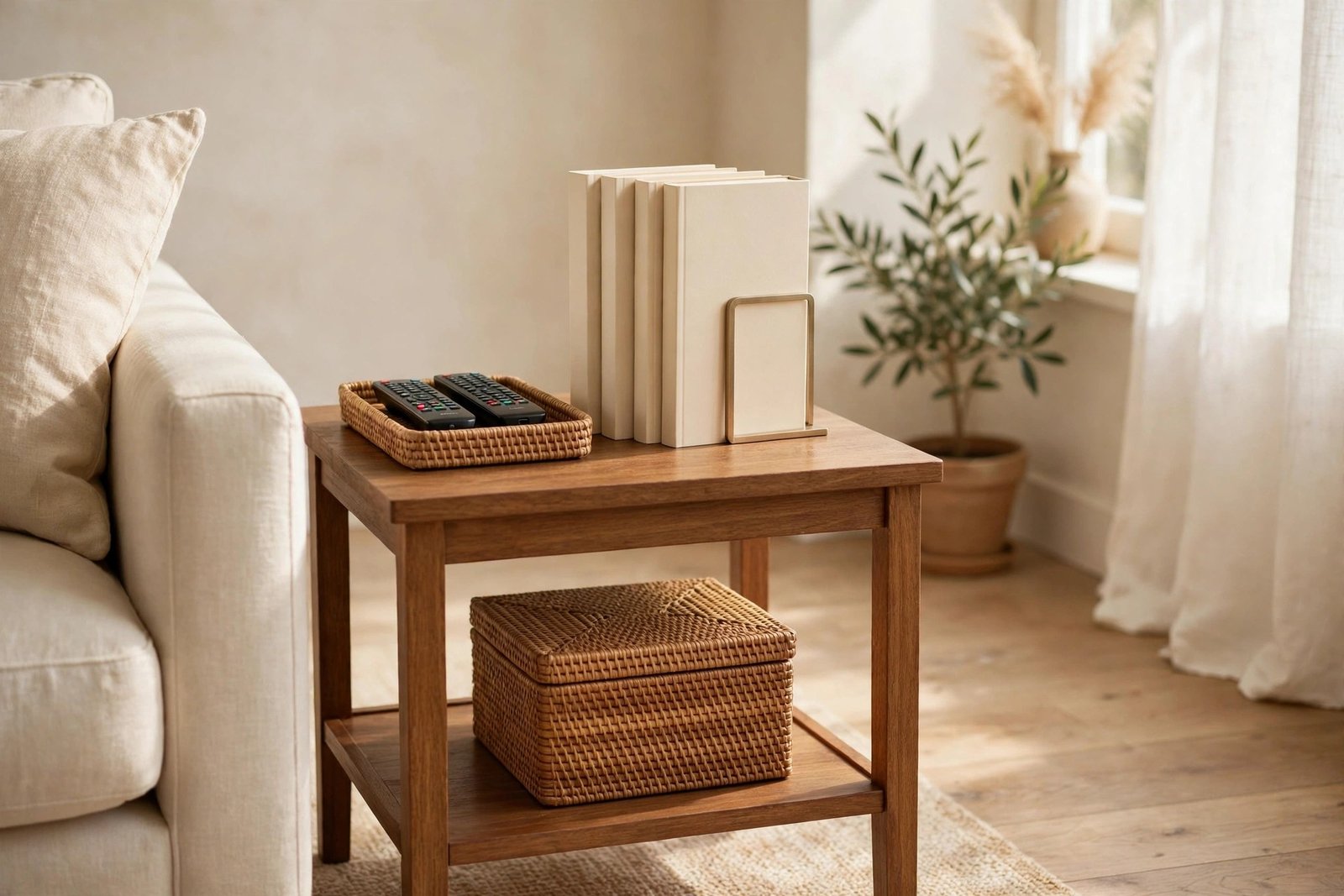
They are the three most-used object groups in any home, and the three most likely to be found in the wrong place. Books migrate to every flat surface. Remotes multiply on sofa arms and vanish into cushions. Chargers drape from sockets, trail across side tables and tangle around lamps. None of it is dirt or even untidiness, exactly — it is everyday life with no assigned parking.
The fix for this trio is not a big storage purchase. It is three small decor moves: a book home in every room where books collect, one tray that remotes are not allowed to leave, and a single charging station styled to look like part of the room. This guide sets up all three, with the grouping habits that keep them looking intentional rather than contained.
Quick Answer
Books, remotes and chargers spread because they are used daily but have no fixed home at the point of use. Give books one home per room — a small “currently reading” stack with a bookend, or a basket beside the reading chair — and let finished books leave the room. Give remotes one tray on the coffee or side table that they must live on. Give chargers one home instead of five: a single charging station — a lidded box with cable slots or a tray station on a sideboard — with cables clipped and coiled so nothing trails. Three homes, three rules, and the everyday clutter reads as styling.
Why These Three Win Every Room
Most clutter is occasional. This trio is daily, mobile and shared: a book is picked up in one room and put down in another; the remote travels with whoever is watching; a charger follows the phone. Items that move need homes that are easier to use than the nearest surface — or the nearest surface wins, every time. Each fix below is placed exactly where the item gets put down anyway, then made to look like decor, so the room reads styled rather than policed.
Fix 1: A Book Home in Every Room
Books look like clutter when they are spread — one on the sofa, two on the floor, a third on the kitchen counter. Gathered, the same books look like a styled stack. The difference is a designated home:
- The currently-reading stack: in the room where you read, a small stack of the two or three books actually in progress, squared up on a side table or shelf with a bookend or a small object on top. A stack with an object on it is a vignette; a pile without one is a to-do list.
- The basket by the chair: for households where reading material accumulates — magazines, a novel, a notebook — a lidded or open basket beside the main reading chair holds the overflow upright.
- Finished books leave the room. This is the rule that stops growth: when a book is finished, it goes to the bookshelf, the bedroom stack or the charity pile that week — not back onto the side table. Rooms hold reading in progress, not a library.
Fix 2: The Remote Tray Rule
Remotes are small, slippery and used with tired evening brains — the worst possible combination for “put it back in the drawer.” Drawers lose. Trays win:
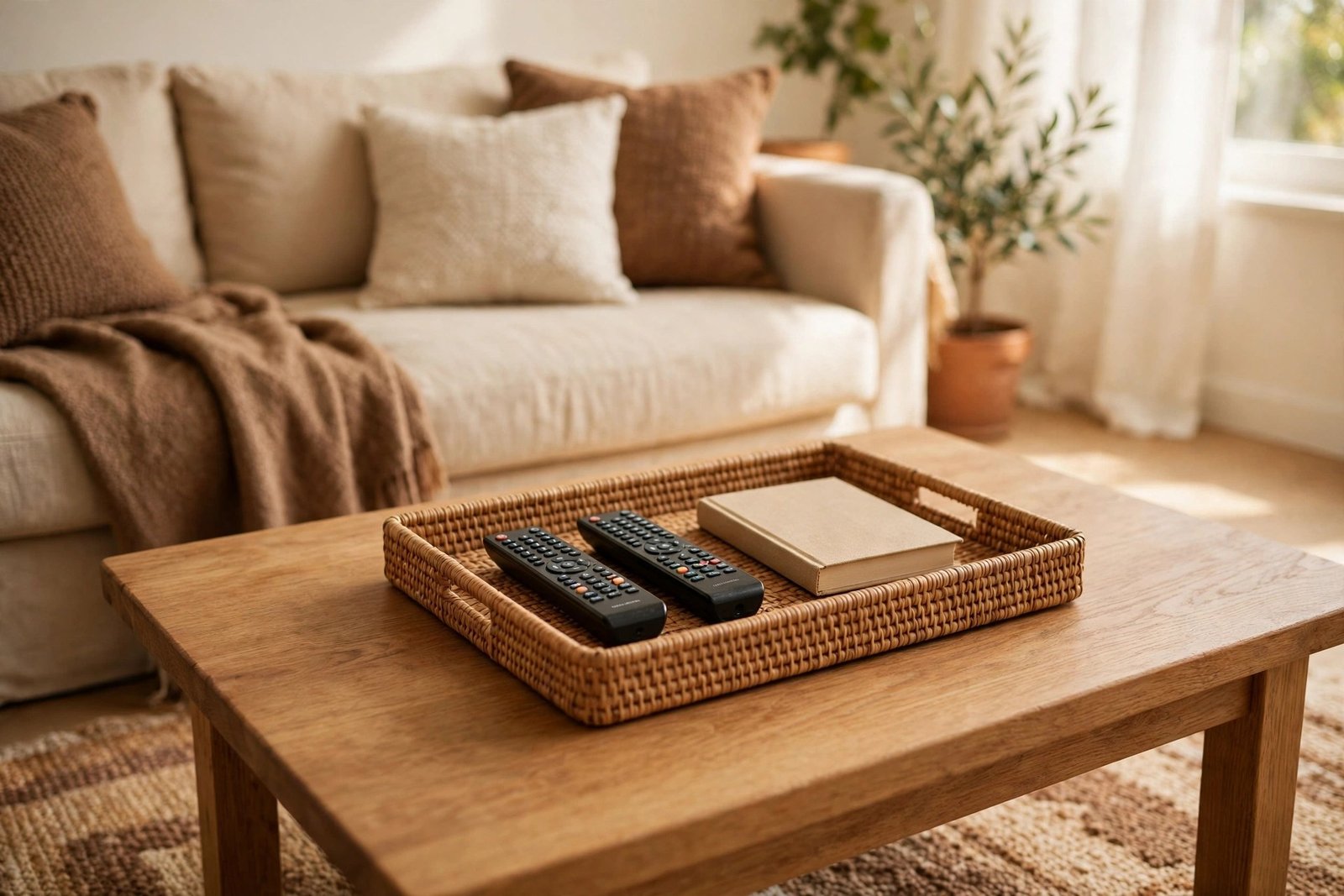
- One tray on the coffee table or side table — sized for the remotes and nothing else much: remotes plus, at most, the current book or a pair of glasses. The tray is where remotes live; if a remote is not in a hand, it is on the tray.
- Stand them or lay them in a row, the same way every time. Two remotes lined on a tray look like a styled detail; two remotes at angles on a cushion look like a search waiting to happen.
- Shrink the fleet. Most living rooms hold a remote for a device that left years ago. Retire the orphans to a drawer with the manuals, and the tray stops overflowing.
The tray is the smallest working example of the point-of-use principle behind the whole storage approach on this site — set out in full in the guide to pretty storage that looks like decor: everyday things stay tidy when their home sits exactly where they are used.
Fix 3: One Charging Station, Styled Like Decor
Chargers are the worst offenders of the three, because each one brings a cable, and cables are pure visual noise — thin, tangled, and always draped across the furniture you most want to look calm. The answer is concentration: one charging station for the home’s everyday devices, not a cable growing out of every socket.
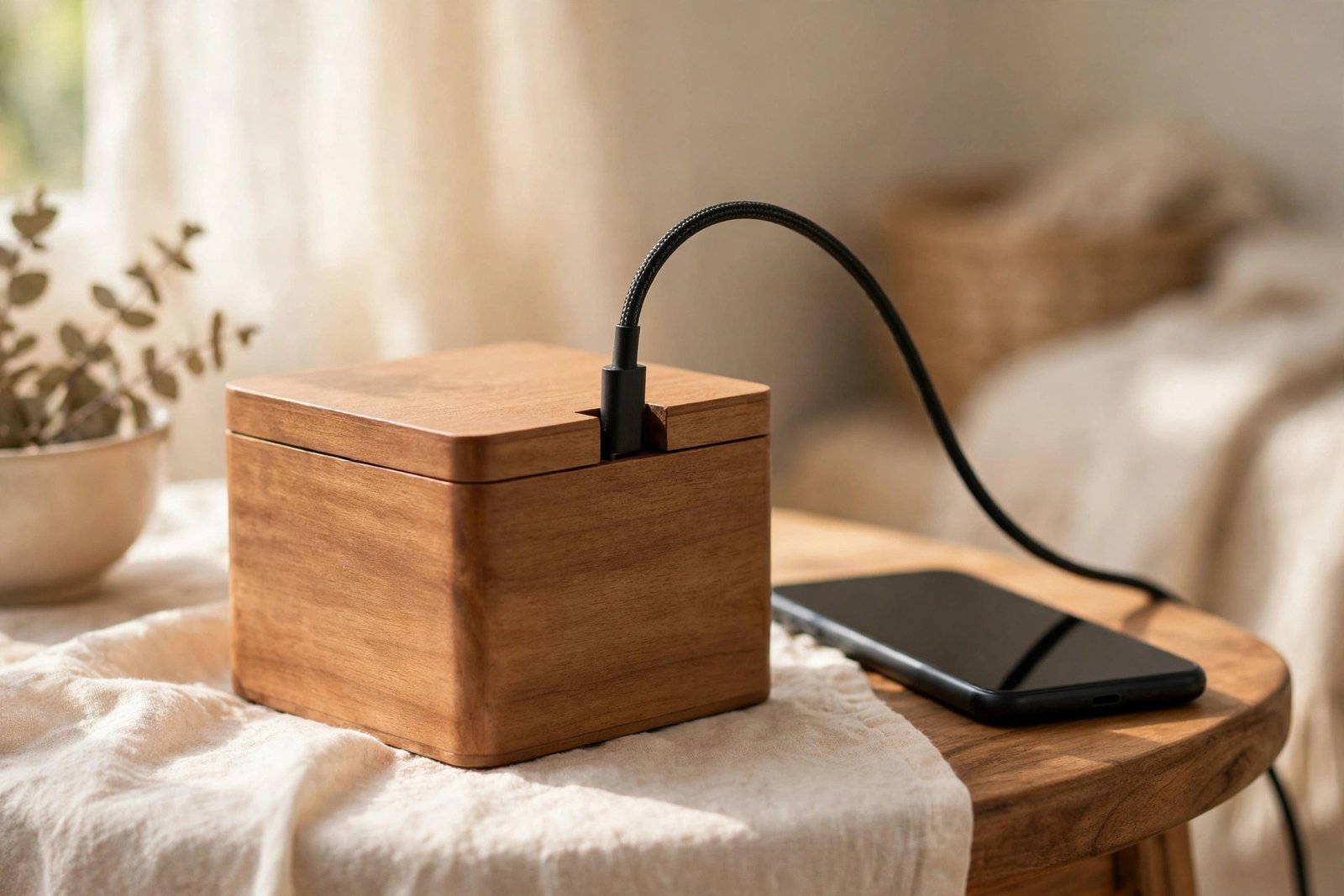
- The station: a lidded box with cable slots, a shallow tray station with a multi-port hub inside, or a small basket on a sideboard — placed where devices naturally end the day, usually a sideboard, console or quiet kitchen corner.
- The plug strip and adapters live inside, hidden by the lid; only short cable ends emerge through the slots, one per device spot. Phones and tablets rest on top or lean beside it like objects on a styled surface.
- Dress it in the room’s palette: a wooden, fabric or woven box that matches the room’s materials turns the station into a piece of decor with a secret. A frame leaned in front of a tray station, or a small plant beside the box, completes the disguise.
- Cable basics everywhere else: for the one or two cables that must live elsewhere (a bedside charger, say), keep them short, clip them along the back edge of the furniture with adhesive cable clips, coil the spare length with a fabric tie, and never run a cable under a rug or across a walkway — hidden cables under rugs are a trip and wear hazard, and trailing cables are the visual problem you are solving in the first place.
Concentration has a second benefit: when charging happens in one place, cables stop migrating. The charger stays at the station, devices visit it, and the rest of the house’s sockets return to being invisible.
Step by Step: Setting Up All Three Homes
- Do the evening sweep first. Walk the home at the end of a normal day and collect every book, remote and charger from every surface. The pile on the table is your true inventory — usually smaller than it felt.
- Retire the extras. Finished books to the shelf or charity pile, orphan remotes to the manual drawer, duplicate and frayed cables out (frayed charging cables are a safety issue, not a storage one — replace or bin them).
- Place the three homes at the points of use: book stack or basket by the reading seat, remote tray on the coffee/side table, charging station on the sideboard or console where devices already gather.
- Match them to the room. Tray, basket and charging box in the same material family as each other and the room — the repetition is what makes three separate fixes read as one designed system. It is the grouping rule from the guide to fixing a room cluttered with small decor items: grouped and matched, they read as chosen; scattered and mismatched, they read as mess.
- Set the two household rules out loud: finished books leave the room; remotes sleep on the tray. Rules nobody has heard are just hopes.
- Two-minute nightly reset: chargers back to the station, remotes to the tray, books squared into their stack. Two minutes because the homes are close — that is the entire point.
Materials and Costs
- Remote tray, sized to the table — $5–$12, or a board/shallow basket you own
- Bookend or a basket for the reading chair — $6–$15
- Lidded cable box with slots, in the room’s material — $10–$22
- Multi-port charging hub for inside the station — $15–$30
- Short charging cables (one per device spot) — $6–$12 each
- Adhesive cable clips and fabric cable ties — $4–$9
- A small plant or frame to dress the station, if needed — $5–$12, or moved from another room
Mistakes to Avoid
- A charging point in every room. It feels convenient and guarantees cables everywhere forever. One good station, plus at most one tidy bedside exception, beats five scattered chargers.
- Buying organisers before assigning homes. A cable box placed where nobody charges is shelf decoration. Decide where devices end the day first; buy the box that fits that spot.
- Trays that grow. The remote tray that also holds post, mugs and keys is no longer a remote tray — it is a landing strip. Keep each home single-purpose; the entryway and kitchen have their own landing spots.
- Long cables “temporarily” across the floor. Besides the trip risk, a cable across a walkway is the loudest visual line in a room. Short cables at the station and clips along furniture backs solve the same need without the drape.
- Hiding cables under rugs. They wear unseen, overheat more easily and still trip feet through the pile. Route along edges and behind furniture instead.
The same visual discipline — matching containers, one home per thing, a short nightly reset — is what calms the most-seen storage in the house, the wardrobe area, covered in the companion guide to visual fixes for a wardrobe area that looks untidy.
Frequently Asked Questions
Where should the charging station go if there is no sideboard?
Any surface where devices already land: a hallway console, the end of a kitchen counter away from water and cooking, or a shelf of the bookcase. The best station is placed where phones are actually put down at night — watch where they end up for two evenings and put the box there.
What about tablets, e-readers and the kids’ devices?
Give the station enough slots for the household’s nightly devices — usually four to six — and let daytime top-ups happen there too. Kids’ devices charging in the shared station overnight is a bonus: one place, one set of cables, nothing trailing in bedrooms.
How do I keep the book stack from becoming a book tower?
Cap it: the stack holds what is being read now — two or three books. A new book joining means a finished one leaves. If reading material genuinely overflows one stack, the basket by the chair is the overflow valve, and a monthly sort returns finished books to the shelf.
Guests’ chargers and remotes for guest rooms — exceptions?
One guest charger kept in the guest room drawer is a kindness, not a violation — it lives in a drawer, not draped on a surface. The rule is about what is visibly out: surfaces calm, dailies homed, the rest behind a lid or in a drawer.